Last updated on July 19th, 2026 at 08:28 am
How to Grow and Care for Portulaca. If you’re searching for one of the easiest flowering plants to grow during the hottest months of the year, Portulaca (Portulaca grandiflora) deserves a place in your landscape. Commonly called Moss Rose, this colorful annual thrives where many other flowers struggle. Even during weeks of 100°F-plus temperatures, Portulaca continues producing bright blooms with very little maintenance.
Its succulent-like leaves store moisture, making it one of the most drought-tolerant flowering plants available. Whether you’re planting flower beds, rock gardens, containers, or hanging baskets, Portulaca provides months of vibrant color throughout the Southwest.
Why Portulaca Is Perfect for Southwest Gardens
Gardeners in southern New Mexico, West Texas, Arizona, and similar desert climates appreciate plants that can handle intense sunshine and dry conditions. Portulaca does exactly that.
Benefits include:
- Loves extreme summer heat
- Thrives in full sun
- Requires very little water once established
- Flowers continuously from late spring through fall
- Available in dozens of bright colors
- Excellent for rock gardens and containers
- Attracts bees and butterflies
Unlike many bedding plants that begin fading in July, Portulaca often reaches its peak during the hottest part of summer.
Planting Portulaca
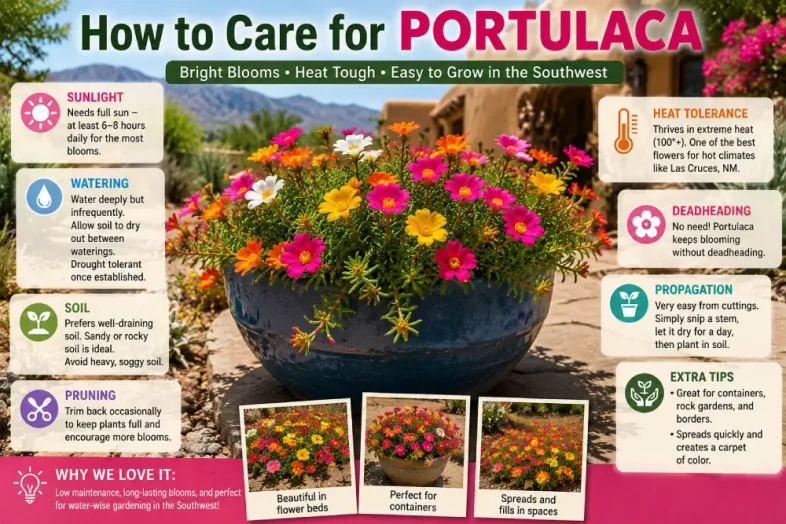
Choose a location that receives at least 6 to 8 hours of direct sunlight each day. More sun generally means more flowers.
The soil should drain quickly. Sandy or rocky soils are ideal, while heavy clay soils may need compost or other amendments to improve drainage.
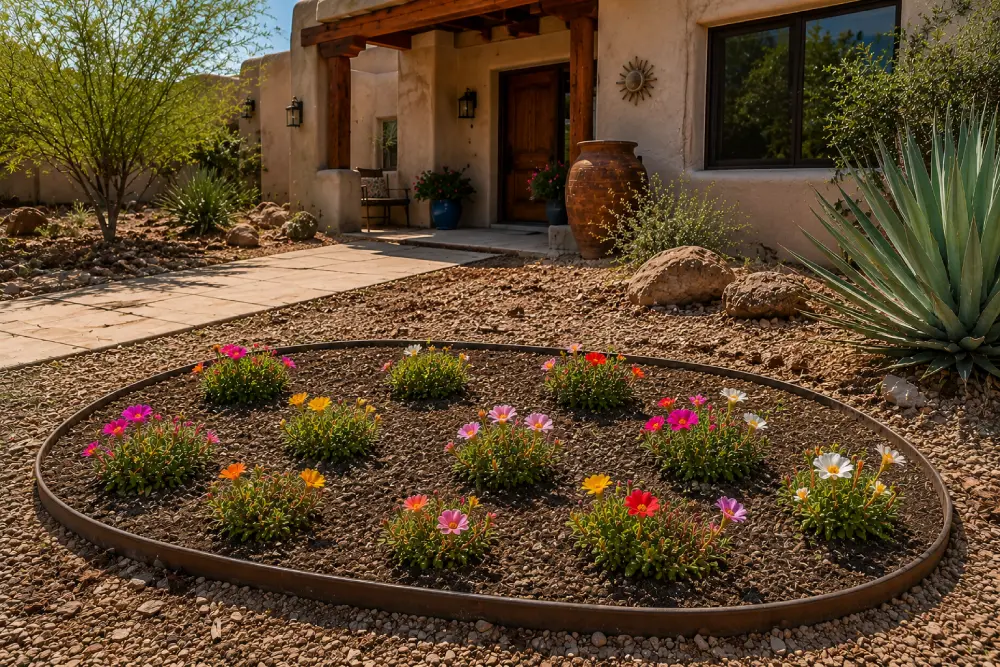
Space plants approximately 8 to 12 inches apart. Although they begin as small transplants, they spread nicely and eventually create a colorful carpet of blooms.
How Often Should You Water Portulaca?
One of the biggest mistakes homeowners make is watering Portulaca too often.
After planting, water thoroughly every day for the first week or two while the roots become established. Once established, allow the soil to dry before watering again.
During extremely hot Southwest summers:
- In the ground: Deep watering about once every 5–7 days is usually sufficient, depending on soil type.
- Containers: Water when the top inch of soil becomes dry. Pots dry out much faster than landscape beds.
Because Portulaca stores water in its leaves, it tolerates short periods of drought much better than consistently wet soil.
For more watering advice, read our guide: How often should you water plants in Las Cruces?
Fertilizing Portulaca
Portulaca is not a heavy feeder.
Apply a balanced slow-release fertilizer at planting time, or feed monthly with a water-soluble fertilizer if growing in containers.
Avoid excessive nitrogen fertilizers, which encourage leafy growth at the expense of flowers.
Does Portulaca Need Deadheading?
Modern Portulaca varieties are largely self-cleaning.
Older blooms usually drop off naturally, allowing new flowers to develop.
If plants become leggy by midsummer, trimming them back by a few inches often encourages a fresh flush of blooms.
Growing Portulaca in Containers
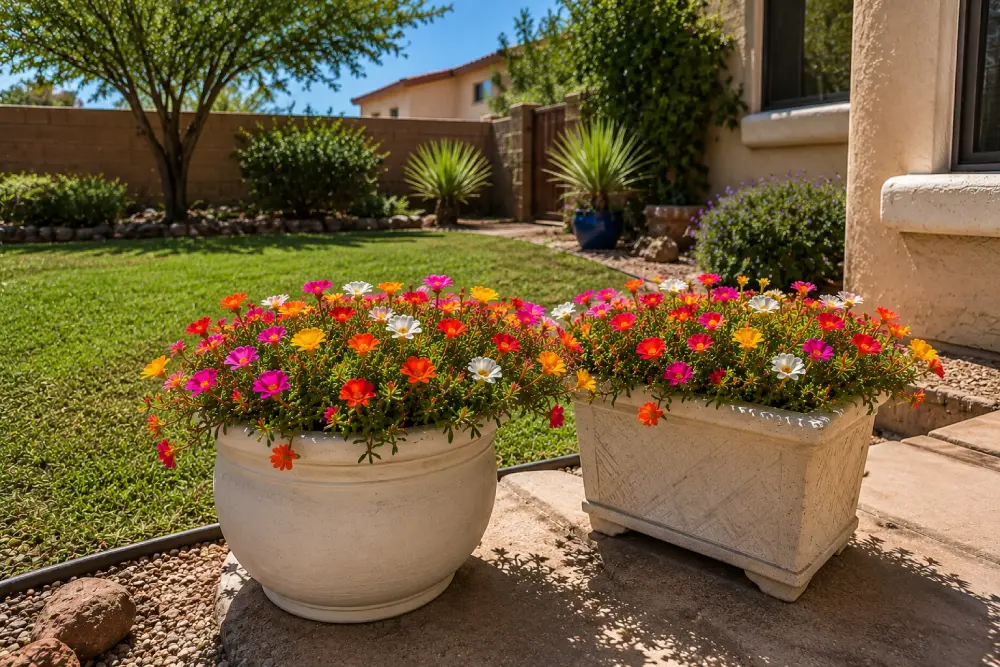
Portulaca performs exceptionally well in containers because pots drain quickly.
Use a quality potting mix designed for flowering plants and always choose containers with drainage holes.
Hanging baskets and decorative patio pots often produce beautiful cascades of colorful flowers all summer.
Common Problems
Fortunately, Portulaca has relatively few pest or disease issues.
Root Rot
Overwatering is the most common cause of failure.
Symptoms include:
- Yellow leaves
- Mushy stems
- Wilting despite moist soil
Improve drainage and reduce watering immediately.
Aphids
Occasionally, aphids gather on tender new growth.
A strong stream of water or insecticidal soap usually controls them.
Does Portulaca Come Back Every Year?
In most Southwest gardens, Portulaca is grown as an annual.
However, because it produces abundant seed, new seedlings often appear the following spring. In mild winters, some plants may even survive until the next growing season.
Best Companion Plants
Portulaca pairs beautifully with other heat-loving plants, including:
- Lantana
- Angelonia
- Verbena
- Vinca Plant Care
- Dusty Miller
- Gazania
- Blue Daze
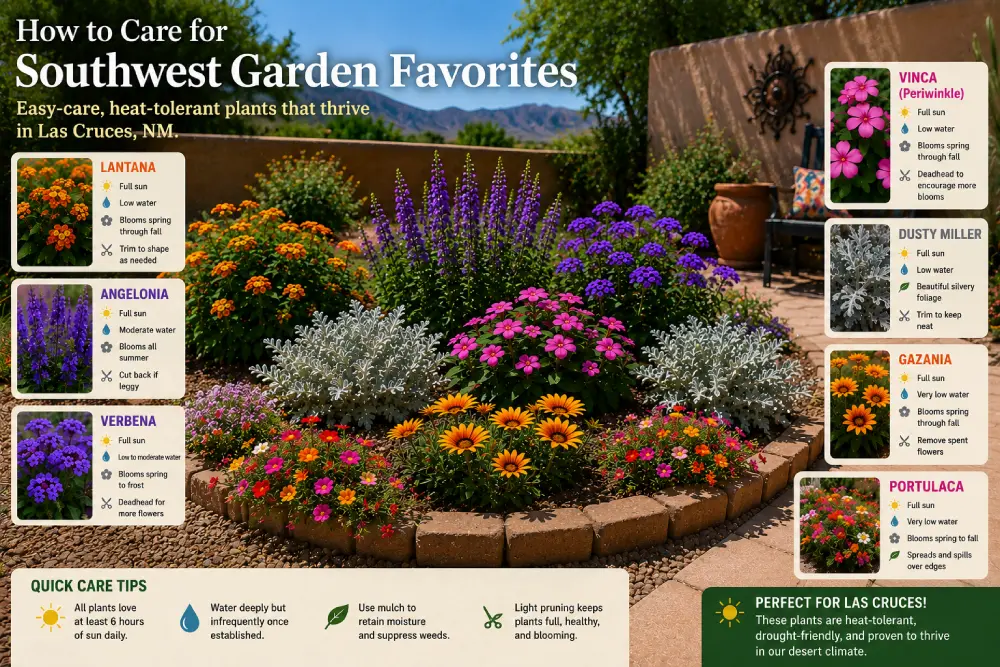
These plants create colorful landscapes that continue blooming throughout the hottest months of the year.
Is Portulaca Safe Around Pets?
According to the ASPCA, Portulaca grandiflora (Moss Rose) is considered non-toxic to dogs, cats, and horses. However, another plant commonly called purslane, Portulaca oleracea, can accumulate naturally occurring oxalates under certain conditions. As with any ornamental plant, it’s best to discourage pets from eating large amounts of foliage.
Frequently Asked Questions
Does Portulaca bloom all summer?
Yes. With plenty of sunshine and proper watering, Portulaca can bloom continuously from late spring until the first frost.
Why do my flowers close during the day?
Portulaca flowers naturally close during cloudy weather and at night. They reopen when bright sunshine returns.
Can Portulaca grow in full sun?
Absolutely. In fact, full sun is essential for maximum flowering.
Is Portulaca drought tolerant?
Yes. Once established, it is one of the most drought-tolerant flowering annuals available.
More information at – Missouri Botanical Garden – Portulaca grandiflora (Moss Rose)
Final Thoughts
If you want dependable color during the hottest months of the year, few plants can compete with Portulaca. Its ability to thrive in blazing sunshine, tolerate drought, and bloom for months makes it one of the best flowering annuals for Southwest landscapes.
Whether you’re filling containers, brightening a rock garden, or adding color along walkways, Portulaca rewards gardeners with cheerful blooms and minimal maintenance.
How to protect plants from extreme heat.
New to Southwest Gardening?
Stop wasting money on plants that will not survive our heat and drought.
My Southwest Gardening Made Simple eBook shows you which trees, shrubs, flowers, and vegetables actually thrive in New Mexico, Arizona, and West Texas.
The best plants for hot, dry climates
Common mistakes that kill Southwest plants
Easy-to-follow advice for beginners

Paul Guzman is a lifelong Southwest gardener and gardening writer with decades of experience helping homeowners grow beautiful landscapes in the desert Southwest. He writes for Guzman’s Garden Centers in Las Cruces, New Mexico, with contributing expertise from Gary Guzman, owner of Guzman’s Garden Centers. If you have any questions or enjoyed this post, feel free to share your thoughts in the comments below.