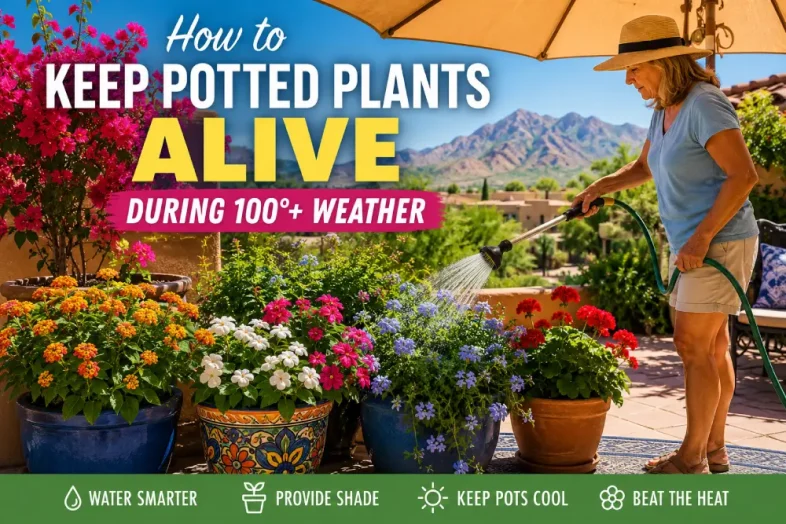
How to Keep Potted Plants Alive During 100°+. If you’ve ever walked outside on a hot July afternoon and found your beautiful container plants wilted, you’re not alone. Potted plants are much more vulnerable to extreme heat than plants growing in the ground. During the summer months in Las Cruces, El Paso, and throughout the Desert Southwest, temperatures over 100°F can quickly dry out the soil and overheat plant roots.
The good news is that with a few simple techniques, you can keep your potted flowers, shrubs, and vegetables healthy and blooming throughout even the hottest part of the summer.
Why Potted Plants Struggle During Extreme Heat
Plants growing in the ground have the advantage of cooler soil temperatures and deeper roots that can reach moisture below the surface. Containers are completely different. The pot itself absorbs heat from the sun, and the limited amount of soil dries out much faster.
Dark-colored plastic containers can become extremely hot during the afternoon, sometimes heating the root zone well beyond the air temperature. This added stress can cause leaves to wilt, flowers to drop, and even permanent root damage if the plant isn’t watered properly.
Water Early in the Morning
One of the best ways to help potted plants survive hot weather is to water them early in the morning, preferably before 9:00 a.m.
Morning watering allows moisture to soak deep into the root ball before the day’s heat arrives. Water thoroughly until it drains from the bottom of the container. This ensures the entire root system receives moisture instead of just wetting the surface.
Avoid giving plants a light sprinkle. Shallow watering encourages shallow roots that dry out quickly during hot weather.
Don’t Be Afraid to Water Twice a Day
During prolonged periods of 100° to 110°F temperatures, especially when it’s windy, smaller containers may need water twice each day.
Before watering again, always check the soil first. Stick your finger about two inches into the soil. If it feels dry, it’s time to water. If it’s still moist, wait a little longer.
Large containers usually stay moist longer than smaller pots.
Provide Afternoon Shade
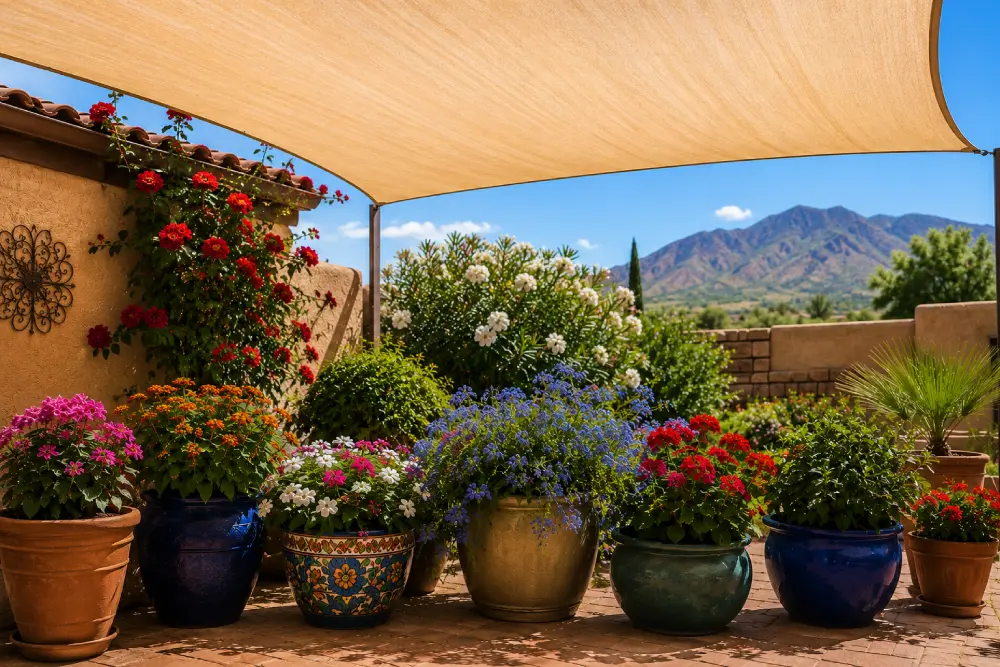
Most flowering plants appreciate full morning sun, but many benefit from protection during the hottest part of the afternoon.
Move lightweight containers to an east-facing patio, beneath a shade tree, or under a covered porch if possible. Even two or three hours of afternoon shade can dramatically reduce plant stress.
If your containers are too heavy to move, consider installing a shade cloth during extended heat waves.
Group Containers Together
Grouping several pots together creates a cooler, more humid environment around the plants. The foliage naturally shades neighboring containers and slows moisture loss from the soil.
This simple trick also reduces direct sunlight hitting the sides of each container.
Choose Containers Wisely
Not all pots perform the same during summer.
Light-colored ceramic, glazed pottery, fiberglass, or resin containers generally stay cooler than black plastic pots.
Terra-cotta containers are beautiful but very porous. Water evaporates through the sides of the pot, causing the soil to dry much faster. While terra-cotta works well, expect to water more often during extreme heat.
If you’re using black nursery containers, consider placing them inside decorative pots or moving them where they receive afternoon shade.
Add Mulch to the Soil Surface
A one- to two-inch layer of mulch can make a surprising difference.
Small bark chips, shredded wood mulch, decorative gravel, or even pine bark help reduce evaporation and keep the soil cooler.
Mulch also prevents the soil surface from baking in direct sunlight.
Avoid Fertilizing During Heat Waves
Many gardeners assume a struggling plant needs fertilizer. In reality, fertilizer can add additional stress during extreme heat.
Wait until temperatures cool or the plant has recovered before feeding. Once the weather moderates, a balanced water-soluble fertilizer such as a 20-20-20 can encourage fresh growth and new blooms.
Watch for Signs of Heat Stress
Even healthy plants can struggle when temperatures climb above 100°F.
Common symptoms include:
- Wilted leaves
- Brown or crispy leaf edges
- Yellowing foliage
- Flower drop
- Slow growth
- Dry soil pulling away from the sides of the pot
If you notice these symptoms, check the soil moisture first. Often, a thorough watering and a little afternoon shade are all that’s needed.
The Best Plants for Hot Southwest Containers
Some plants naturally handle extreme summer temperatures much better than others.
Excellent choices include:
- Lantana
- Vinca
- Angelonia
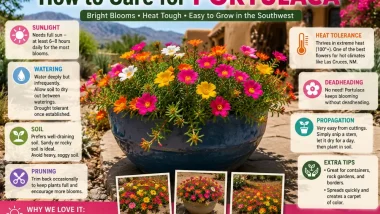
- Moss Rose (Portulaca)
- Bougainvillea
- Yellow Bells (Esperanza)
- Plumbago
- Geraniums (with afternoon shade)
These plants continue blooming through much of the Southwest summer when properly watered.
Don’t Forget the Drainage Holes
Healthy roots require both water and oxygen. Always use containers with drainage holes.
Standing water trapped inside a pot can quickly lead to root rot, especially after frequent watering.
If you place decorative pots beneath containers, empty any excess water after watering.
More Gardening resources at NMSU
Final Thoughts
Keeping potted plants alive during 100°+ weather isn’t difficult once you understand how quickly containers heat up and lose moisture. Water deeply early in the morning, provide afternoon shade whenever possible, mulch the soil, and check containers daily during periods of extreme heat.
A little extra attention during the hottest weeks of summer will reward you with healthy plants, vibrant flowers, and beautiful container gardens that continue thriving long after the temperatures begin to cool.
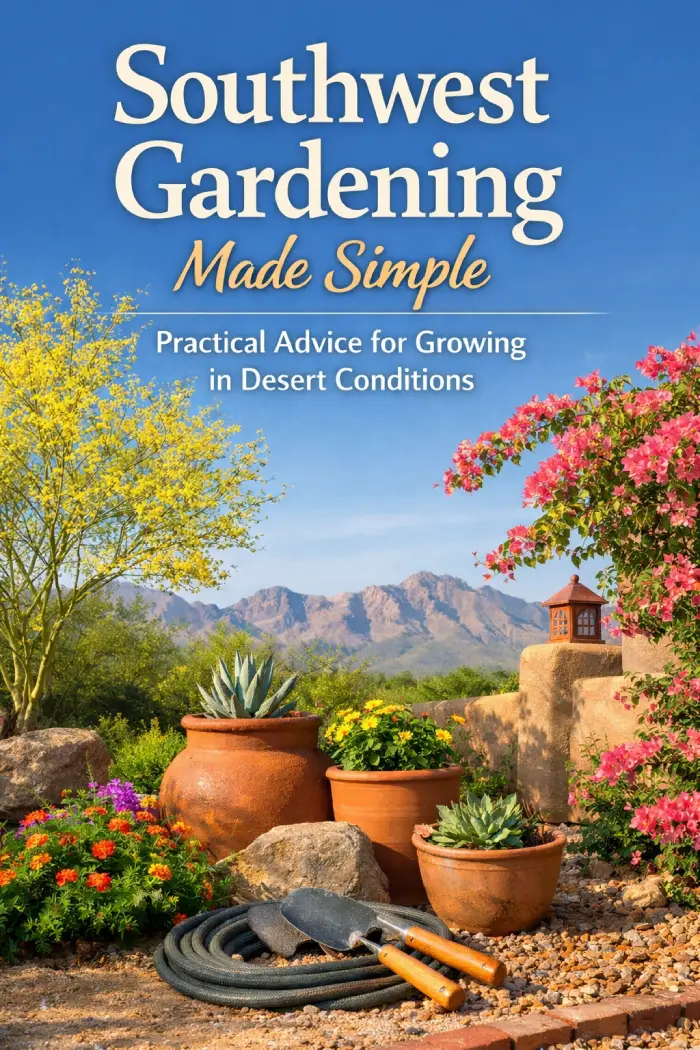
New to Southwest Gardening?
Stop wasting money on plants that will not survive our heat and drought.
My Southwest Gardening Made Simple eBook shows you which trees, shrubs, flowers, and vegetables actually thrive in New Mexico, Arizona, and West Texas.
The best plants for hot, dry climates
Common mistakes that kill Southwest plants
Easy-to-follow advice for beginners

Paul Guzman is a lifelong Southwest gardener and gardening writer with decades of experience helping homeowners grow beautiful landscapes in the desert Southwest. He writes for Guzman’s Garden Centers in Las Cruces, New Mexico, with contributing expertise from Gary Guzman, owner of Guzman’s Garden Centers. If you have any questions or enjoyed this post, feel free to share your thoughts in the comments below.