How to Keep Gophers and Squirrels Out of Your Garden
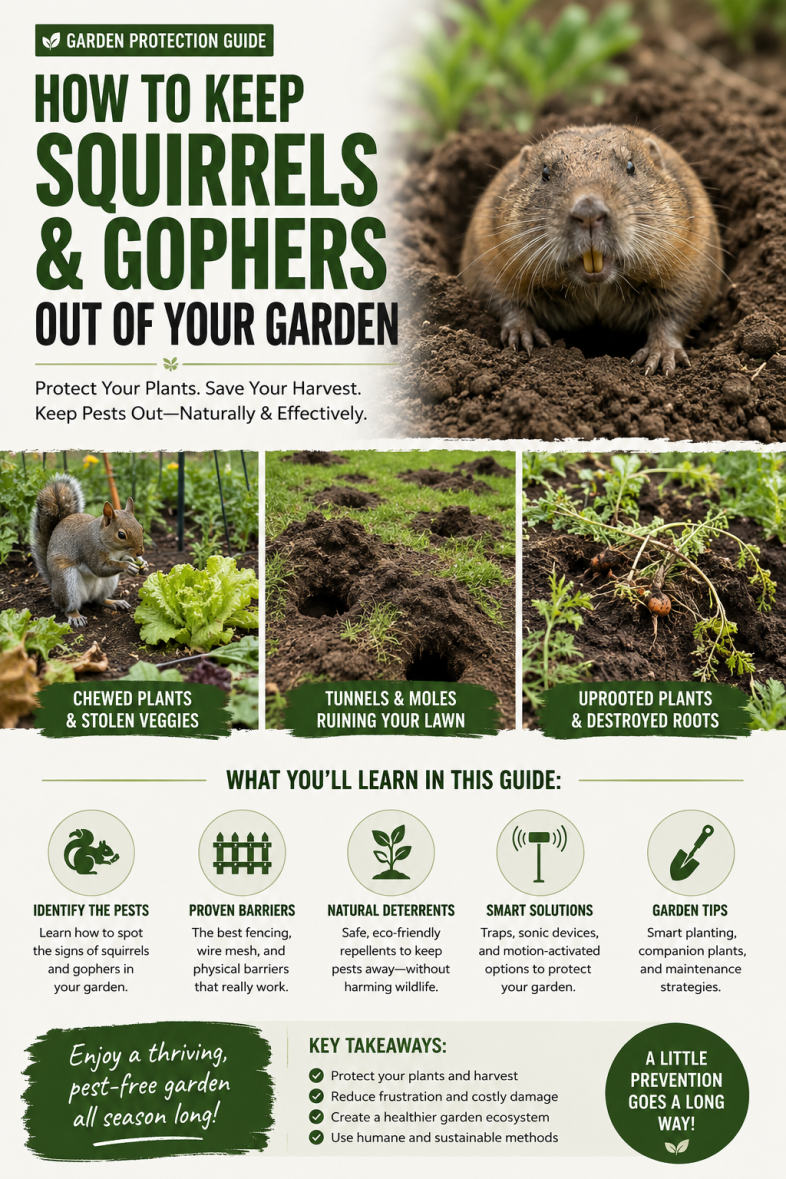
Keep Gophers and Squirrels out of your garden. Few things are more frustrating than walking into your garden only to find freshly dug holes, missing vegetables, chewed roots, or young plants lying on the ground. In the Southwest, gophers and squirrels can quickly turn a beautiful landscape or vegetable garden into a disaster if left unchecked.
The good news is that you don’t have to give up your garden. With a combination of barriers, repellents, habitat management, and persistence, you can greatly reduce the damage these pests cause.
How to Tell Which Animal Is Causing the Damage
Before choosing a solution, it’s important to identify the culprit.
Gophers
Gophers spend almost their entire lives underground. Signs include:
- Crescent- or horseshoe-shaped soil mounds
- Raised tunnels beneath the lawn
- Plants suddenly wilting without warning
- Missing roots on vegetables, shrubs, and flowers
- Trees that become unstable because the roots have been eaten
Squirrels
Squirrels are active during the day and are much easier to spot. They commonly:
- Dig small holes throughout flower beds
- Steal tomatoes, melons, corn, and other vegetables
- Dig up newly planted bulbs
- Chew irrigation tubing
- Scatter mulch and potting soil from containers
Knowing which animal is responsible will help you choose the most effective control methods.
1. Install Underground Barriers
One of the most effective ways to stop gophers is by installing hardware cloth or galvanized wire mesh beneath raised garden beds.
Use 1/2-inch hardware cloth and extend it several inches up the sides before adding soil. This creates a barrier that prevents gophers from tunneling into your garden while still allowing proper drainage.
For valuable ornamental trees, wire root baskets can also provide excellent protection during planting.
2. Remove Their Food Source
Both squirrels and gophers are attracted by readily available food.
Harvest ripe vegetables promptly instead of leaving them on the vine. Pick up fallen fruit, nuts, and birdseed around the yard. If you feed birds, consider moving feeders away from the garden, as spilled seed often attracts squirrels.
Keeping the garden clean makes it much less inviting.
3. Protect Young Plants
Young seedlings are especially vulnerable.
Use:
- Plant cages
- Floating row covers
- Garden netting
- Raised beds with protective fencing
These barriers can prevent squirrels from digging while protecting tender plants from other wildlife as well.
4. Use Repellents
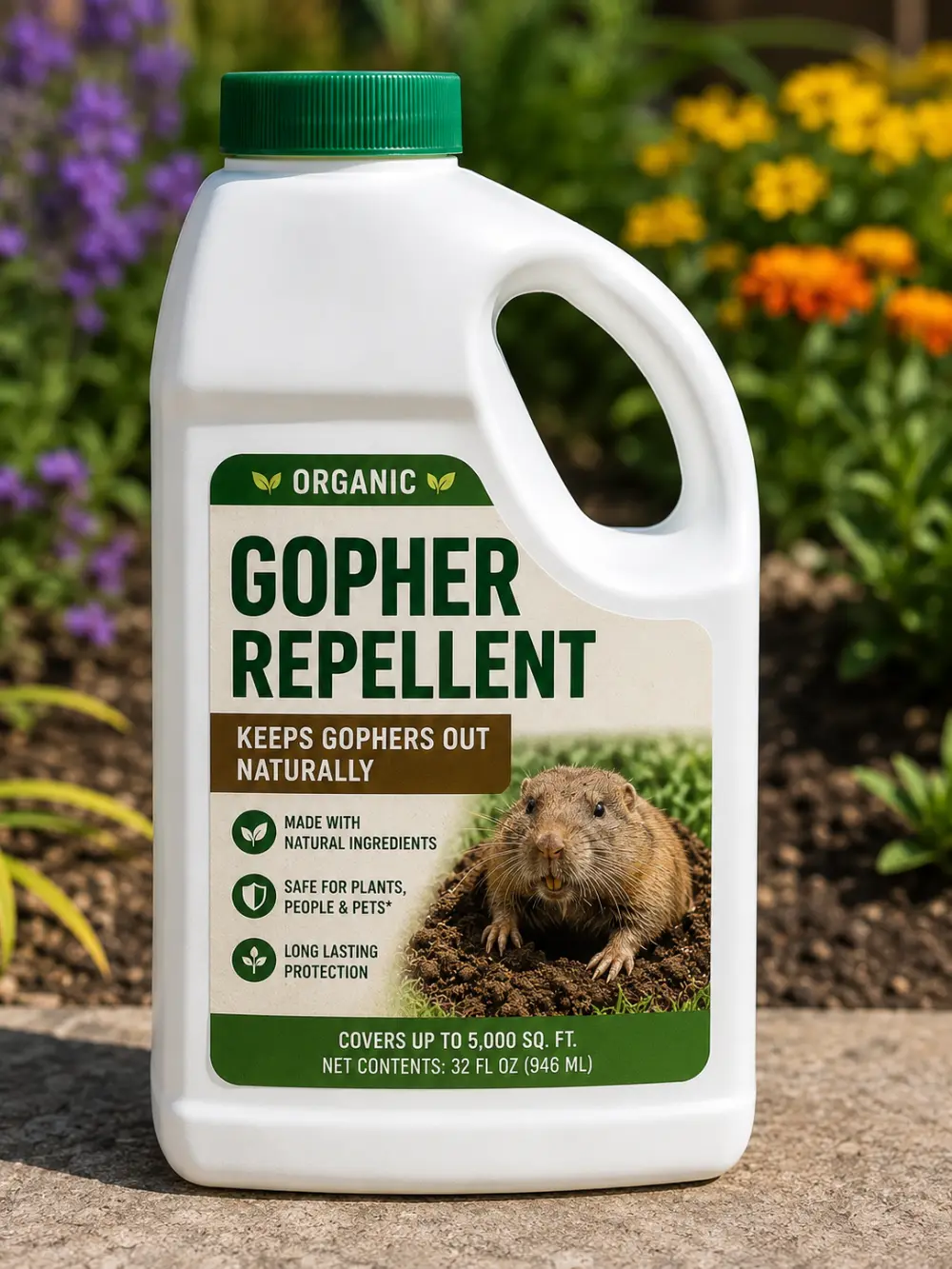
Several commercial repellents are available that use natural ingredients such as castor oil, garlic, peppermint, or hot pepper.
These products may help discourage both squirrels and gophers, especially when applied consistently according to the manufacturer’s directions.
Repellents generally work best as part of an overall pest management plan rather than as the only solution.
5. Keep Lawns Healthy
Thin lawns often make it easier to spot gopher activity, but unhealthy turf can also become more vulnerable to damage.
Maintain healthy grass by watering deeply but less frequently, mowing at the proper height, and fertilizing appropriately. Inspect your lawn regularly for fresh mounds so you can act before tunnels spread throughout the yard.
6. Eliminate Hiding Places
Overgrown vegetation provides excellent cover for squirrels.
Trim dense shrubs, remove brush piles, stack firewood neatly, and keep weeds under control. The fewer hiding places available, the less attractive your landscape becomes.
7. Consider Humane Trapping
Live traps can sometimes be effective for squirrels when local regulations allow relocation.
For gophers, specialized underground traps are often more effective than surface traps because they are placed directly inside active tunnels.
Always follow local wildlife regulations before trapping or relocating any animal.
8. Protect Irrigation Systems
Gophers frequently chew underground irrigation lines, while squirrels often damage exposed drip tubing.
Inspect your irrigation system regularly for leaks or bite marks. Replacing damaged tubing promptly helps prevent water waste and keeps plants healthy.
9. Be Persistent
Unfortunately, there is no one-time cure.
New gophers and squirrels may eventually move into your yard after others leave. Regular inspections, fresh repellents, repairing barriers, and removing food sources are the keys to long-term success.
A little maintenance throughout the growing season can prevent major damage later.
10. Encourage Natural Predators
Owls, hawks, snakes, foxes, and other predators naturally help control rodent populations.
Providing a healthy landscape while avoiding unnecessary pesticide use allows these beneficial predators to do their job. Some gardeners even install owl nesting boxes to encourage natural rodent control.
Final Thoughts
Keeping gophers and squirrels out of your garden requires patience and a combination of methods rather than relying on a single product. Underground barriers, clean gardening practices, repellents, protective fencing, and regular inspections can dramatically reduce the damage these pests cause.
The earlier you catch an infestation, the easier it will be to protect your vegetables, flowers, shrubs, and lawn. With a little persistence, you can enjoy a productive garden while keeping unwanted visitors to a minimum.
Frequently Asked Questions
Do squirrels eat plant roots?
While squirrels mainly eat fruits, seeds, nuts, and vegetables, they may dig up bulbs and occasionally damage shallow roots while burying food.
Do gophers eat plant roots?
Yes. Gophers primarily feed on roots, tubers, bulbs, and underground stems, making them one of the most destructive garden pests.
What is the best way to stop gophers?
Installing underground hardware cloth beneath raised beds, combined with trapping active tunnels, is one of the most effective long-term solutions.
Can gophers damage lawns?
Absolutely. Their tunnels can weaken turf, create dangerous holes, and make mowing difficult.
For additional information on identifying active tunnels and choosing the best control methods, see the University of California Integrated Pest Management (UC IPM) Gopher Management Guide.
New to Southwest Gardening?
Stop wasting money on plants that will not survive our heat and drought.
My Southwest Gardening Made Simple eBook shows you which trees, shrubs, flowers, and vegetables actually thrive in New Mexico, Arizona, and West Texas.
The best plants for hot, dry climates
Common mistakes that kill Southwest plants
Easy-to-follow advice for beginners

Paul Guzman is a lifelong Southwest gardener and gardening writer with decades of experience helping homeowners grow beautiful landscapes in the desert Southwest. He writes for Guzman’s Garden Centers in Las Cruces, New Mexico, with contributing expertise from Gary Guzman, owner of Guzman’s Garden Centers. If you have any questions or enjoyed this post, feel free to share your thoughts in the comments below.