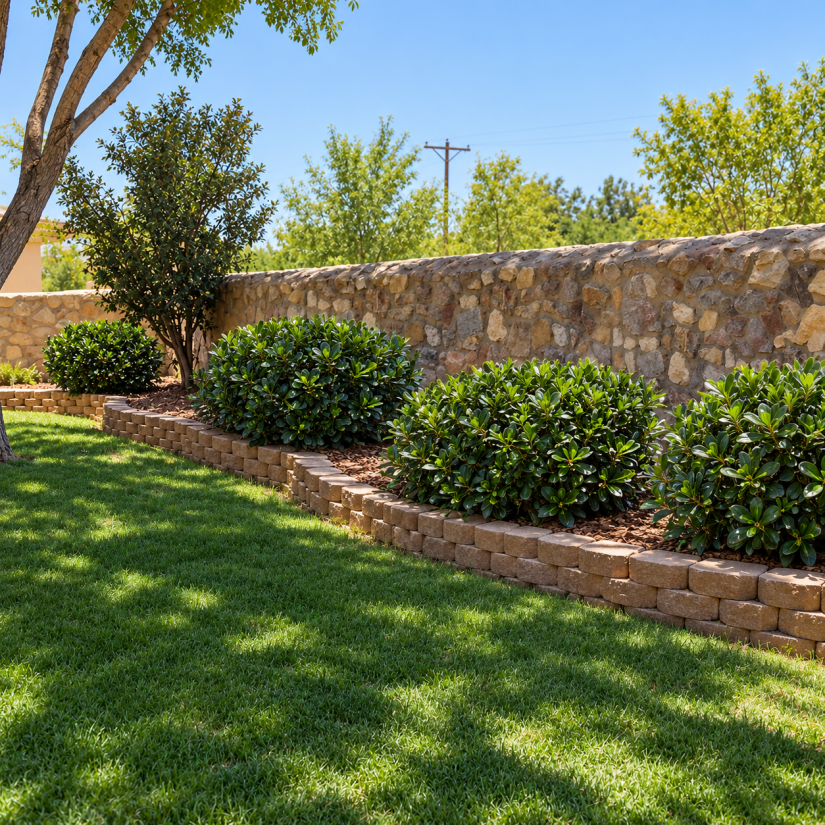
Pittosporum shrubs and plants
Pittosporum shrubs are attractive evergreen plants with thick, glossy green leaves and a naturally rounded growing habit. They are a good choice for adding year-round greenery to your landscape.
Here in Las Cruces, New Mexico, Pittosporum shrubs can do well, but they need a little more attention than our native desert plants.
Our intense summer sunshine, dry winds, alkaline soil, and occasional winter freezes can be challenging. However, choosing the right location and providing proper watering will make a big difference.
If you’re looking for an evergreen shrub to plant near your home’s entrance, along a walkway, or in a protected garden area, Pittosporum is worth considering.
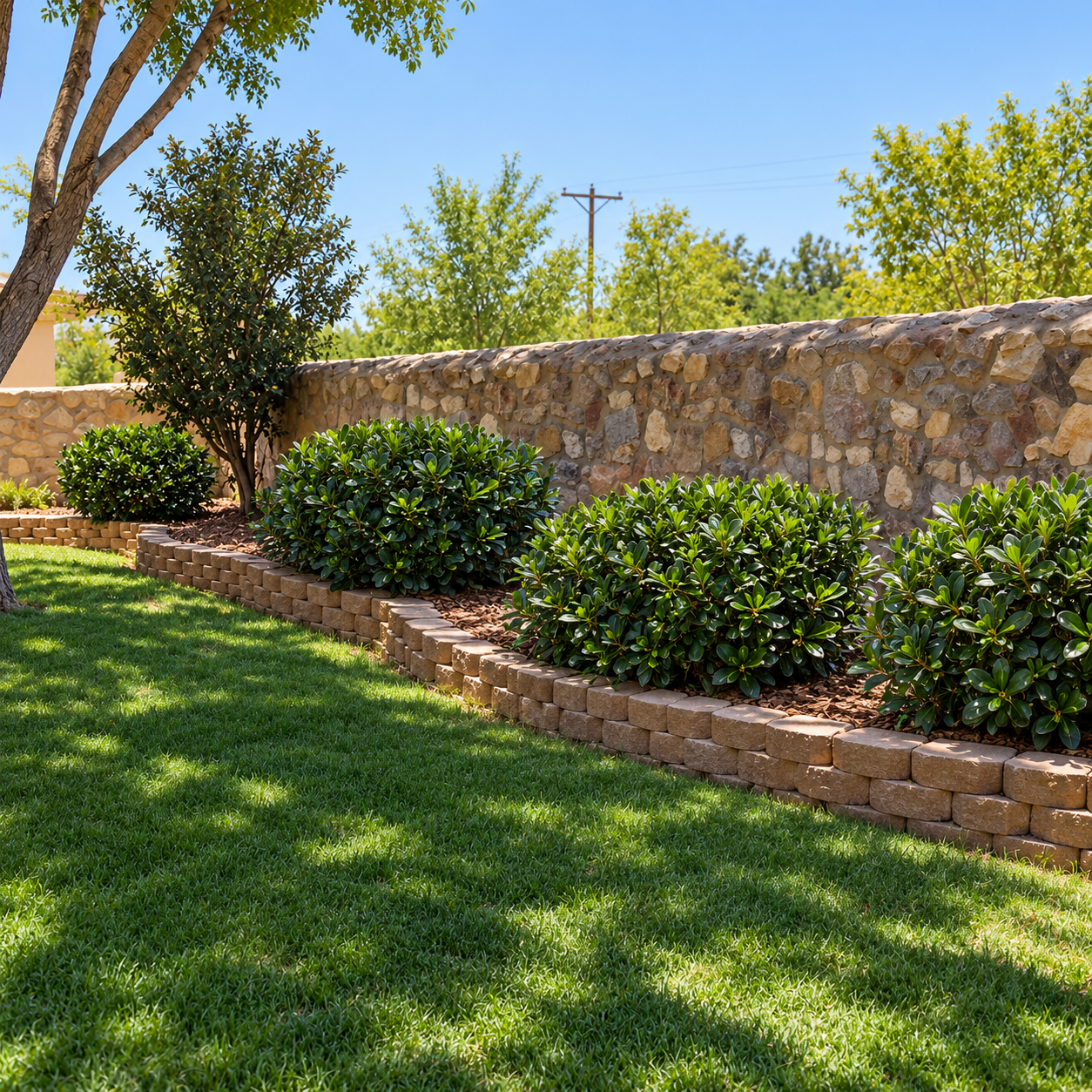
Can Pittosporum Shrubs Grow in Las Cruces?
Yes, they can. The important thing is understanding that Pittosporum is not a true desert xeriscape plant.
Established Japanese Pittosporum has moderate drought tolerance, but regular supplemental watering is usually necessary during our hot Southwest summers.
For the best results, plant your shrubs where they receive morning sunlight and some protection from the intense afternoon sun.
The east side of your home, a protected courtyard, or a location beneath light tree shade can be a good choice.
Avoid planting young Pittosporum shrubs against west-facing walls where reflected summer heat can damage their foliage.
Pittosporum Shrub (‘tobira’) The commonly sized pittosporum (Japanese mock orange) plant. It is not drought tolerant so follow a regular watering schedule even after being established. It can get about 10ft. tall and wide. Easy to trim, an excellent choice specimen for hedge or screen shrub. It can be used in full sun but does better in partial shade.
More Evergreen shrubs and trees for the Southwest.
Color Your World Nurseries will usually have this type of plant year-round. Ask for it at your local retail greenhouse or nursery. Our Blog: View or post a comment on Guzman’s Garden Blog.
Pittosporum as a tree

1. Wheeler’s Dwarf Pittosporum
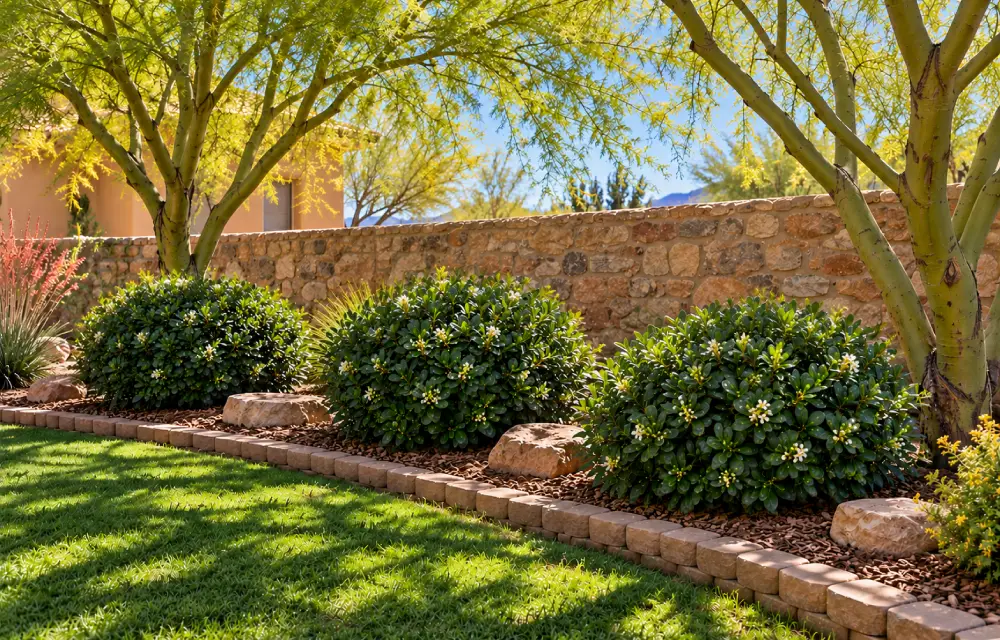
Pittosporum tobira ‘Wheeleri’
Wheeler’s Dwarf is a compact evergreen shrub with thick, dark-green leaves. It has a naturally rounded shape and requires very little pruning to maintain its appearance.
This variety typically grows about 2–3 feet tall and can spread 4–5 feet wide.
It is an attractive choice for front entrances, raised planting beds, patios, and garden borders.
The dark-green foliage looks especially nice against tan stucco walls and decorative rock commonly used in Las Cruces landscaping.
Wheeler’s Dwarf needs well-drained soil and consistent irrigation. It is less tolerant of poor growing conditions and severe freezes than standard Japanese Pittosporum.
2. Creme de Mint Pittosporum
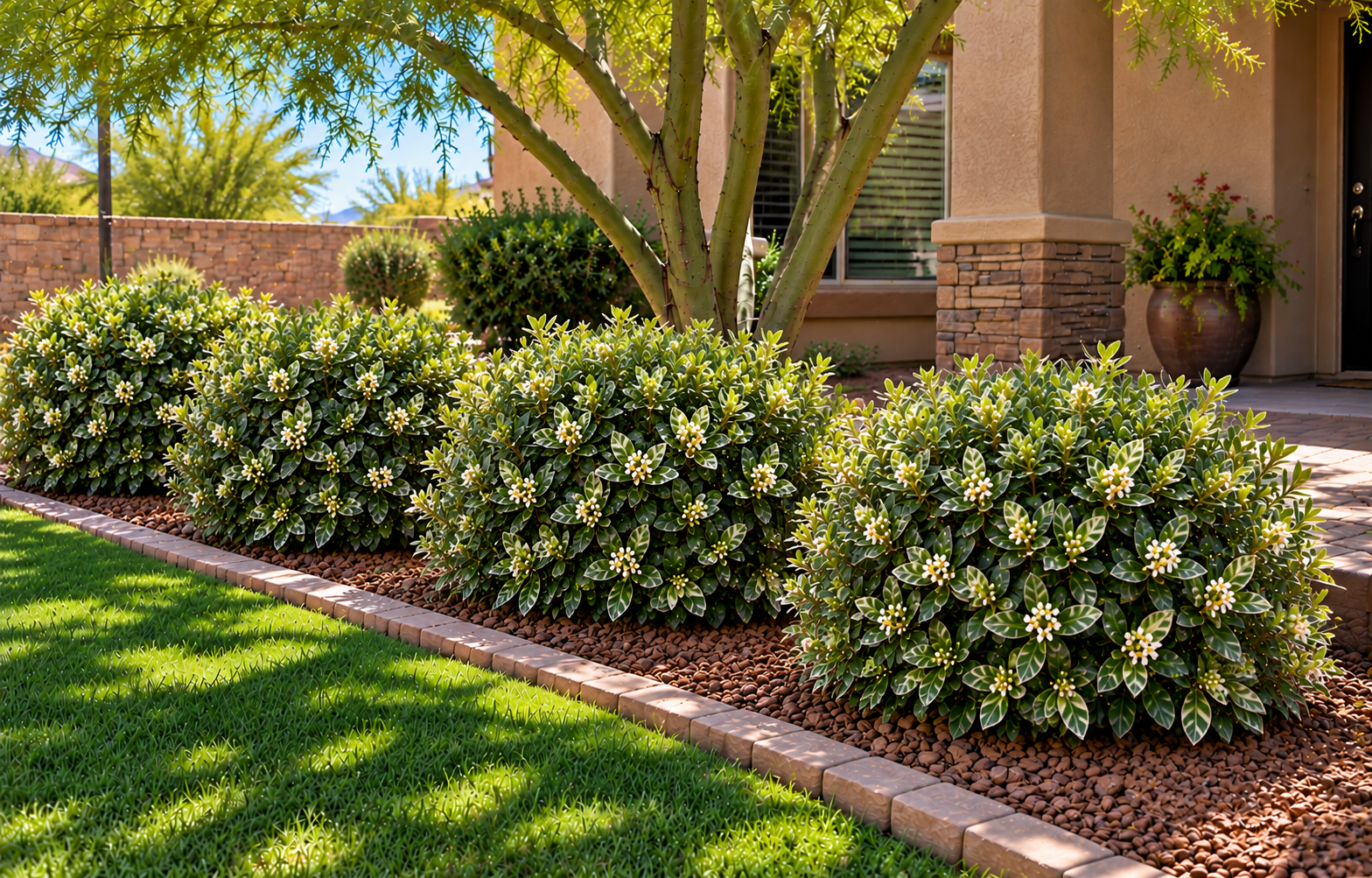
Pittosporum tobira ‘Shima’
Creme de Mint is a compact, slow-growing evergreen shrub with green leaves edged in creamy white.
Unlike the dark-green Wheeler’s Dwarf, this variety has naturally variegated foliage.
It generally grows about 2–3 feet tall and wide.
Creme de Mint makes a beautiful accent plant near walkways, patios, and protected garden entrances.
In the Desert Southwest, give this shrub some afternoon shade to help prevent leaf scorch during the hottest months.
It also works well in large containers with good drainage.
3. Japanese Pittosporum
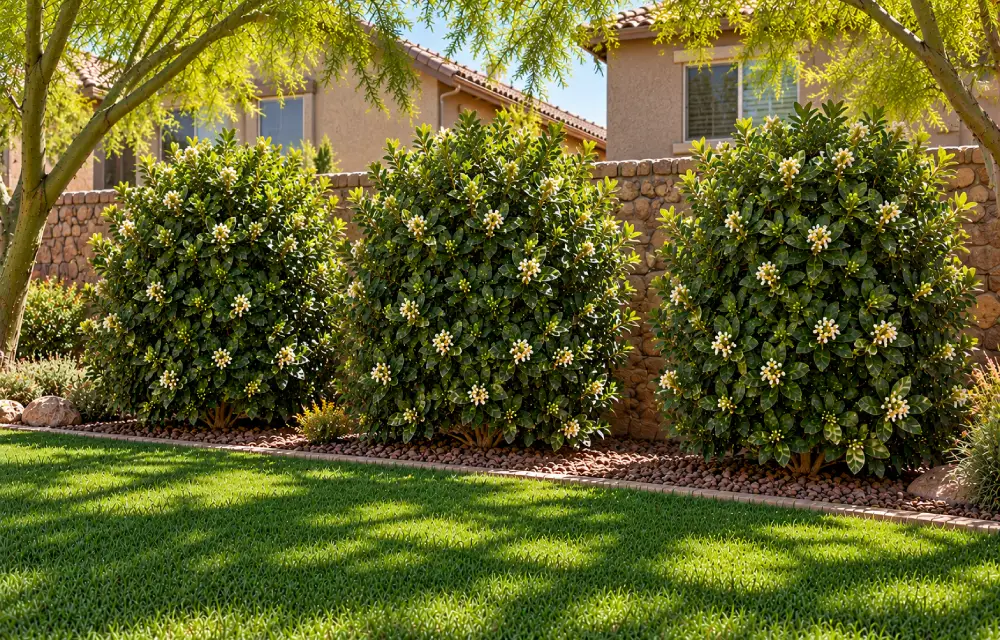
Pittosporum tobira
Standard Japanese Pittosporum is a larger shrub that can grow approximately 8–12 feet tall, sometimes larger under favorable conditions.
It has thick, glossy leaves and produces small, fragrant white flowers during spring.
This variety works well as a privacy screen, informal hedge, or large evergreen accent.
It can also be trained into a small multi-trunk tree over time.
Give it plenty of room to grow and avoid planting it too close to foundations or narrow walkways.
How Much Sun Does Pittosporum Need?
Pittosporum shrubs grow in full sun to partial shade in suitable climates.
However, our Southern New Mexico sunshine can be intense, especially during June, July, and August.
Morning sunshine with afternoon shade is usually a safer choice in Las Cruces, particularly for young plants.
Too much afternoon sunshine, reflected heat, or dry soil may cause leaf burn and brown edges.
If you notice these symptoms, check your watering system and sun exposure before assuming the plant needs fertilizer.
How Often Should You Water Pittosporum Shrubs?
Watering is one of the most important parts of keeping Pittosporum healthy in the Southwest.
Newly planted shrubs need regular deep watering while their roots become established.
During hot weather, check the soil several inches below the surface. Water thoroughly when the root area begins drying, but don’t keep the soil constantly saturated.
Established shrubs can tolerate some dry conditions, but prolonged periods without supplemental water may cause stress.
Drip irrigation is an excellent choice because it delivers water directly into the root area.
My tip: Apply 2–3 inches of organic mulch around the shrub to help conserve moisture and protect the roots from summer heat. Keep mulch away from the main stems.
What Type of Soil Is Best for Pittosporum?
Pittosporum grows best in soil that drains well.
Many homes in Las Cruces have alkaline or compacted soil. These shrubs can tolerate alkaline conditions, but poor drainage can lead to root problems.
Before planting, check how well your soil drains.
If water remains standing in the planting area for extended periods, improve drainage or choose another location.
Avoid planting Pittosporum in low spots where water collects after heavy monsoon rainfall.
When Is the Best Time to Plant Pittosporum?
Spring and early fall are usually good planting seasons in southern New Mexico.
Spring planting gives the shrub time to develop roots before the hottest summer weather.
Early fall planting also works well because cooler temperatures reduce heat stress. However, newly planted shrubs may need protection from winter freezes.
Avoid planting during extreme summer heat whenever possible.
Can Pittosporum Survive Winter in New Mexico?
Japanese Pittosporum generally grows in USDA Hardiness Zones 8–10.
However, temperatures in southern New Mexico occasionally drop low enough to damage exposed shrubs.
Wheeler’s Dwarf can be especially sensitive to severe cold.
Young plants may need protection with frost cloth during unusually cold nights.
A protected courtyard or planting location away from cold winter winds can improve your chances of success.
How to Prune Pittosporum Shrubs
One of the nice things about Pittosporum is that it naturally develops an attractive shape.
Wheeler’s Dwarf rarely needs much pruning.
You can remove dead branches or lightly trim uneven growth to maintain a rounded appearance.
Larger Japanese Pittosporum shrubs can be pruned into informal hedges or trained into small trees.
For flowering plants, prune after the spring blooms have finished to avoid removing developing flower buds.
Avoid heavy pruning during extreme summer heat or immediately before freezing weather.
Common Pittosporum Problems
Although Pittosporum is relatively easy to maintain, a few problems can develop.
Brown leaf tips: These may result from excessive sunshine, dry soil, salt buildup, or winter damage.
Yellowing leaves: Possible causes include overwatering, poor drainage, or nutrient deficiencies.
Drooping foliage: Check soil moisture. Both dry and overly saturated roots can cause wilting.
Scale insects and mealybugs: Inspect the foliage and branches for insects, sticky residue, or unusual discoloration.
Root rot: Poor drainage and excessive irrigation are common contributors.
Powdery Mildew: Too much water, overhead watering.
Learn more on Insects and Diseases on Plants
Always identify the problem before applying insecticides or fertilizer.
Southwest Landscaping Ideas With Pittosporum
Pittosporum shrubs make attractive additions to Southwest-style homes when planted in suitable locations.
Try Wheeler’s Dwarf along a protected walkway or garden entrance.
Use Creme de Mint in a decorative container near a shaded patio.
Plant larger Japanese Pittosporum shrubs where they have room to develop into an informal hedge.
The dark-green foliage contrasts nicely with natural stone, tan stucco, and light-colored decorative rock.
You can also combine Pittosporum with flowering Southwest plants, but remember that plants with different watering requirements should be placed on separate irrigation zones.
Frequently Asked Questions About Pittosporum Shrubs
1. Are Pittosporum shrubs drought tolerant?
Established Japanese Pittosporum has moderate drought tolerance, but supplemental watering is recommended during extended hot, dry weather in the Southwest.
2. Can Pittosporum grow in full sun?
Yes, but partial afternoon shade is usually beneficial in Las Cruces and other hot desert locations.
3. Does Pittosporum stay green all year?
Yes. Japanese Pittosporum and its commonly grown varieties are evergreen shrubs.
4. How tall does Wheeler’s Dwarf grow?
Wheeler’s Dwarf usually grows about 2–3 feet tall and spreads approximately 4–5 feet wide.
5. Why are my Pittosporum leaves turning brown?
Brown leaves can result from sunburn, insufficient water, excess soil salts, or freezing temperatures.
6. Can Pittosporum grow in pots?
Yes. Dwarf varieties are suitable for large containers with good drainage.
7. When should I fertilize Pittosporum?
If fertilizer is needed, spring is generally a good time. Avoid overfertilizing and consider a soil test if nutrient problems persist.
8. Do Pittosporum shrubs produce flowers?
Yes. Japanese Pittosporum produces small, fragrant white flowers in spring.
9. Is Pittosporum good for privacy?
The standard Japanese Pittosporum can make a good evergreen privacy screen in suitable growing conditions.
10. Can Pittosporum survive a freeze?
Established plants can tolerate some freezing weather, but severe cold may damage foliage and branches. Dwarf varieties can be more vulnerable.
Final Thoughts
Pittosporum shrubs are an attractive way to add evergreen color to your Southwest landscape.
Whether you choose Wheeler’s Dwarf, Creme de Mint, or standard Japanese Pittosporum, remember that location and watering are the keys to success.
Here in Las Cruces, I recommend giving these shrubs some protection from the hot afternoon sun and making sure the soil drains properly.
If you’re unsure which variety is right for your yard, stop by Guzman’s Garden Centers in Las Cruces. Our staff can help you choose plants that fit your landscape and growing conditions. Availability may vary.
The growing recommendations and variety sizes are supported by university extension and horticultural references, including University of Florida IFAS and Oregon State University