When fall arrives in Las Cruces and throughout the Desert Southwest, many gardeners start cleaning up their yards. We rake leaves, pull weeds, trim shrubs, and cut back anything that looks brown or finished for the season. 10 Flowering Plants Not to Cut Back in Fall
But don’t get carried away with those pruning shears.
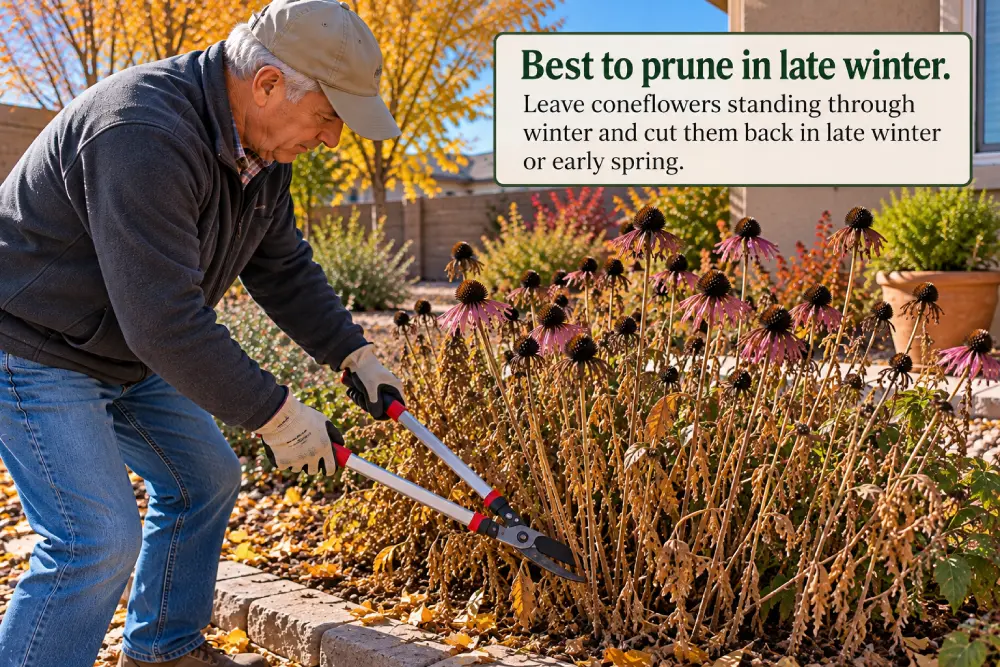
Some flowering plants are actually better left alone during the fall and winter months. Those dried stems, old flower heads, and brown foliage might not look perfect, but they can serve an important purpose in your landscape.
Leaving certain plants standing can help protect the crown and roots from cold temperatures. Seed heads provide food for birds, while hollow stems and dried foliage can provide shelter for beneficial insects during winter.
There is another good reason to wait.
Cutting some perennials back too early can encourage tender new growth if we get a stretch of unusually warm weather during late fall. That new growth can then be damaged when temperatures suddenly drop.
Here in southern New Mexico, our fall weather can be unpredictable. We can have beautiful sunny afternoons followed by freezing nighttime temperatures only a few days later.
So before cleaning up every flowering plant in your landscape, take a closer look.
Here are 10 flowering plants not to cut back in fall. In most cases, waiting until late winter or early spring is the better choice.
1. Purple Coneflower
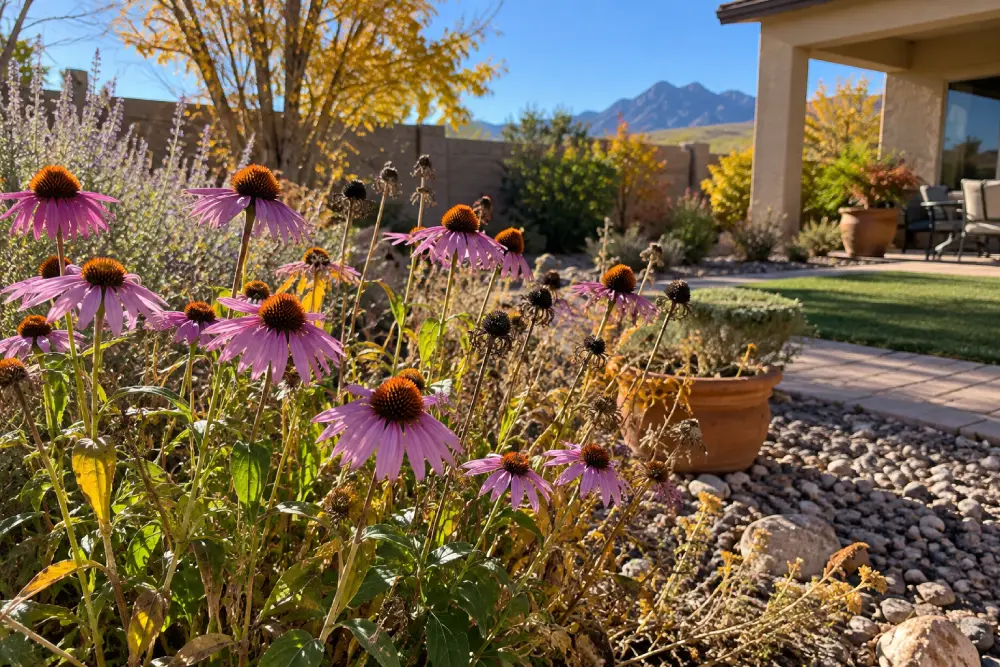
Purple coneflower (Echinacea purpurea) is one plant that I would not be in a hurry to cut back.
Once the flowers fade, the dark seed heads remain standing above the plant. They might look finished to us, but birds can see them as a source of food.
Finches and other seed-eating birds may pick at the seed heads during fall and winter.
The dried stems also add a little structure to the winter garden and can provide some protection around the crown of the plant.
Instead of cutting coneflowers down in fall, leave the old growth standing through winter. Cut the dried stems back in late winter or early spring before new growth gets going.
Of course, if the plant had a serious disease problem during summer, remove the diseased material rather than leaving it around the plant.
2. Black-Eyed Susan

Black-eyed Susan (Rudbeckia) is another flowering perennial worth leaving alone after it finishes blooming.
The bright yellow petals eventually disappear, but the dark centers remain. Those old seed heads contain seeds that birds may feed on during the colder months.
They also add a little winter interest to a landscape that might otherwise look pretty bare.
There is no need to make your Black-eyed Susans look perfectly clean in November or December.
Wait until late winter or early spring and then remove the old stems.
Again, the exception would be plants that suffered from serious leaf spot, mildew, or another disease during the growing season. Diseased foliage should usually be removed and disposed of rather than allowed to remain around the plant.
3. Blanket Flower
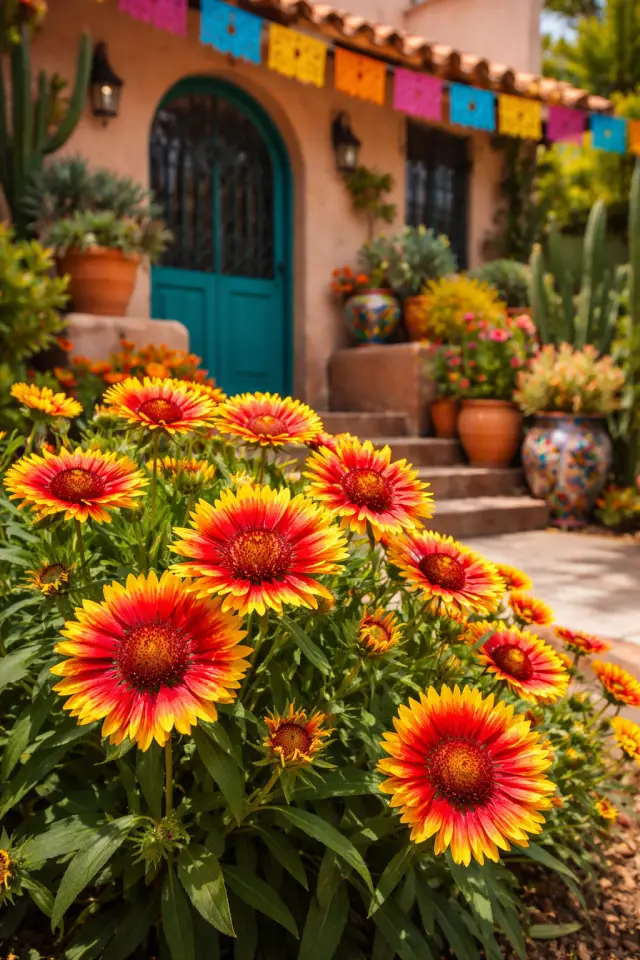
Blanket flower (Gaillardia) is an excellent flowering perennial for New Mexico landscapes.
It loves sunshine, tolerates our heat, and once established it doesn’t need nearly as much water as many traditional flowering plants.
After flowering, Blanket Flower develops round seed heads.
Leaving some of those seed heads in place allows the plant to reseed naturally. Birds may also feed on the seeds.
You can certainly deadhead Blanket Flower during the growing season to encourage additional blooms. But once fall arrives and flowering begins slowing down, there is less reason to keep removing every faded flower.
Let the plant finish its natural cycle.
The dried foliage can also provide a little protection around the base of the plant during winter.
Do your major cleanup when spring approaches.
4. Yarrow
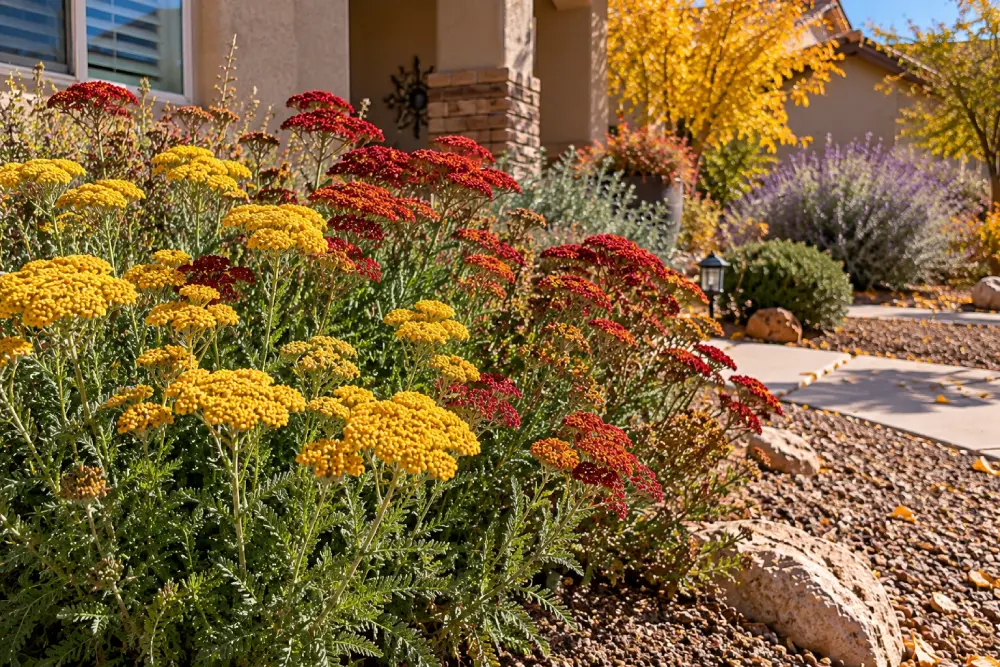
Yarrow (Achillea) is another tough perennial that performs well in sunny Southwest landscapes.
Its flat clusters of flowers eventually dry and turn brown, but they can remain attractive well into winter.
Instead of cutting the entire plant to the ground in fall, consider leaving the dried flower stems standing.
The old growth can provide some protection during cold weather, while the dried flowers add texture to the winter landscape.
Yarrow can sometimes stay partially green during mild Southwest winters. That’s another reason not to automatically cut the entire plant down just because the calendar says fall has arrived.
Once the worst of winter is behind us, trim away the old flower stalks and damaged foliage and allow the fresh spring growth to take over.
5. Autumn Joy Sedum
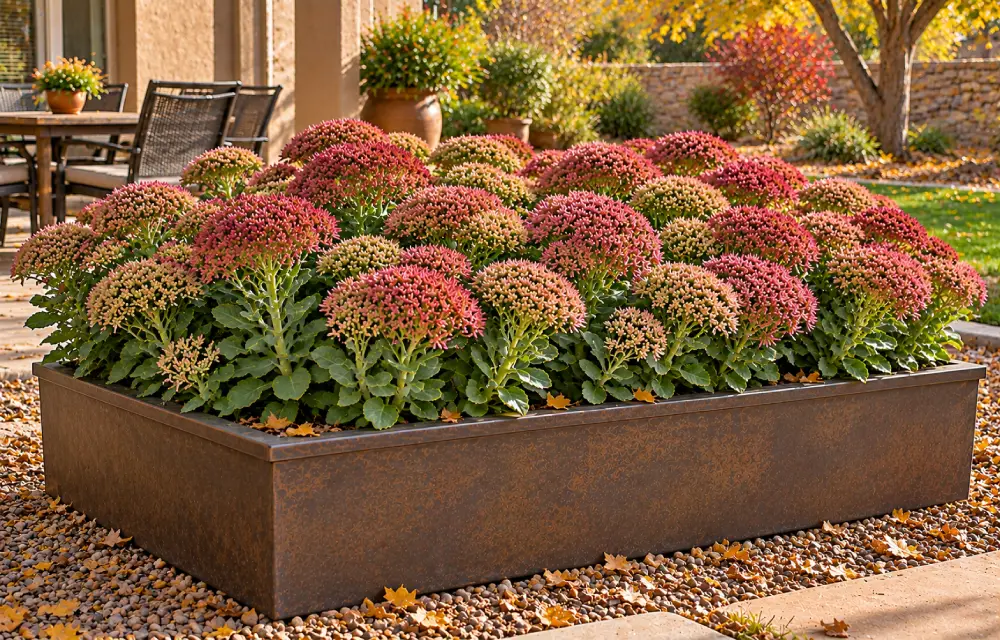
Autumn Joy Sedum is almost made for leaving alone during winter.
The flowers begin changing color as the season progresses, eventually turning into large brown or bronze flower heads.
Don’t assume brown means ugly.
On cold winter mornings, those dried flower clusters can look surprisingly attractive when covered with frost.
The sturdy stems and flower heads also provide structure when many other flowering plants have disappeared for the season.
There really isn’t much benefit to cutting Autumn Joy Sedum to the ground during fall.
Leave it standing during fall and winter. Cut the old stems close to the ground in late winter or early spring when you begin seeing new growth emerging from the base.
6. Penstemon
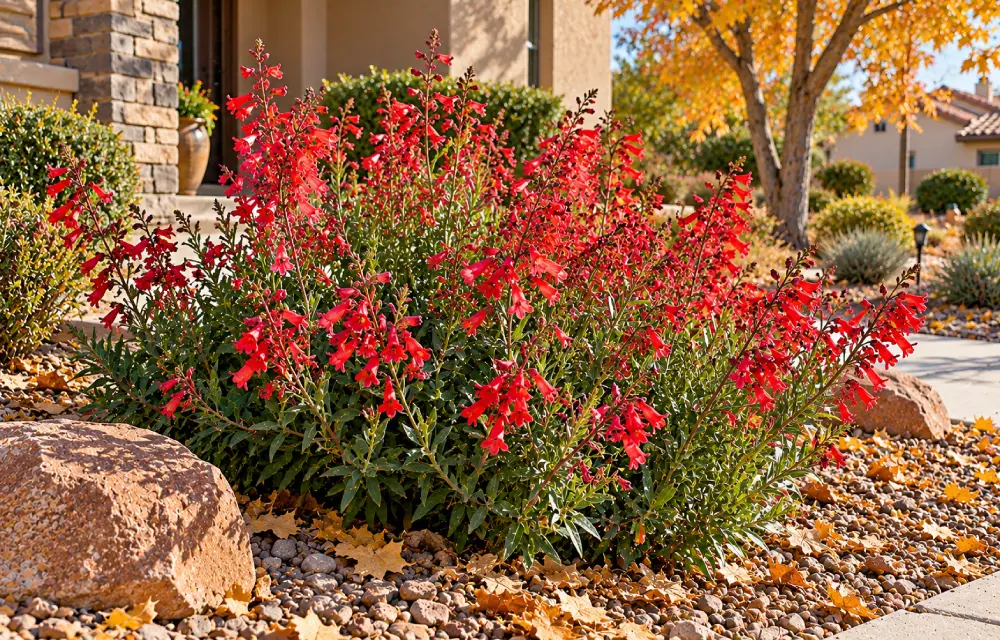
Penstemons are some of my favorite flowering plants for Southwest landscapes.
There are numerous varieties, and many are well adapted to our dry climate.
Once the flowers finish blooming, Penstemon develops seed capsules along its stems. Leaving those stems alone allows the seeds to mature and possibly scatter naturally around the garden.
That’s especially useful if you would like your Penstemons to spread.
The standing stems can also provide winter habitat for small beneficial insects.
Wait until late winter or early spring to do your major cleanup.
If a stem is broken, diseased, or obviously causing a problem, you can remove it. Otherwise, there isn’t much reason to give Penstemon a severe fall haircut.
7. Agastache
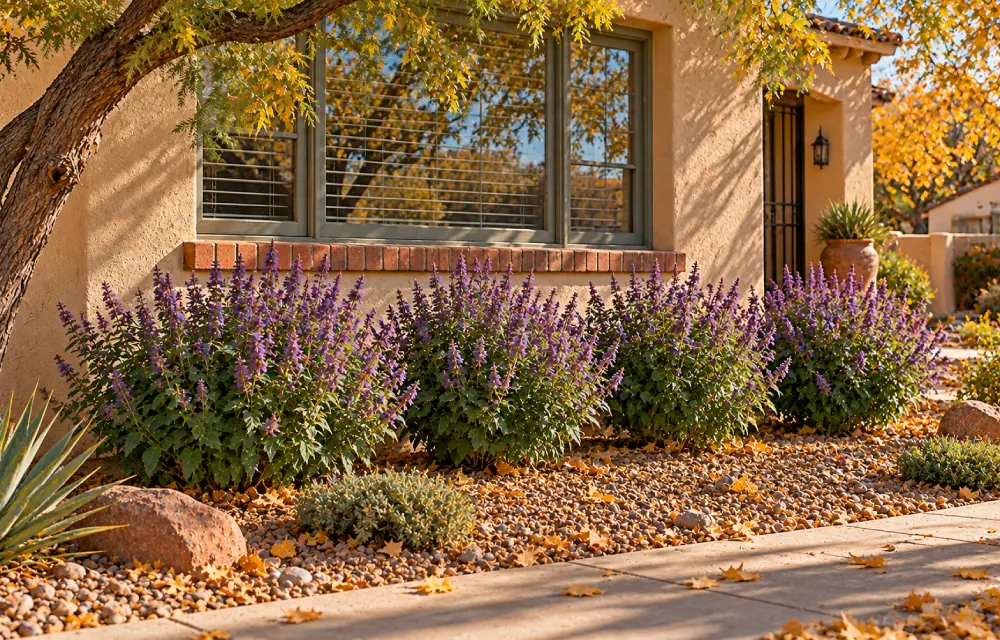
Agastache, sometimes called hummingbird mint or hyssop, is an outstanding choice for a Southwest pollinator garden.
During the growing season, its colorful flower spikes attract hummingbirds, bees, and butterflies.
After flowering, the dried stems and seed heads can continue to have value.
Birds may feed on the seeds, while the standing stems provide additional winter structure and habitat.
Agastache can also be sensitive to excessive winter moisture, so avoid piling heavy layers of wet mulch directly against the crown.
This is especially important in heavy or poorly draining soil.
Leave the old stems standing and wait until late winter or early spring to cut them back.
When new growth begins appearing near the base, you’ll know it’s time to clean up last year’s stems.
8. Salvia
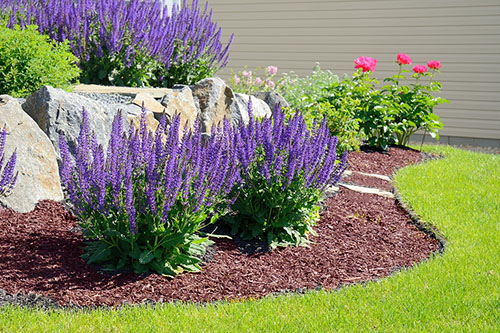
There are many types of Salvia that grow well in New Mexico, including several perennial varieties.
During spring, summer, and fall, their flowers are magnets for hummingbirds, bees, and other pollinators.
Once cold weather arrives, the upper growth on many perennial Salvias may turn brown and look dead.
Don’t be too quick to cut everything to the ground.
Those old stems can provide some extra protection around the base of the plant during winter. Waiting also makes it easier to see exactly where new growth will emerge once temperatures begin warming again.
Some Salvias can remain partly evergreen during a mild winter, while others may die back considerably after a hard freeze.
Either way, there is usually no need for aggressive fall pruning.
In late winter or early spring, remove the dead stems and shape the plant as needed.
You should soon see fresh growth appearing.
9. Russian Sage

Russian Sage is one of the toughest flowering plants for our hot, dry climate.
Its lavender-blue flowers provide color for a long period, and the plant handles our intense sunlight remarkably well once established.
After a hard freeze, the stems will eventually turn gray or brown.
This is where many homeowners immediately reach for their pruning shears.
There is no hurry.
Leaving the stems standing during winter provides some protection for the base of the plant and gives the landscape a little structure during the dormant season.
Wait until late winter or early spring before doing your major pruning.
As new growth begins to appear, remove the old growth and reshape the plant. Avoid cutting into the plant unnecessarily during fall when cold weather is still ahead.
Russian Sage is a tough plant, and sometimes the best care you can give it during fall is simply to leave it alone.
10. Ornamental Grasses
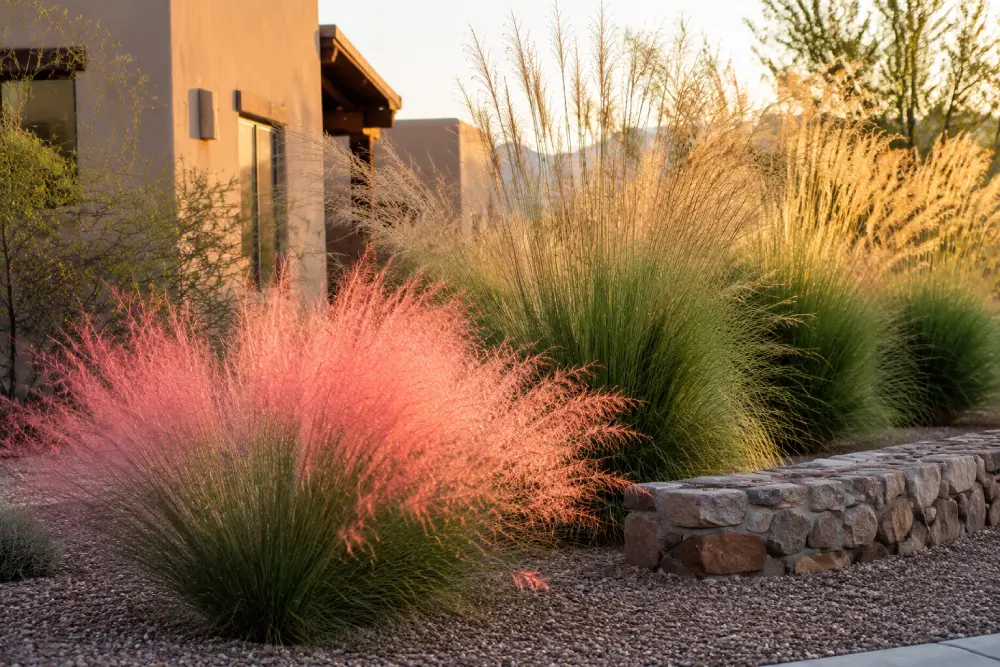
Ornamental grasses are some of the last plants you should cut back in fall.
Many popular grasses, including Pink Muhly Grass, Deer Grass, Blue Grama, Fountain Grass, and Dwarf Pampas Grass, develop attractive seed heads or plumes that can remain standing well into winter.
Those dried flower stalks aren’t just for looks.
They can provide seeds for birds, while the dense foliage and stems can offer shelter for beneficial insects and other small wildlife during the colder months.
Ornamental grasses also add movement and texture to an otherwise quiet winter landscape. On windy days, the dried foliage and seed heads sway in the breeze, and on frosty mornings they can look surprisingly attractive.
Another reason to leave ornamental grasses alone is protection.
The old foliage can help shield the crown of the plant from freezing temperatures and sudden temperature changes.
Here in southern New Mexico, our winter weather can change quickly. We may have several mild, sunny days followed by a hard nighttime freeze.
Don’t cut ornamental grasses down in fall.
Instead, leave them standing throughout the winter.
In late winter or early spring, before fresh growth begins, cut the old foliage back. Depending on the type and size of the grass, you can usually leave several inches of old growth above the ground.
Once warmer weather arrives, new green growth will quickly begin hiding the cut stems.
Here’s a little trick that makes the job easier.
If you have a large ornamental grass, tie the old foliage together with twine before cutting it. You can then cut underneath the tied bundle and remove most of the old foliage in one piece instead of chasing dried grass blades all over the yard. NMSU: Ornamental Grasses for New Mexico Landscape
Why you Shouldn’t Prune trees in the fall
Why You Shouldn’t Cut Back These Plants in Fall?
For years, gardeners were encouraged to make landscapes perfectly clean before winter.
Cut everything down. Rake everything up. Remove every brown stem.
But there are advantages to allowing at least part of the garden to remain natural.
Dried flower heads can provide seeds for birds.
Standing stems can provide places for beneficial insects to spend the winter.
Old foliage can help protect the crowns of some perennial plants.
And ornamental grasses and dried flower heads can provide some much-needed texture and interest in the winter landscape.
There is also another consideration here in the Desert Southwest.
Our fall weather doesn’t always cool down gradually.
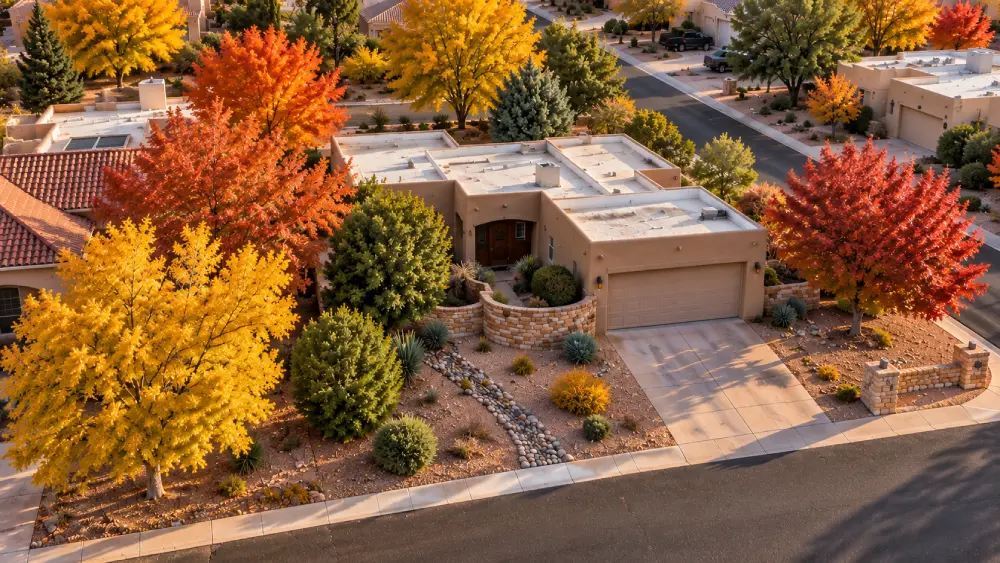
We can have warm temperatures well into fall, followed by a sudden cold snap. Pruning certain plants too early can sometimes encourage new growth that doesn’t have enough time to harden off before freezing weather arrives. Penn State Extension: Fall Garden Care for Pollinators
There is usually no reason to rush.
When Should You Cut Plants Back?
For most of the flowering perennials listed above, late winter to early spring is a better time for major cleanup.
Watch the base of the plant.
When you begin seeing small green shoots emerging, that’s usually a good indication that the plant is waking up and last year’s growth can be removed.
Use clean, sharp pruning shears and remove the old stems without damaging the new growth underneath.
Don’t wait too long, either.
Once fresh growth becomes mixed with last year’s dried stems, pruning becomes more difficult, and it’s easier to accidentally cut the new growth.
For ornamental grasses, try to get the job done before the fresh green blades begin growing through the old foliage.
When You SHOULD Remove Old Growth
Leaving plants untouched doesn’t mean you should ignore obvious problems.
Remove plant material if you see signs of serious disease, rot, or insect infestation.
Diseased leaves and stems lying underneath a plant can sometimes allow problems to carry over into the following growing season.
You can also remove broken stems or branches that are rubbing against other plants, blocking a walkway, or creating another problem.
And, of course, continue pulling weeds.
The idea isn’t to abandon your garden for the winter.
It’s simply to avoid unnecessary pruning.
Don’t Make Your Yard Too Clean
A perfectly manicured winter landscape isn’t always the healthiest landscape.
A few dried flower heads, brown stems, seed heads, and fallen leaves aren’t necessarily a bad thing.
Nature doesn’t clean everything up in November.
By leaving plants such as Purple Coneflower, Black-eyed Susan, Blanket Flower, Yarrow, Autumn Joy Sedum, Penstemon, Agastache, Salvia, Russian Sage, and Ornamental Grasses standing through winter, you can provide food and shelter for wildlife while giving some of your plants additional protection from cold weather.
Then, as winter begins winding down in southern New Mexico, you can head outside with your pruning shears and start cleaning things up before spring growth takes off.
Sometimes the best thing you can do for your flowering plants in fall is very simple.
Leave them alone.
At Guzman’s Garden Centers in Las Cruces, we carry many flowering perennials and ornamental grasses that perform well in southern New Mexico and throughout the Desert Southwest. Stop by either of our Las Cruces locations, and we’ll help you choose plants that fit your landscape, sunlight, and watering conditions.
New to Southwest Gardening?
Stop wasting money on plants that will not survive our heat and drought.
My Southwest Gardening Made Simple eBook shows you which trees, shrubs, flowers, and vegetables actually thrive in New Mexico, Arizona, and West Texas.
The best plants for hot, dry climates
Common mistakes that kill Southwest plants
Easy-to-follow advice for beginners

Paul Guzman is a lifelong Southwest gardener and gardening writer with decades of experience helping homeowners grow beautiful landscapes in the desert Southwest. He writes for Guzman’s Garden Centers in Las Cruces, New Mexico, with contributing expertise from Gary Guzman, owner of Guzman’s Garden Centers. If you have any questions or enjoyed this post, feel free to share your thoughts in the comments below.