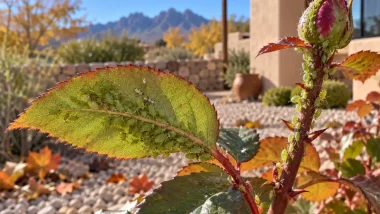
Why Are the Leaves Curling on My Peach or Plum Tree?. Curled leaves on a peach or plum tree can look alarming, but they do not always mean the tree has a serious disease. In Las Cruces and across southern New Mexico, the most common possibilities include aphids, heat or water stress, and peach leaf curl disease.
The appearance of the leaves—and what you find underneath them—can help you identify the problem before applying an insecticide or fungicide.
Start by Looking Inside the Curled Leaves
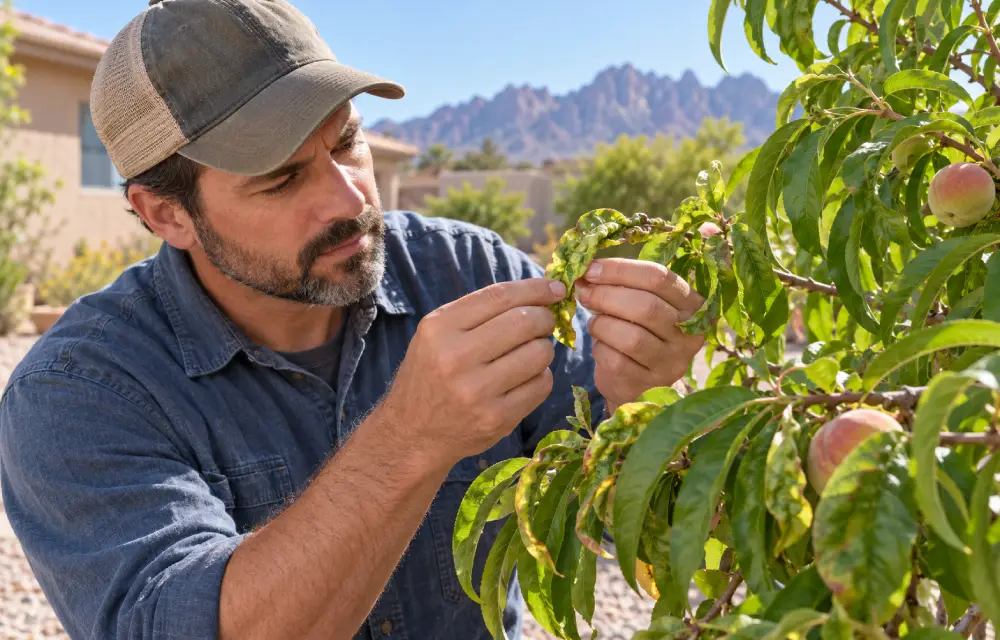
Gently unfold several curled leaves, especially those near the ends of young branches.
Look for:
- Small green, yellow, pink, or brown insects
- Sticky leaves or shiny residue
- Ants traveling along branches
- Black sooty material on leaves or fruit
- Ladybugs, lacewing larvae, or other beneficial insects
- Thickened, puckered leaves with red or purple coloring
- Dry, brown leaf edges without insects or sticky residue
Check more than one branch. A single damaged shoot may not represent the condition of the entire tree.
Aphids on Peach and Plum Trees
Aphids are small, soft-bodied insects that feed by drawing sap from tender new growth. Green peach aphids and leaf curl plum aphids are among the aphids that may infest fruit trees in New Mexico.
Leaf curl plum aphids can attack plums, peaches, cherries, and other trees in the Prunus group. Their feeding causes young leaves to curl tightly around the insects.
Aphid damage is most noticeable during spring when trees are producing tender foliage.
Signs of an aphid infestation
Look for:
- Curled or distorted young leaves
- Clusters of tiny insects inside the curled foliage
- Sticky honeydew on leaves and branches
- Ants moving up and down the tree
- Black sooty mold growing on the honeydew
- Premature leaf, flower, or young-fruit drop in a heavy infestation
Aphids may be difficult to see after the leaves curl because the damaged foliage shelters them.
Why are ants on the tree?
Ants do not usually cause the curled leaves. They are attracted to the sugary honeydew produced by aphids.
Ant activity can therefore be an early clue that sap-feeding insects are present. Follow the ants and examine the undersides and folded portions of nearby leaves.
Ants may also protect aphids from predators, making it harder for beneficial insects to reduce the infestation.
Do All Aphids Need to Be Sprayed?
No. Established trees can often tolerate a small aphid population without lasting harm.
Before treating the tree, look for natural predators such as:
- Ladybugs and their larvae
- Green lacewing larvae
- Hoverfly larvae
- Parasitized aphids, sometimes called aphid mummies
These beneficial insects can reduce an aphid population naturally. A broad-spectrum insecticide may kill the helpful insects along with the aphids and allow the pest problem to return.
On accessible branches, a firm stream of water may dislodge exposed aphids. Insecticidal soap or horticultural oil may help when treatment is justified, but the spray must contact the insects directly. Aphids hidden inside tightly curled leaves are difficult to reach.
Always read and follow the product label. Avoid spraying during the hottest part of a Las Cruces afternoon or when bees are actively visiting flowers.
Heat and Water Stress
Hot, dry weather can also cause peach and plum leaves to curl or fold. This helps the tree reduce the amount of leaf surface exposed to intense sunlight and dry air.
Heat or water stress is more likely when:
- Leaves curl during the hottest part of the day
- The soil is dry several inches below the surface
- Leaf tips or edges are brown and crisp
- There is no honeydew, sooty mold, or aphid colony
- The tree was planted recently
- Drip emitters are clogged or no longer reach the expanding root zone
- Rock or reflected heat surrounds the tree
Newly planted fruit trees have limited root systems and may show stress sooner than established trees.
How to check the soil
Do not judge soil moisture by looking only at the surface. Dig carefully several inches deep near the outer portion of the root area.
If the soil is dry below the surface, water slowly and deeply. Avoid giving the tree a small amount of water every day. Shallow watering encourages roots to remain close to the hot soil surface.
As the tree grows, move or add drip emitters so water reaches beyond the original planting hole. Keep mulch a few inches away from the trunk and spread it over the root area to reduce evaporation and moderate soil temperature.
Could It Be Peach Leaf Curl Disease?
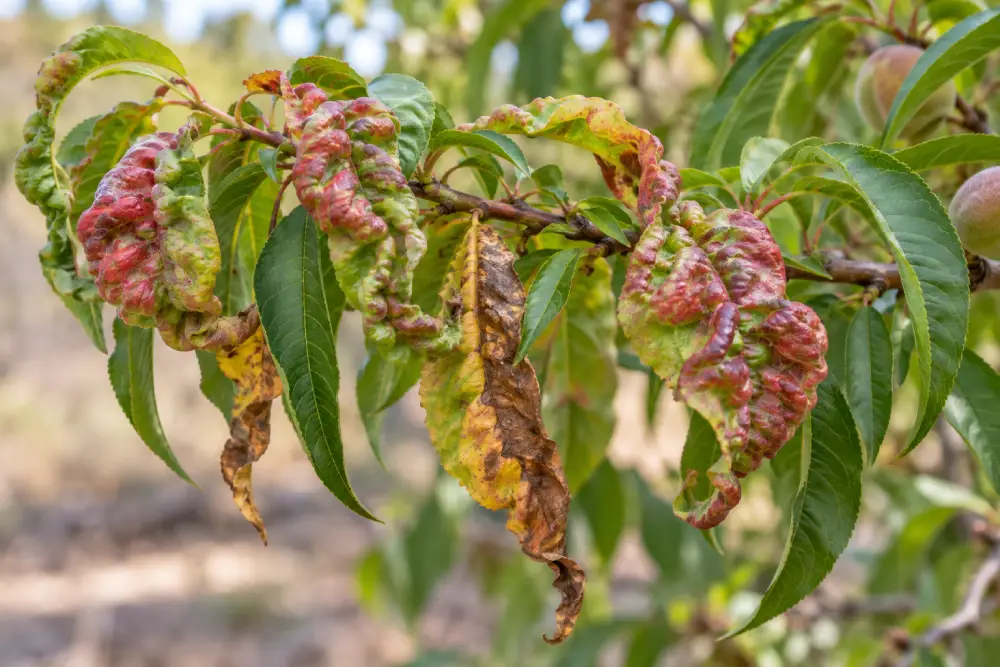
Peach leaf curl is a fungal disease caused by Taphrina deformans. It primarily affects peaches and nectarines—not plum trees.
The disease usually develops when cool, wet weather occurs as buds swell and new leaves emerge. Because southern New Mexico is normally dry, severe outbreaks may be less frequent than in wetter climates, but they can occur after favorable spring weather.
Signs of peach leaf curl
Affected leaves may become:
- Thickened and puckered
- Twisted or severely distorted
- Red, pink or purple
- Yellow and eventually brown
- More swollen-looking than leaves damaged by heat stress
Unlike aphid damage, you will not find an insect colony inside the curled leaves. Peach leaf curl also does not produce sticky honeydew.
Once symptoms appear in spring, a fungicide will not cure the affected leaves. Severely damaged foliage may fall, and the tree may produce a later flush of healthier leaves.
Preventive treatment, when warranted, must be applied during dormancy according to the product label—before buds open and infection occurs. Bring a sample to a knowledgeable garden center or contact your county Extension office before treating, since aphid damage and peach leaf curl require completely different approaches.
Quick Comparison: Aphids, Heat Stress or Disease?
Aphids
- Usually affect tender new growth
- Tiny insects may be hidden inside curled leaves
- Leaves may feel sticky
- Ants are frequently present
- Sooty mold may develop
- Peach and plum trees may both be affected
Heat or water stress
- Curling may become worse during hot afternoons
- Leaf edges may become dry or brown
- Soil may be dry below the surface
- No insects, honeydew or sooty mold
- Often connected to inadequate or poorly placed irrigation
Peach leaf curl disease
- Primarily affects peaches and nectarines
- Leaves become thick, puckered, and unusually distorted
- Red, pink, or purple areas may develop
- No aphids or sticky honeydew
- Infection occurs as foliage emerges, but prevention must begin during dormancy
Late-Winter Inspection Checklist
Inspect peach and plum trees before spring growth begins.
- Check twigs and areas around buds for insect eggs or scale-like material.
- Remove dead, damaged and crossing branches.
- Inspect drip emitters for clogs and leaks.
- Make sure irrigation reaches the tree’s expanding root zone.
- Remove mummified fruit remaining on the tree or ground.
- Clean up heavily diseased fallen leaves.
- Avoid applying more fertilizer than the tree needs.
- Confirm the diagnosis before using dormant oil, copper or another pesticide.
- Read the label to make sure the product is approved for the tree and the problem.
- Do not apply oil or fungicide simply because leaves curled the previous year.
Dormant treatments are preventive tools, not automatic annual requirements. The correct product and timing depend on whether the previous problem involved aphids, fungal disease or environmental stress.
When to Ask for Help
Bring several affected leaves and a few inches of attached stem to Guzman’s Garden Centers. Place the sample in a sealed plastic bag so insects do not escape.
Photographs are also helpful. Take pictures of:
- The entire tree
- The damaged branches
- Both sides of the affected leaves
- The trunk and soil around the tree
- The irrigation emitters
- Any aphids, ants, honeydew, or beneficial insects
The more information you provide, the easier it is to distinguish an insect problem from disease or improper watering.
Correct identification matters. Aphids, heat stress, and peach leaf curl can all produce curled foliage, but each problem requires a different response. Checking inside the leaves, feeling the soil and noting whether the foliage is sticky or discolored can prevent unnecessary spraying and help protect your fruit tree.
More information at NMSU website here.

New to Southwest Gardening?
Stop wasting money on plants that will not survive our heat and drought.
My Southwest Gardening Made Simple eBook shows you which trees, shrubs, flowers, and vegetables actually thrive in New Mexico, Arizona, and West Texas.
The best plants for hot, dry climates
Common mistakes that kill Southwest plants
Easy-to-follow advice for beginners

Paul Guzman is a lifelong Southwest gardener and gardening writer with decades of experience helping homeowners grow beautiful landscapes in the desert Southwest. He writes for Guzman’s Garden Centers in Las Cruces, New Mexico, with contributing expertise from Gary Guzman, owner of Guzman’s Garden Centers. If you have any questions or enjoyed this post, feel free to share your thoughts in the comments below.