Plants too close to walls can cause more problems than you might think. Whether you have a block wall, rock wall, stucco home, or wooden fence, giving your plants enough room to grow is important.
Here in Las Cruces and throughout the Desert Southwest, I often see shrubs planted right up against a wall. They look fine when they’re small, but a few years later, the branches are pushing against the wall, the plants are growing unevenly, and pruning becomes a chore.
My recommendation is to leave at least 2 feet of open space between a plant’s mature foliage and the wall. Many larger shrubs will need considerably more room. Two feet is a starting point, not a rule for every plant.
Here are eight good reasons why proper plant spacing matters.
1. Better Air Circulation Around Your Plants
Plants need good air circulation to stay healthy. When branches and leaves are pressed against a wall, air cannot move freely around the foliage.
This can create pockets of moisture, especially during our summer monsoon season.
Poor air movement can encourage certain fungal diseases and other plant problems. Leaving open space helps foliage dry more quickly after rain or irrigation.
Even here in our dry Southwestern climate, good airflow matters.
2. Walls Reflect Intense Summer Heat
If you live in Las Cruces, you already know how hot our summer afternoons can get.
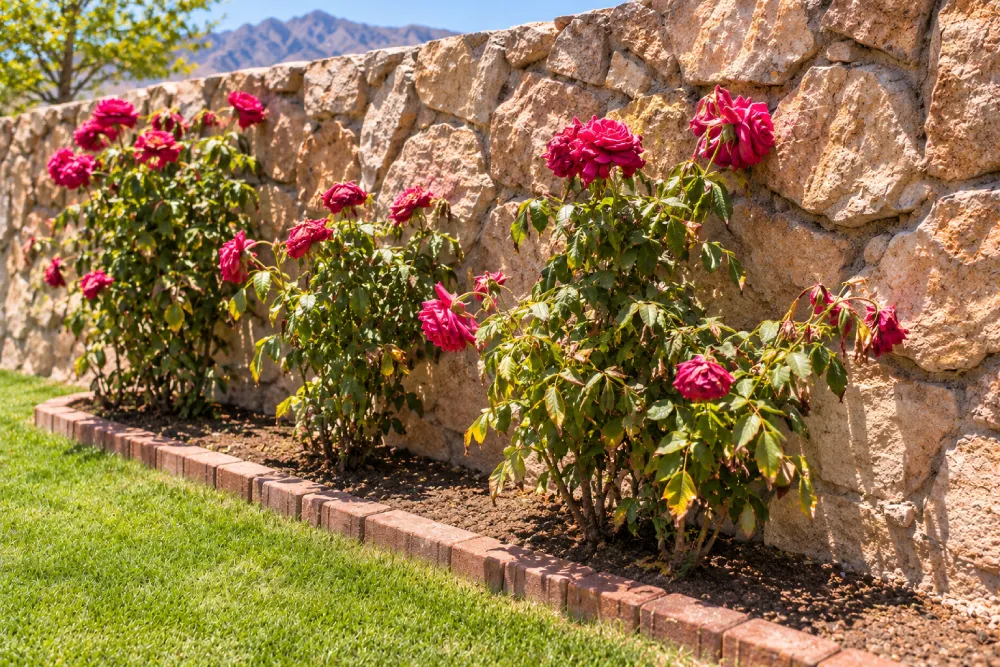
Concrete block walls, stucco surfaces, and rock walls absorb heat during the day. Some also reflect sunlight directly onto nearby plants.
A shrub planted too close to a hot west-facing wall may experience:
- Burned or brown leaf edges
- Wilting during extreme heat
- Increased water requirements
- Slower growth on the side facing the wall
Not every wall creates the same problem. South- and west-facing walls are usually the ones to watch during summer.
Giving your plants extra room can reduce direct contact with hot surfaces, although spacing alone will not eliminate reflected heat.
3. Easier Pruning and Maintenance
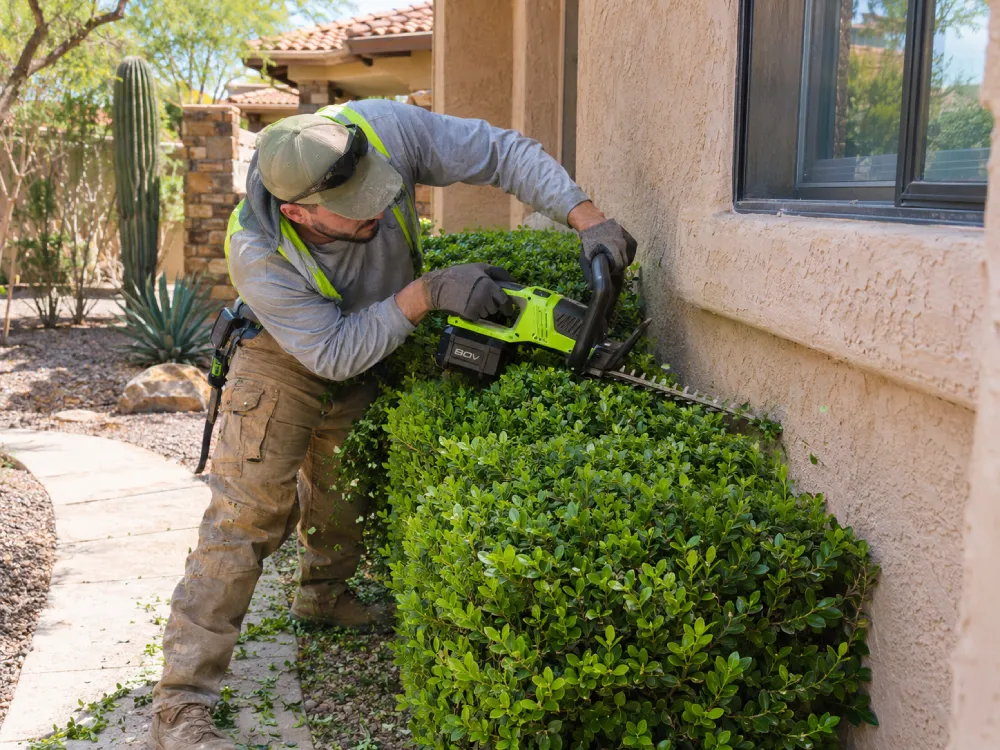
Have you ever tried pruning a large shrub that is growing right against a wall?
It’s not easy!
You end up reaching through branches, cutting from awkward angles, and sometimes damaging the plant just to reach the backside.
Leaving enough space makes it easier to trim, inspect, and maintain your plants.
This is especially important for Texas sage, oleanders, pittosporum, and other shrubs commonly planted in Southwestern landscapes.
And remember, shrubs don’t stay the size they were when you purchased them.
4. Helps Reduce Insect and Rodent Problems
Dense plants growing against walls can provide hiding places for unwanted pests.
Rodents may find shelter underneath thick foliage. Ants and other insects can also use branches touching a house as a convenient route toward the building.
Keeping shrubs trimmed and separated from walls makes it easier to spot pest activity.
It also helps you inspect the area for holes, nests, or other signs of trouble.
You don’t need to eliminate every insect from your landscape. Many are beneficial. The goal is to avoid creating unnecessary hiding places next to your home.
5. Prevents Plants From Growing Unevenly
Plants naturally grow toward available sunlight.
When a shrub is planted directly against a tall wall, the side facing the wall may receive very little light.
Over time, the plant can become lopsided, with most of its branches growing outward toward the sun.
I’ve seen shrubs that look nice from the front but are almost completely bare on the backside.
Proper spacing allows the plant to develop a more natural shape.
If you’re planning a new landscape, take a look at our 10 Desert Landscaping Ideas for Southwestern Homes for more tips on choosing and placing plants.
6. Protects Walls and Foundations
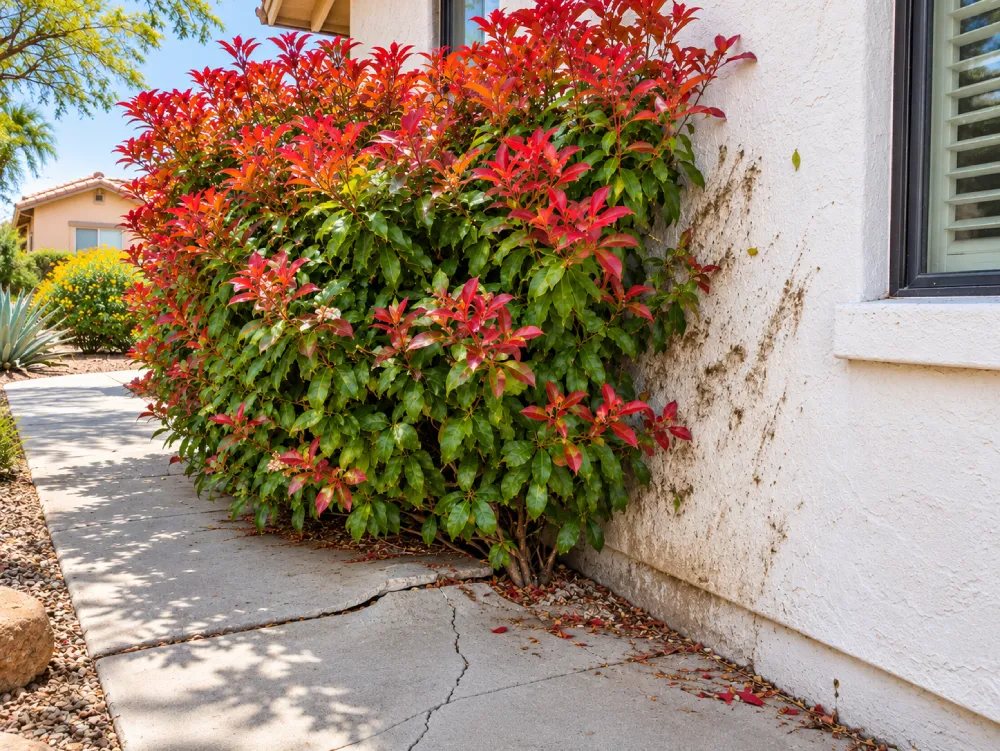
Plants themselves are not always the problem. Sometimes it’s how close they’re planted and how much water they receive. Red tip Photinia too close to home wall.
Irrigation directed toward a wall or foundation may contribute to moisture problems over time.
Large roots can also interfere with existing cracks, joints, or nearby paving, depending on the plant and soil conditions.
In the Southwest, some soils expand and contract as moisture levels change. That’s another reason to be careful about watering close to foundations.
Use drip irrigation when possible, avoid spraying water directly against walls, and make sure water drains away from your home.
Important: Trees need much more separation than 2 feet. Always consider their mature root systems, canopy size, and distance from structures.
7. Gives Plants Room to Reach Their Mature Size
This is probably one of the most common landscaping mistakes I see.
Someone purchases a small shrub in a 1-gallon or 5-gallon container and plants it 12 inches from a wall.
Two or three years later, that same shrub may be 5 or 6 feet wide!
Now the branches are pressing against the wall, and the homeowner is constantly trimming it back.
Before buying any shrub, check its mature height and width.
For example, if a shrub grows 6 feet wide, its branches may extend about 3 feet outward from the center.
To maintain a 2-foot gap between the mature plant and the wall, you would need to plant its center approximately 5 feet away.
That’s why planning ahead is so important.
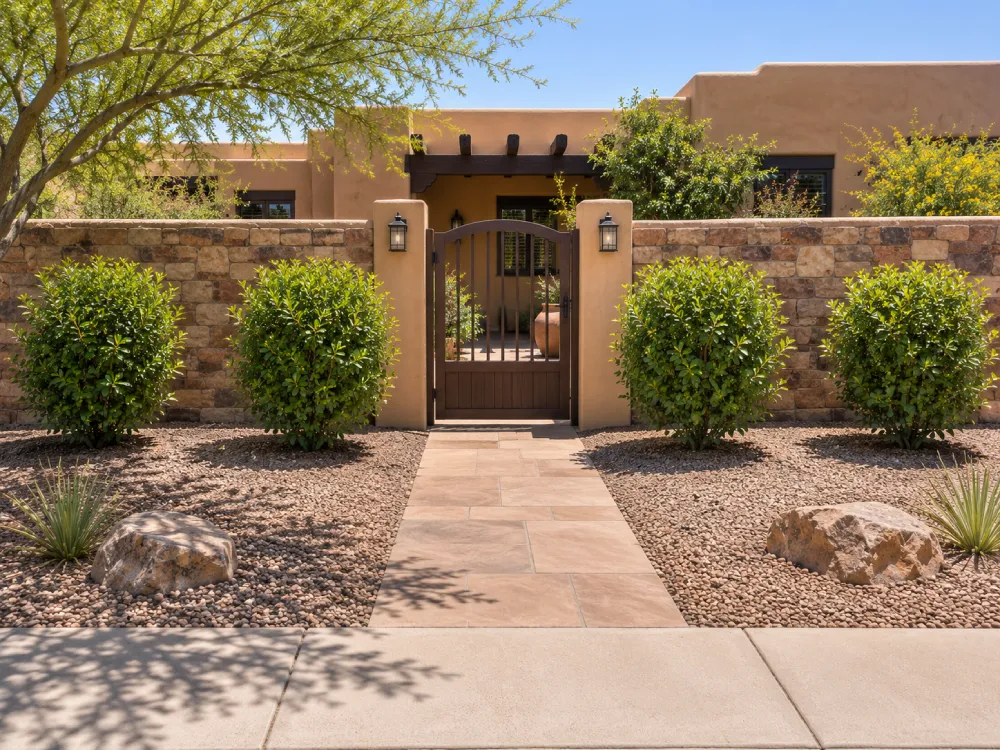
And before purchasing, read our guide on How to Pick Healthy Plants. Starting with a healthy plant and putting it in the right location can save you problems later.
8. Makes Your Landscape Look Better
Sometimes less is more when it comes to landscaping.
A row of shrubs pressed tightly against a wall can look overcrowded and unnatural.
Leaving a little open space creates a cleaner appearance and allows individual plants to show off their natural shape.
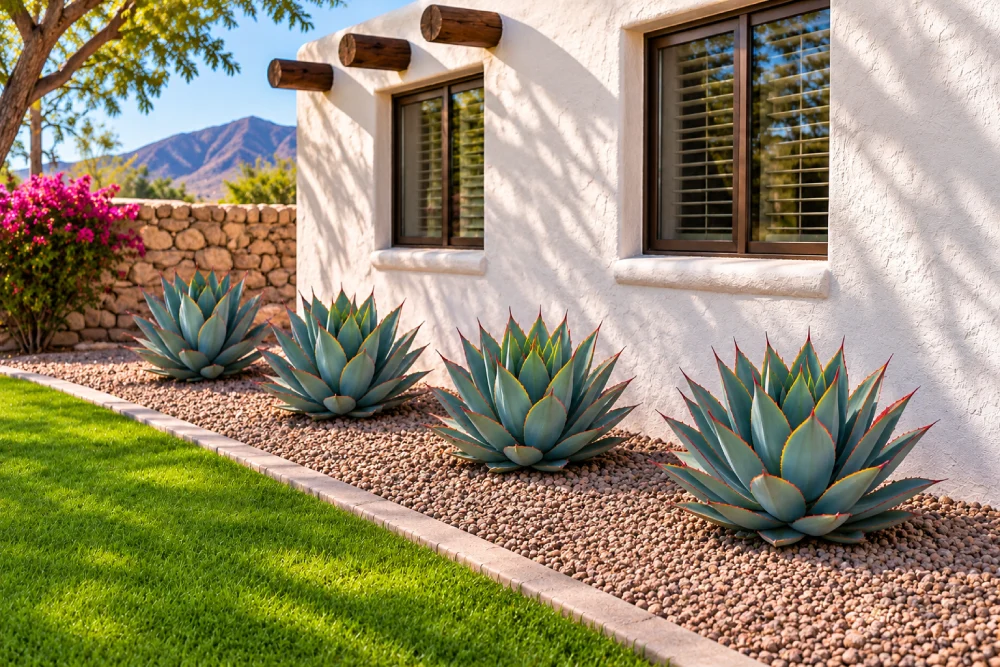
Decorative gravel or small rock can help finish the area without filling every inch with vegetation.
In Southwestern landscaping, open space is part of the design.
You don’t have to cover every bare spot with another plant.
How Far Should Plants Be From a Wall?
The correct distance depends on the mature size of the plant, the type of wall, and how much room you want for maintenance.
Here’s a simple guide:
| Plant type | Spacing recommendation |
|---|---|
| Small flowering perennials | Allow room for mature growth and airflow |
| Compact shrubs | Aim for at least 2 feet of clearance from mature foliage |
| Medium and large shrubs | Often 3–5 feet or more of mature clearance |
| Small ornamental trees | Several feet beyond shrub spacing, depending on species |
| Large shade trees | Much farther away; evaluate mature size and roots |
Remember: Measure the distance from the wall to the plant’s expected mature foliage, not just the trunk or center of the plant.
For more information, the University of Florida IFAS Extension explains why spacing shrubs away from buildings helps improve airflow and makes maintenance easier.
The Clemson University Extension also offers helpful advice on foundation plantings and clearance around homes.
Frequently Asked Questions
Can plants damage a block wall?
Some large trees and vigorous plants may cause problems, especially where roots encounter existing cracks or weak structures. Smaller shrubs are usually less concerning, but they still need room to grow.
Is 2 feet enough space between shrubs and a wall?
Not always. Two feet of clearance beyond the mature foliage is a useful starting point for many shrubs. Larger plants may need considerably more room.
Can I plant Texas sage next to a wall?
Yes, but leave enough room for its mature width. Some Texas sage varieties grow 5–6 feet wide or more.
Why are my plants turning brown next to a wall?
Reflected heat, insufficient water, poor drainage, and excessive sunlight are possible causes. Check the soil moisture and inspect the foliage before deciding what is wrong.
Should I remove shrubs already growing against my house?
Not necessarily. Start by checking their mature size, health, and whether they’re trapping moisture or blocking access. Some can be selectively pruned, while others may be better relocated during mild weather.
Final Thoughts
Keeping plants away from walls is one of the simplest ways to prevent future landscaping problems.
A little extra room improves airflow, makes maintenance easier, reduces crowding, and allows plants to grow naturally.
My advice: Before planting anything along a wall, step back and imagine what that plant will look like five years from now.
Will it still fit comfortably in that space?
If not, move it farther away before you plant it.
If you’re unsure which shrubs will work best along your backyard wall, stop by Guzman’s Garden Centers in Las Cruces. We can help you choose plants that fit your space and handle our Southwestern growing conditions.
Have you ever planted a shrub too close to a wall and regretted it later? Let us know in the comments below.
New to Southwest Gardening?
Stop wasting money on plants that will not survive our heat and drought.
My Southwest Gardening Made Simple eBook shows you which trees, shrubs, flowers, and vegetables actually thrive in New Mexico, Arizona, and West Texas.
The best plants for hot, dry climates
Common mistakes that kill Southwest plants
Easy-to-follow advice for beginners

Paul Guzman is a lifelong Southwest gardener and gardening writer with decades of experience helping homeowners grow beautiful landscapes in the desert Southwest. He writes for Guzman’s Garden Centers in Las Cruces, New Mexico, with contributing expertise from Gary Guzman, owner of Guzman’s Garden Centers. If you have any questions or enjoyed this post, feel free to share your thoughts in the comments below.