Plant Fungal Diseases. White powder on your roses? Rust-colored spots underneath your hollyhock leaves? These can be signs of plant fungal diseases. But before you reach for a spray, take a closer look. Sunburn, watering problems, insects, and nutrient deficiencies can leave damage that looks like a disease.
Here in Las Cruces, our dry climate does not keep every fungal problem away. Rainy weather, crowded plants, and irrigation that keeps foliage wet can create opportunities for disease. Some fungi, including powdery mildew, can infect plants without water sitting on the leaves.
The best place to start is with the plant, the symptoms, and the conditions around it.
How to Identify Plant Fungal Diseases
Start by identifying the plant. A disease that affects roses may not be the same problem causing spots on your squash.
Next, look at the whole plant rather than one damaged leaf. Check:
- Leaf surfaces: Look for powdery growth, spots, discoloration, or dead patches.
- Leaf undersides: Rust pustules and other signs may be easier to see underneath.
- New growth: Notice whether young leaves are curled, thickened, or distorted.
- The pattern: Is the damage scattered, concentrated on lower leaves, or mostly on the sunny side?
- Soil moisture: Check below the surface before deciding the plant needs more water.
Think about when the problem started, too. Did symptoms follow a rainy spell, a change in irrigation, or several days of intense heat?
Photos help you narrow down a problem, but they do not always confirm the cause. Different diseases can produce similar symptoms, and some problems require laboratory testing.
Common Plant Fungal Diseases to Recognize
These examples give you a starting point. They are not a list of every disease you might find, and their likelihood depends on your plants and growing conditions.
1. Powdery Mildew

Powdery mildew often looks like someone dusted the leaves with flour. White or gray patches may appear on leaves, tender stems, and flower buds. Affected growth can become distorted.
Roses, zinnias, squash, and many other plants can develop powdery mildew, although different fungi affect different hosts.
One thing surprises many gardeners: powdery mildew does not need wet leaves to infect a plant. It can become a problem even when the weather seems too dry for fungus.
What you can do: Give plants appropriate sunlight and enough room for air movement. Choose resistant varieties when available. If treatment is needed, use a product labeled for powdery mildew on your particular plant. Early treatment is generally easier than managing a severe infection.
2. Rust Diseases
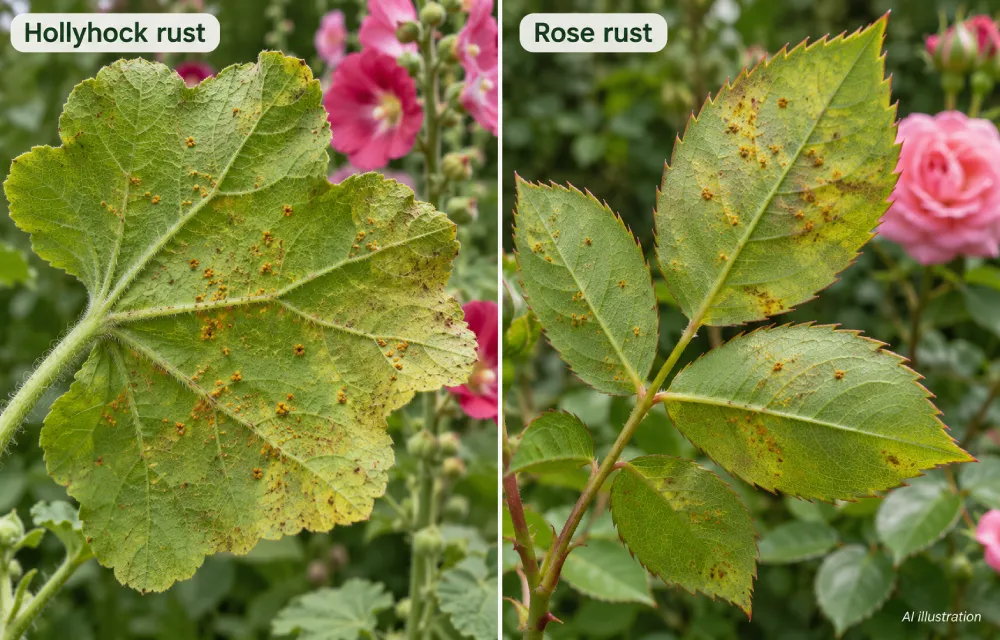
Rust often produces raised, dark powdery spots on the undersides of leaves. Depending on the disease, these may be orange, yellow, reddish brown, or another dark color.
You may first notice pale spots on the upper leaf surface. Turn the leaf over before deciding what is wrong.
Rust can affect plants such as roses and hollyhocks. The fungi involved often have specific hosts, so rust on one plant does not mean every nearby plant will become infected.
What you can do: Remove affected material where practical, clean up fallen infected leaves, and reduce prolonged leaf wetness. Some infections may need a labeled fungicide, especially when damage continues to develop.
3. Black Spot on Roses
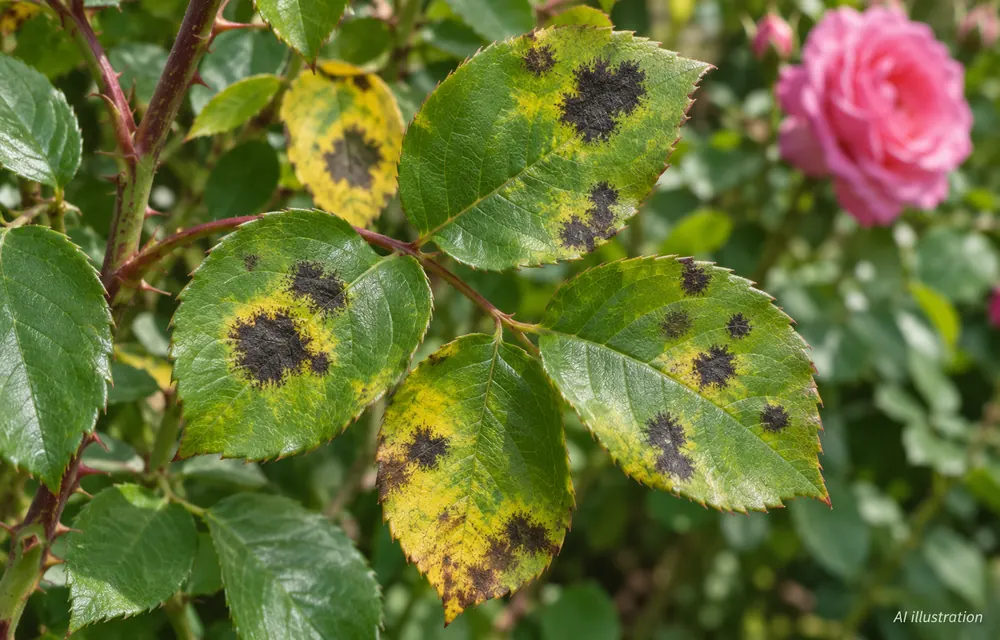
Black spot causes dark spots on rose leaves, often followed by yellowing and leaf drop.
It is generally a bigger problem in wetter climates than in the dry Southwest. However, roses whose leaves stay wet from sprinklers or rainy weather can still develop the disease.
What you can do: Adjust sprinklers so they do not repeatedly soak the foliage, especially overnight. Remove fallen infected leaves and consider resistant rose varieties. Where black spot keeps returning, preventive treatment may be needed; spraying will not turn damaged leaves green again.
4. Peach Leaf Curl
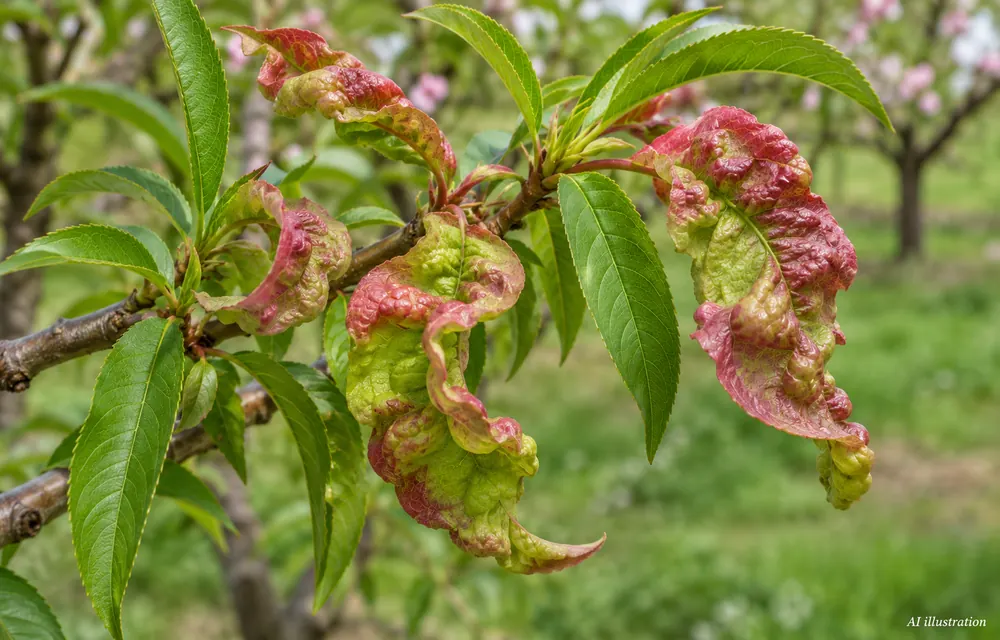
Peach leaf curl affects peaches and nectarines. In spring, infected leaves may become thickened, puckered, curled, and reddish.
However, curled leaves alone do not prove peach leaf curl. Insects and other stresses can also distort foliage.
What you can do: Get the problem identified and plan ahead. Treatment for peach leaf curl is preventive, during the dormant season after leaf drop and before new growth begins. Spraying after the leaves become distorted will not repair them. Follow the product label and locally appropriate timing.
5. Fire Blight on Pear Trees
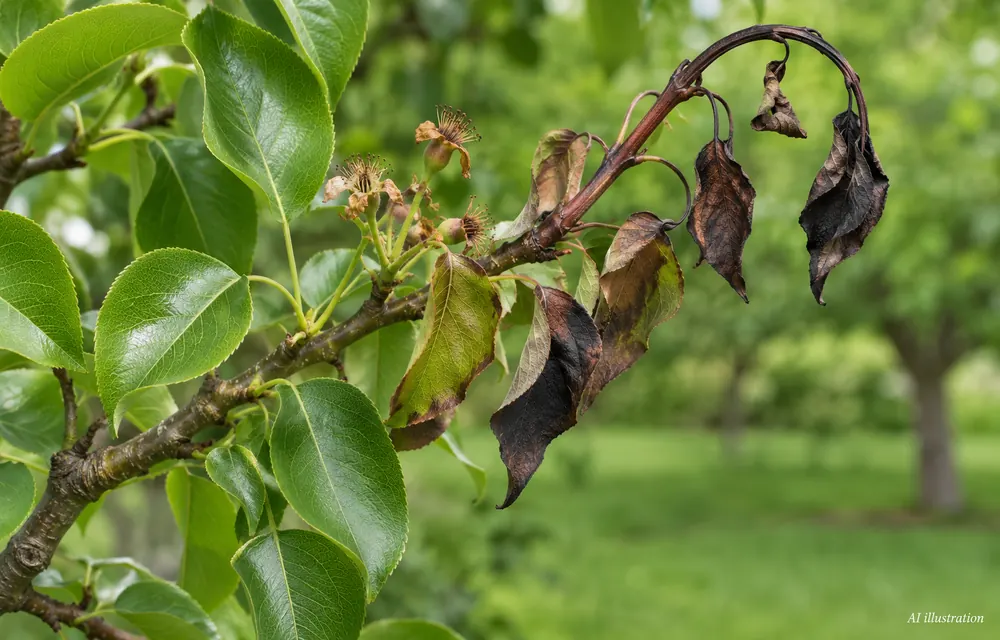
Fire blight can make a pear tree look as though someone scorched its branches. Blossoms turn brown or black, leaves wilt, and young shoots may bend into a hook at the tip. Dead leaves often remain attached to the branches. Fire blight is caused by bacteria, not a fungus, so a general-purpose fungicide is not the answer.
If you suspect fire blight, have the problem identified before pruning. Infected branches usually need to be removed well below visible damage, preferably during dry weather while the tree is dormant. Disinfect pruning tools between cuts, avoid excessive nitrogen fertilizer, and get expert advice if damage reaches a main limb or trunk. In Las Cruces, the NMSU Plant Diagnostic Clinic can help confirm the cause and recommend your next steps.
Is It Fungus or Something Else?
A yellow or brown leaf is a symptom, not a diagnosis. Before buying a fungicide, ask a few questions.
Is the damage mostly on the exposed side? Think about sun, reflected heat, and drying wind.
Is the plant wilting even though the soil stays wet? Check irrigation and drainage instead of automatically adding more water.
Are leaves sticky, chewed, or covered with insects? Look closely at leaf undersides and new growth.
Did several different plants develop damage at the same time? Consider a shared cause, such as weather, irrigation, or a recent spray application.
These clues help guide the investigation. They do not replace a diagnosis when a valuable tree or shrub is declining.
For help checking your watering routine, read How Often Should You Water Plants in Las Cruces?.
What to Do When You Suspect a Fungal Disease
You do not need to spray everything in the yard at the first sign of a spotted leaf.
Start with these steps:
- Take clear pictures. Photograph the whole plant, affected leaves, and leaf undersides.
- Check the growing conditions. Note soil moisture, sunlight, drainage, and sprinkler coverage.
- Remove limited infected material when appropriate. Avoid stripping a plant of most of its healthy foliage.
- Clean up diseased debris. Follow disease-specific advice about disposal.
- Watch new growth. Mark or photograph affected areas so you can tell whether symptoms are spreading.
- Get help if the cause remains unclear. Rapid decline or repeated problems deserve closer investigation.
Good spacing, suitable plants, and early attention can help reduce disease problems. Removing infected leaves is useful for some leaf diseases, but it will not solve every infection.
After a wet spell, you may also find our guide to What to Do in Your Yard After Heavy Monsoon Rains in New Mexico helpful.
Should You Use a Fungicide?
Often, a fungicide could be useful. The important part is choosing it for an identified problem.
Check that the label includes both your plant and the disease you are treating. For vegetables and fruit trees, also check harvest restrictions. Follow application rates, timing, protective equipment, and temperature limits.
Be especially careful with sprays during Southwest heat. Sulfur and horticultural oils can injure plants under unsuitable conditions. UC IPM advises against applying them at temperatures of 90°F or above or to water-stressed plants, and warns against applying sulfur within two weeks of an oil treatment. The product label may have additional restrictions.
Do not assume a homemade mixture is harmless. Identify the problem first, then choose an appropriate treatment.
Where to Get Help in Las Cruces
If you cannot identify the problem, the New Mexico State University Plant Diagnostic Clinic provides plant disease diagnosis and management recommendations.
Check its current submission instructions before collecting or sending a sample. Include the plant name, symptom history, watering information, and clear photos. Those details help the clinic work toward an accurate diagnosis.
Frequently Asked Questions
Can plants recover from fungal diseases?
Many can, depending on the disease, the plant, and how much damage has occurred. Look for healthy new growth and reduced spread. Leaves that are already badly damaged may not recover their appearance.
Should I remove every spotted leaf?
Not automatically. Removing a few infected leaves may help with some diseases, but stripping most of the foliage can weaken the plant. Identify the problem before doing extensive pruning.
Can fungal diseases spread to other plants?
Some can spread to nearby susceptible plants. Others have a narrow host range. Having one diseased plant does not mean every species in your garden needs treatment.
Is every root rot caused by a fungus?
No. Root decline can involve fungi, fungus-like organisms called oomycetes, or damage from waterlogged conditions. A wilting plant in wet soil needs investigation rather than another watering or a general-purpose spray.
Give Your Plants a Closer Look
The next time you notice white growth, curled leaves, or unusual spots, stop and inspect the plant before treating it. Check underneath the leaves, feel the soil below the surface, and think about recent weather and watering.
A few minutes of observation can help you choose a better next step—and avoid spending money on the wrong product.
For more practical help with your Las Cruces garden, sign up for the Guzman’s Garden Centers newsletter for seasonal planting tips, watering advice, and plant care reminders.
New to Southwest Gardening?
Stop wasting money on plants that will not survive our heat and drought.
My Southwest Gardening Made Simple eBook shows you which trees, shrubs, flowers, and vegetables actually thrive in New Mexico, Arizona, and West Texas.
The best plants for hot, dry climates
Common mistakes that kill Southwest plants
Easy-to-follow advice for beginners

Paul Guzman is a lifelong Southwest gardener and gardening writer with decades of experience helping homeowners grow beautiful landscapes in the desert Southwest. He writes for Guzman’s Garden Centers in Las Cruces, New Mexico, with contributing expertise from Gary Guzman, owner of Guzman’s Garden Centers. If you have any questions or enjoyed this post, feel free to share your thoughts in the comments below.