Fire blight is a serious bacterial disease that affects pear trees, apple trees, crabapples, and several ornamental shrubs. If you’ve noticed leaves turning black, branches wilting, or new growth looking like it has been burned, your tree may have fire blight.
Here in Las Cruces and throughout the Southwest, fire blight can become a problem during warm spring weather, especially when we receive rain or experience unusually humid conditions.
The good news is that early detection and proper pruning can help control this disease. However, severe infections can damage major branches and sometimes kill the entire tree.
Let’s look at what causes fire blight, how to identify the symptoms, and what you can do to protect your trees.
What Is Fire Blight Disease?
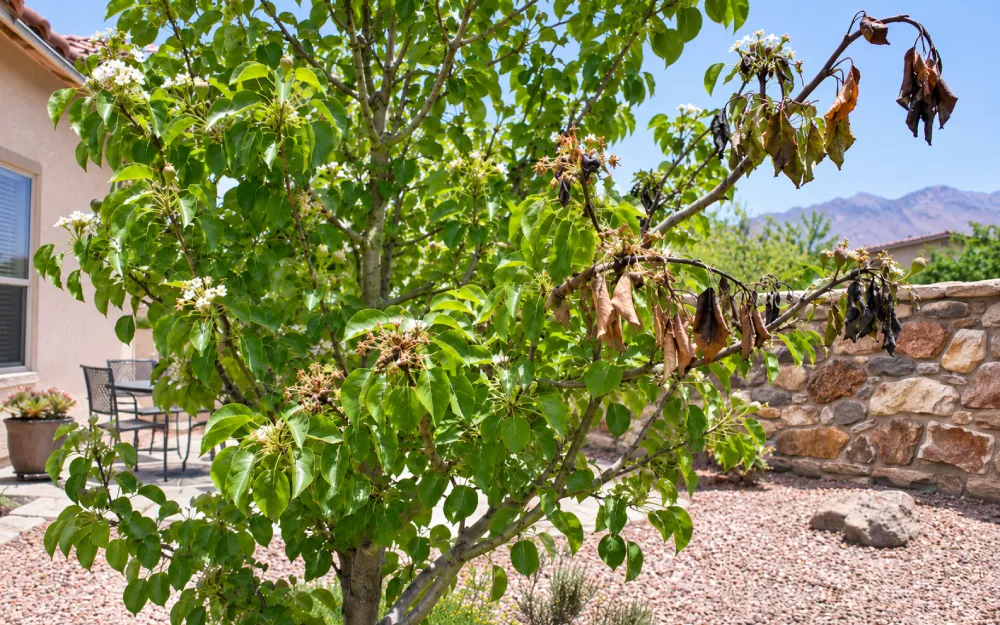
Fire blight is caused by a bacterium called Erwinia amylovora. It attacks blossoms, tender shoots, leaves, branches, and sometimes developing fruit.
Unlike powdery mildew, rust, or leaf spot, fire blight is not a fungal disease. This is important because ordinary fungicides will not cure an infected tree.
The disease gets its name from the way infected leaves and branches turn brown or black, making them appear scorched by fire.
Pear trees are particularly susceptible, although apple trees and several ornamental plants can also become infected.
The bacteria can survive the winter in infected branches and cankers. When temperatures warm in spring, the disease can become active again.
What Are the Symptoms of Fire Blight on Trees?
Recognizing fire blight early can make a big difference in saving your tree.
Here are the most common warning signs.
Black or Brown Leaves
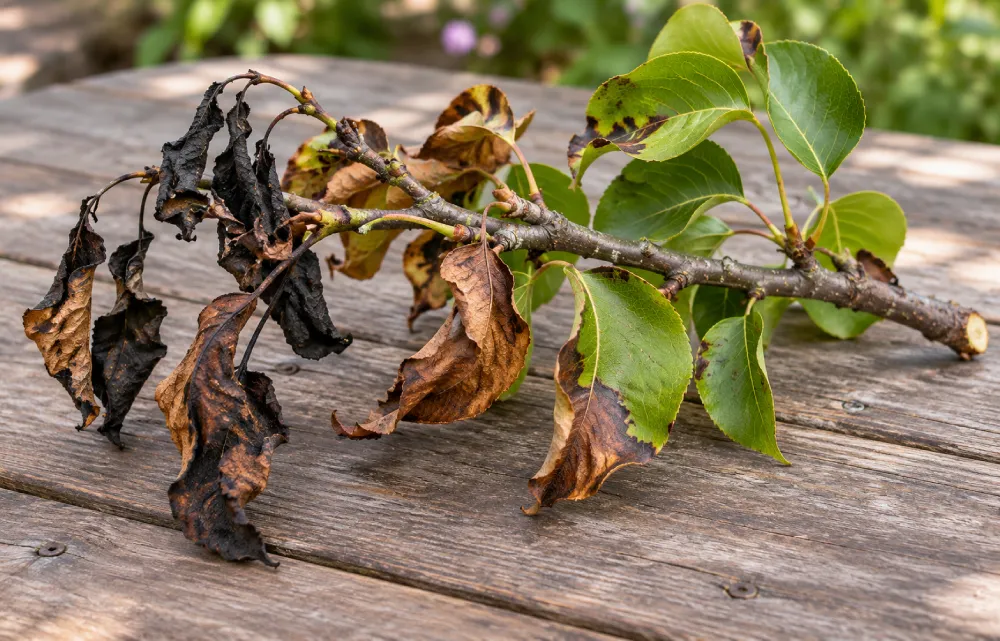
One of the first noticeable symptoms is the sudden appearance of blackened or brown leaves.
The leaves often remain attached to the branches instead of falling to the ground.
You may notice one or two affected branches while the rest of the tree looks perfectly healthy.
Curled Branch Tips
Another recognizable symptom is the curling of tender new growth.
Infected branch tips frequently bend downward, resembling a shepherd’s crook.
This symptom is especially common on pear trees and is one of the easiest ways to recognize a possible fire blight infection.
Dying Flowers and Blossoms
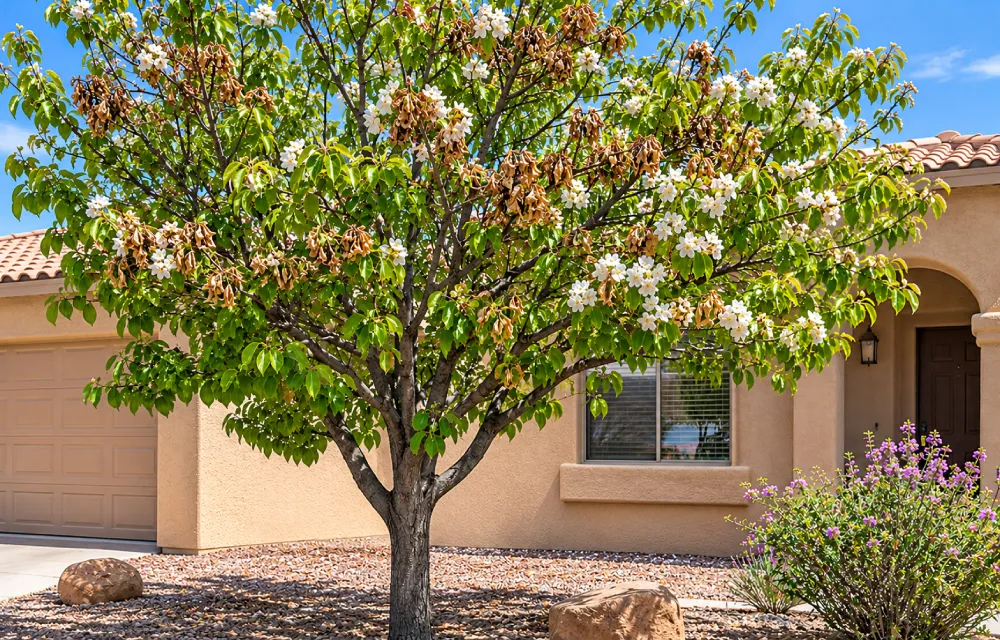
Fire blight often begins during spring flowering.
Healthy-looking white blossoms may suddenly turn brown or black and begin wilting.
The bacteria can then move from the blossoms into nearby branches.
Sunken Areas on Branches
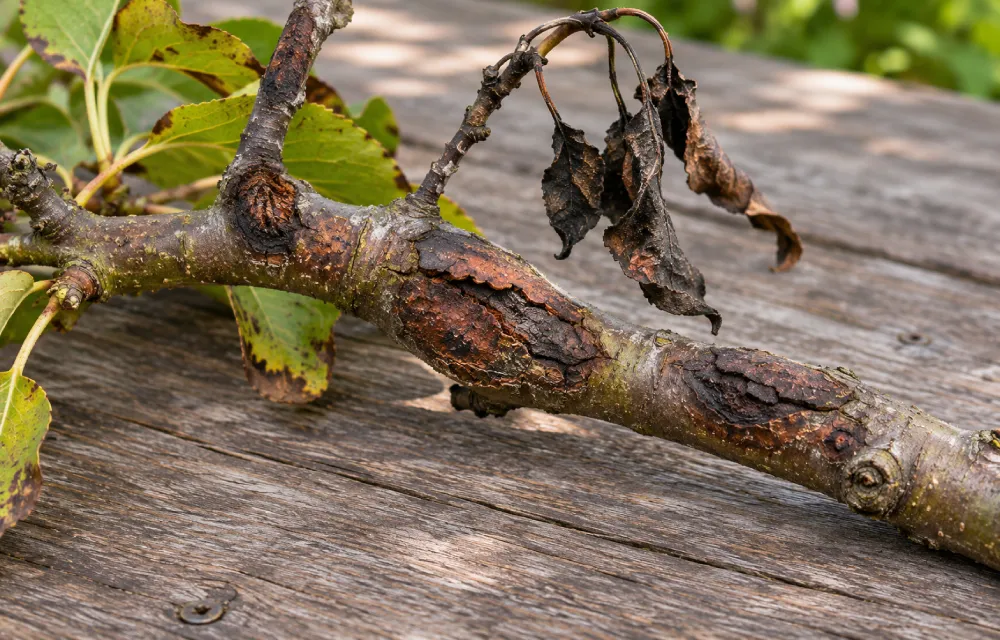
As the infection advances, sunken or discolored areas called cankers may develop along branches.
These areas sometimes produce a sticky bacterial ooze during warm, moist weather.
Cankers can serve as overwintering sites for the bacteria.
Damaged or Shriveling Fruit
Young apples and pears can become infected, turning brown or black and eventually shriveling.
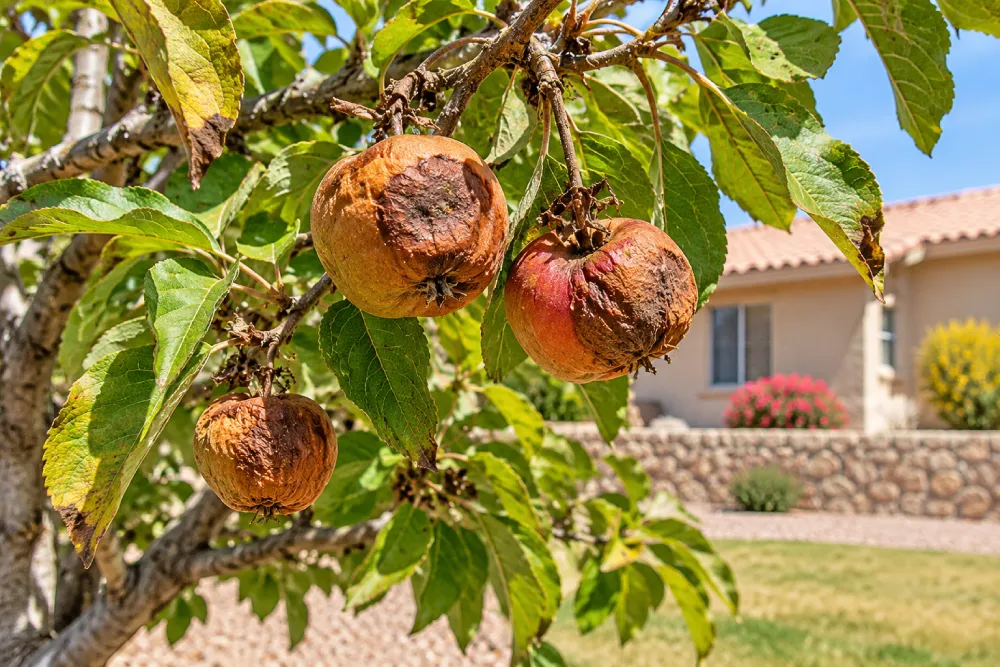
Some infected fruit may remain attached to the tree.
Remember, blackened leaves or damaged fruit do not automatically mean fire blight. Freeze damage, drought stress, insects, and other diseases may look similar.
What Trees and Shrubs Get Fire Blight?
Fire blight mainly affects susceptible plants belonging to the rose family.
Some common hosts include:
- Pear trees: European and Asian pears are often highly susceptible.
- Apple trees: Certain apple varieties are more susceptible than others.
- Crabapple trees: Ornamental crabapples can develop blossom and shoot infections.
- Pyracantha: These evergreen shrubs can develop blackened branches and dying foliage.
- Cotoneaster: Several types are susceptible to fire blight.
- Photinia: Certain species can develop bacterial infections.
- Quince and hawthorn: Both can be affected by the disease.
Pear and apple trees deserve special attention in Southern New Mexico gardens.
Pyracantha is another popular ornamental shrub that homeowners should inspect when unusual branch dieback appears.
What Causes Fire Blight on Pear and Apple Trees?
Fire blight develops when susceptible plants, active bacteria, and favorable weather conditions come together.
The bacteria commonly survive winter in infected wood.
During spring, they can spread to healthy blossoms through insects, rain splash, and other means.
Warm temperatures and moisture encourage bacterial activity.
Warm, Wet Spring Weather
Fire blight is especially troublesome when temperatures reach approximately 75–85°F and moisture is present.
Spring rain, humidity, and storm damage can increase the possibility of infection.
Although Las Cruces has a relatively dry climate, occasional spring storms and warm, humid conditions can still encourage fire blight.
Excessive Nitrogen Fertilizer
Too much nitrogen fertilizer encourages rapid, tender growth.
Unfortunately, this soft new growth is more susceptible to bacterial infection.
Avoid applying excessive fertilizer to pear and apple trees, particularly when fire blight has been a recurring problem.
Tree Injuries and Wounds
Branches damaged by wind, hail, or insects can provide openings for bacterial infections.
Maintaining healthy trees and avoiding unnecessary injuries can help reduce disease problems.
Fire Blight Treatment: How to Control the Disease
If you suspect fire blight on your pear or apple tree, begin by examining how much of the tree is affected.
There is no spray that will cure infected branches, but careful pruning and preventative care can help limit damage.
1. Prune Infected Branches
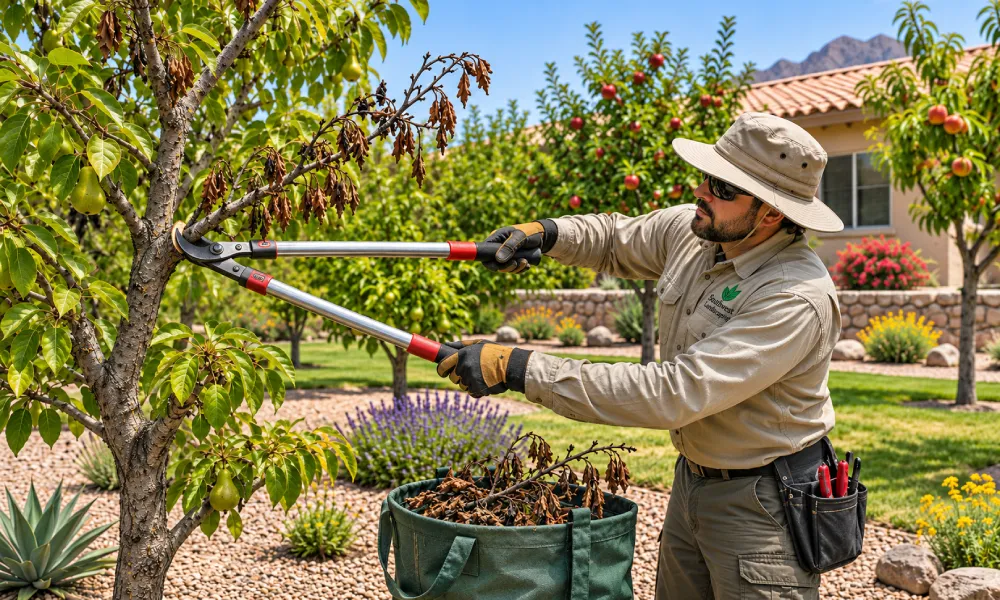
Removing infected wood is one of the most effective methods of managing fire blight.
Whenever possible, prune during winter dormancy, when bacterial activity is reduced.
Cut well below the visible infection into healthy wood. During active infections, New Mexico State University recommends pruning at least 12–15 inches below the symptoms.
The proper pruning distance can vary depending on the tree, branch size, and severity of the infection.
Avoid removing large portions of a tree without first determining whether the disease has spread into major limbs or the trunk.
2. Clean Your Pruning Tools
When pruning during active disease conditions, disinfecting pruning tools between cuts is a sensible precaution.
A 70% alcohol solution or another appropriate pruning-tool disinfectant can be used.
Clean visible debris from your tools before disinfecting them.
However, removing infected wood far enough below the symptoms is more important than disinfecting alone.
3. Dispose of Infected Branches
Remove diseased branches and leaves from the garden.
Avoid placing infected material into an ordinary backyard compost pile.
Dispose of the debris according to local yard-waste guidelines.
4. Avoid Heavy Fertilizing
Do not try to force a sick tree to recover by adding large amounts of fertilizer.
Excess nitrogen encourages tender new growth that may become infected.
Maintain appropriate soil fertility and avoid unnecessary fertilization.
5. Water Your Trees Properly
Proper watering is especially important in the desert Southwest.
Trees experiencing severe drought stress may have difficulty recovering from additional problems.
Water deeply around the root zone according to your soil conditions, tree size, and the season.
Avoid frequently spraying water onto blossoms and foliage.
What Is the Best Spray for Fire Blight?
Homeowners often ask whether there is a spray that can kill fire blight bacteria.
Certain copper-based products labeled for fire blight may help reduce new infections when applied at the correct time.
However, copper sprays will not cure branches already infected with fire blight.
Application timing is extremely important. Some preventive treatments are applied around bud break or bloom, depending on the product and tree.
Copper can damage tender leaves or mark developing fruit if applied incorrectly.
Commercial growers sometimes use specialized antibiotic treatments during blossom periods, but these are not general-purpose cures for infected trees.
Always follow the product label and confirm that it is approved for your particular plant and intended use.
Can a Pear Tree Recover From Fire Blight?
Yes. A pear tree can sometimes recover from fire blight if the infection is limited to smaller branches and the affected wood can be removed successfully.
The chances of recovery depend on several factors, including:
- The severity of the infection.
- The age and variety of the tree.
- Whether the disease has entered the trunk.
- The tree’s overall health.
- How quickly infected branches are removed.
Young trees and highly susceptible pear varieties can suffer extensive damage.
If the disease spreads into the main trunk or major structural branches, removing the tree may become necessary.
How to Prevent Fire Blight on Fruit Trees
Preventing fire blight is generally easier than managing an established infection.
Here are several helpful practices for New Mexico gardeners.
Choose Fire Blight-Resistant Trees
When purchasing apple or pear trees, ask about varieties with resistance or tolerance to fire blight.
No variety is completely immune, but choosing a less susceptible tree can reduce future problems.
Inspect Your Trees During Spring
Early spring is an important time to examine fruit trees.
Pay particular attention to blossoms, newly emerging leaves, and tender branch tips.
If you notice unusual blackening or wilting, investigate before the damage becomes extensive.
Prune During Dormancy
Winter is generally a good time to remove dead or diseased branches.
In Las Cruces, this often means pruning during the winter months before new spring growth begins.
Dormant pruning reduces the chance of spreading active infections.
Avoid Excessive Fertilizer
Do not encourage unnecessarily rapid growth with heavy nitrogen applications.
Moderate, healthy growth is preferable to excessive tender shoots.
Maintain Proper Spacing
Avoid planting trees too close together.
Adequate spacing improves sunlight penetration, air circulation, and access for maintenance.
It also makes inspecting branches much easier.
Is Fire Blight Common in Las Cruces, New Mexico?
Fire blight is a recognized disease of susceptible fruit trees and ornamental plants throughout New Mexico.
Our dry climate can reduce some moisture-related disease pressures, but it does not eliminate the risk.
Warm spring temperatures combined with rain or humidity can create favorable conditions for infection.
Homeowners growing pear trees, apple trees, crabapples, and pyracantha should watch for unusual branch dieback during spring and early summer.
If you notice blackened branches, don’t automatically assume your tree is suffering from drought.
Examine the new growth carefully and look for curled shoot tips, dead blossoms, and possible cankers.
Frequently Asked Questions About Fire Blight
Can fire blight spread from one tree to another?
Yes. Fire blight bacteria can spread between susceptible plants through insects, splashing water, and contaminated plant material.
Is fire blight a fungus or bacteria?
Fire blight is a bacterial disease caused by Erwinia amylovora. It is not a fungus.
Will fire blight go away on its own?
Visible symptoms may stop spreading during unfavorable weather, but the bacteria can survive inside infected wood and become active again.
Can fire blight kill an entire tree?
Yes. Severe infections can spread into major branches and the trunk, eventually killing susceptible trees.
Can peach trees get fire blight?
Peach trees are not typical hosts of fire blight. If your peach tree has dying branches, investigate other diseases, insects, or environmental damage.
When should you prune fire blight?
Dormant-season pruning is generally preferred. However, rapidly spreading infections on young or highly susceptible trees may require earlier attention.
Final Thoughts on Fire Blight Disease
Fire blight can be frustrating, especially when you’ve spent years growing and caring for your fruit trees.
The best defense is recognizing the symptoms early and maintaining proper tree care.
Watch for blackened leaves, wilted blossoms, curled branch tips, and damaged branches.
Remember that proper pruning, balanced fertilization, watering, and selecting resistant tree varieties can help reduce future problems.
If you’re uncertain about the cause of damage, consider getting the disease identified before applying chemical treatments.
At Guzman’s Garden Centers in Las Cruces, New Mexico, we understand the challenges of growing healthy trees in the desert Southwest.
Stop by one of our locations for assistance selecting fruit trees, ornamental shrubs, and gardening supplies suited to our local climate.
Additional Gardening Resources
For additional information about fire blight, visit New Mexico State University’s Fire Blight Guide.
You can also read our article about Pyracantha Varieties to learn more about these popular landscape shrubs.
Fire Blight Treatment Products
If you suspect fire blight on your pear, apple, or other susceptible fruit trees, contact Guzman’s Garden Centers in Las Cruces, New Mexico, for advice on available fire blight treatment and prevention products. Our knowledgeable staff can help you choose an appropriate product for your trees. Remember, sprays are generally used to help prevent new infections, while infected branches may need to be pruned to keep the disease from spreading. Call either of our two locations for more information.

New to Southwest Gardening?
Stop wasting money on plants that will not survive our heat and drought.
My Southwest Gardening Made Simple eBook shows you which trees, shrubs, flowers, and vegetables actually thrive in New Mexico, Arizona, and West Texas.
The best plants for hot, dry climates
Common mistakes that kill Southwest plants
Easy-to-follow advice for beginners

Paul Guzman is a lifelong Southwest gardener and gardening writer with decades of experience helping homeowners grow beautiful landscapes in the desert Southwest. He writes for Guzman’s Garden Centers in Las Cruces, New Mexico, with contributing expertise from Gary Guzman, owner of Guzman’s Garden Centers. If you have any questions or enjoyed this post, feel free to share your thoughts in the comments below.