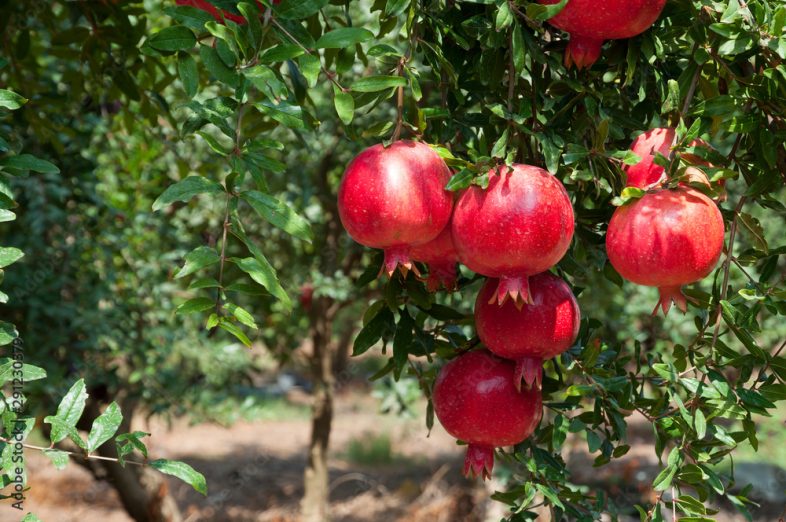
Few things are more disappointing than cutting open a beautiful pomegranate and finding brown or black seeds inside. In some cases, the fruit may look almost normal from the outside.
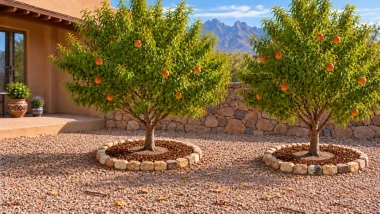
This internal decay is often called black heart or heart rot. Pomegranates grow well in Las Cruces and throughout the Desert Southwest, but fruit can still be damaged by fungal infection, cracking, insects, and inconsistent watering.
The outside of a pomegranate does not always reveal what is happening inside. You may not discover the damage until you cut the fruit open.
What Is Pomegranate Black Heart?
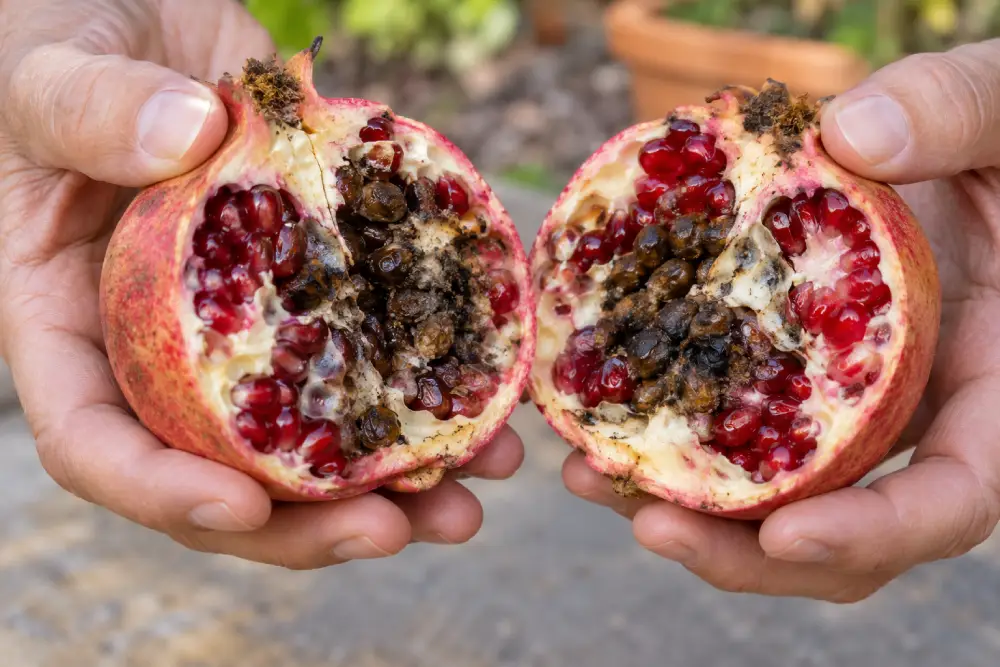
Black heart is a type of internal fruit rot. In New Mexico, one documented cause is Aspergillus fruit rot, associated with the fungi Aspergillus niger and Aspergillus tubingensis.
An affected pomegranate may contain:
- Brown or black arils
- Soft or decaying tissue
- Dry, discolored sections
- Black powdery fungal spores
- An unpleasant or fermented odor
- Rot concentrated around a crack or damaged area
Do not eat a pomegranate that contains blackened, moldy or foul-smelling tissue. Place it in the trash rather than adding it to a backyard compost pile.
Can a Black Pomegranate Look Healthy Outside?

Yes. That is one of the frustrating things about this problem.
Some affected fruit develops a pale-red, yellowish, or brown-red rind. Cracked fruit may show dark fungal growth around the opening. Other pomegranates can appear reasonably normal until they are opened.
A homeowner cannot reliably diagnose black heart simply by looking at the exterior. Soft spots, cracks, puncture marks, and unusual discoloration are warning signs, but a firm, attractive rind does not guarantee that the arils are healthy.
Cut questionable fruit open before serving it or processing a large harvest.
How Does the Rot Get Inside?
Fungal spores can enter through openings created by:
- Fruit cracking
- Leaf-footed bug feeding
- Sunburn injury
- Hail or wind damage
- Scraping or puncturing the rind
- Other physical damage
Infection can also begin during flowering and early fruit development, especially following rain or irrigation events. Once the fungus is protected inside the developing fruit, exterior sprays may not reach it effectively.
Old fruit and dead plant material can harbor fungal spores from one season to the next.
Why Pomegranates Crack
Pomegranate cracking is common in the Desert Southwest. The rind becomes less flexible as fruit approaches maturity. If the plant goes through a dry period and then suddenly receives a large amount of water, the arils may expand faster than the rind can accommodate.
The result is a split fruit.
Possible causes include:
- Irregular irrigation
- Heavy watering after the soil becomes very dry
- A sudden monsoon storm
- Heat and sunburn
- Delayed harvesting
- Physical damage
- Natural variety differences
A crack does not automatically mean the inside is rotten. However, it creates an entrance for dust, insects, and disease organisms.
Harvest cracked fruit promptly and inspect the inside. Discard it if you find mold, blackened arils, extensive decay, or an unpleasant odor.
Consistent Watering Helps Reduce Cracking
Pomegranates tolerate dry conditions, but producing quality fruit still requires adequate and reasonably consistent moisture.
Avoid switching between severely dry soil and heavy irrigation. Water deeply enough to wet the root zone, and then allow the upper soil to begin drying before watering again.
The exact schedule depends on:
- The age and size of the plant
- Soil texture
- Temperature
- Wind
- Mulch
- Sun exposure
- Recent rainfall
- The number of drip emitters and their flow rates
Check the soil instead of relying entirely on a preset irrigation timer. The soil surface can look dry while moisture remains farther down.
As a pomegranate grows, expand the irrigation area beyond the original planting hole. Roots spread outward, and a few emitters placed next to the trunk may no longer water enough of the root zone.
A layer of organic mulch can help moderate soil temperature and moisture. Keep the mulch several inches away from the trunks and stems.
Watch for Leaf-Footed Bugs
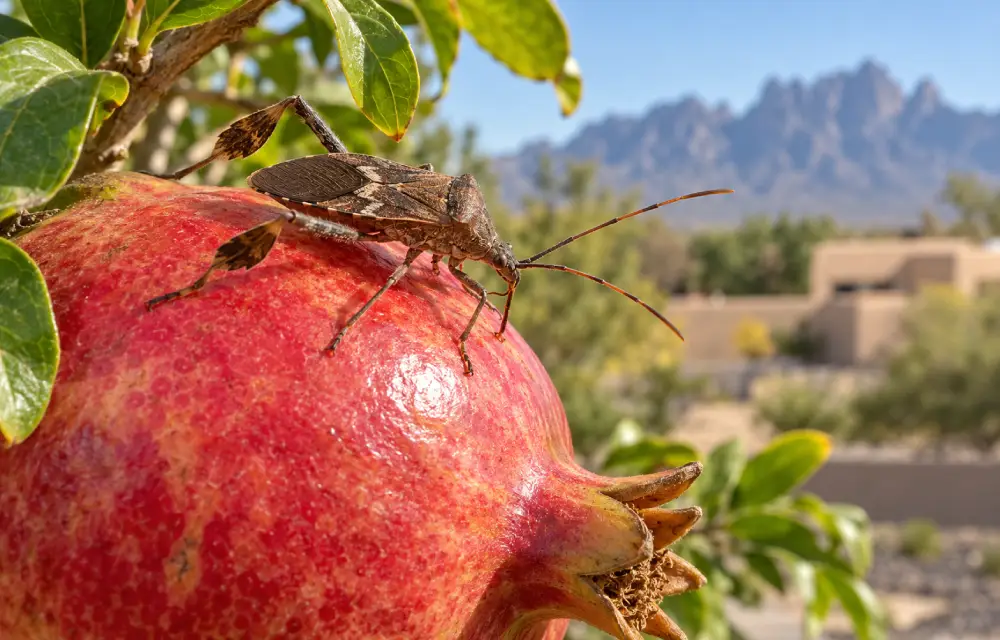
Leaf-footed bugs are large true bugs that feed on developing fruit. Adults are usually brown and have flattened, leaf-like sections on their hind legs. Some species also have a pale zigzag line across the wings.
Their nymphs may look red or orange when young and are sometimes mistaken for beneficial insects.
Leaf-footed bugs use piercing mouthparts to puncture fruit and feed on the contents. These wounds may release sap and create openings through which fungi and bacteria can enter.
Inspect pomegranate plants for:
- Adult bugs on fruit and branches
- Groups of red or orange nymphs
- Rows or chains of brown eggs
- Small puncture marks
- Darkened feeding sites
- Sap leaking from the rind
- Misshapen or prematurely dropping fruit
Check the undersides of leaves and the fruit clusters regularly during the growing season.
Small infestations can often be managed by hand-picking the insects while wearing gloves and dropping them into soapy water. Egg chains can also be removed and destroyed.
Insecticides are not always necessary. If treatment is justified, it is generally more effective against small nymphs than mature adults. Always select a product labeled for both the pest and edible pomegranate fruit, and observe the required interval between treatment and harvest.
Is Every Black Spot Caused by Leaf-Footed Bugs?
No. Leaf-footed bugs can injure the rind and make infection easier, but finding internal rot does not prove that these insects caused it.
Fruit may also be damaged by:
- Cracking
- Sunburn
- Birds
- Wind-blown branches
- Other insects
- Harvest injuries
- Fungal infection during early fruit development
Likewise, seeing leaf-footed bugs in the yard does not prove that every damaged pomegranate was injured by them.
Look at the entire pattern: irrigation history, rind damage, insect activity, weather conditions, and whether old fruit was left on the plant.
Fall Cleanup Is Important
Yes, fall cleanup is a good idea. Aspergillus fungi can survive in plant debris and old, mummified fruit. Good cleanup reduces potential sources of spores and removes places where pests may overwinter.
During fall and winter:
- Remove pomegranates left hanging on the plant.
- Pick up fallen, cracked, and rotting fruit.
- Discard diseased fruit in the trash.
- Prune dead and damaged branches at the proper time.
- Remove excessive weeds near the plant.
- Clean up unnecessary piles of plant debris.
- Inspect protected areas for overwintering leaf-footed bugs.
- Check and repair the irrigation system before spring growth.
Do not leave blackened or mummified fruit hanging through winter.
Will a Fungicide Cure Black Heart?
Usually not once the infection is already inside the fruit.
NMSU reports that preharvest fungicides are generally ineffective against Aspergillus fruit rot because the fruit’s crown protects the blossom tissues where infection may begin.
For homeowners, prevention is more practical than attempting to cure infected fruit. Focus on:
- Consistent irrigation
- Reducing fruit cracking
- Monitoring leaf-footed bugs
- Removing damaged fruit
- Cleaning up old fruit and debris
- Preventing unnecessary injuries to the rind
Avoid applying a fungicide merely because one pomegranate was black inside. Confirming the cause matters, and pesticide labels and registrations can change.
What Should I Do With Affected Fruit?
If only one fruit is affected, remove and discard it, then inspect the remaining crop.
Cut open several other pomegranates. If many are damaged, review the plant’s irrigation history and inspect for cracked fruit, puncture wounds, and leaf-footed bugs.
Take clear photographs of:
- The whole fruit
- Any rind discoloration
- Cracks or puncture marks
- The fruit immediately after cutting it open
- Blackened or powdery arils
- Any insects or egg chains found nearby
A badly decomposed fruit is less useful for diagnosis than a newly opened one showing the transition between healthy and damaged tissue.
How to Reduce the Problem Next Season
Use this checklist:
- Water deeply and consistently.
- Avoid allowing the root zone to become extremely dry.
- Adjust irrigation after substantial rainfall.
- Expand emitters as the plant grows.
- Apply mulch without piling it against the stems.
- Monitor developing fruit for cracks and sunburn.
- Watch for leaf-footed bug adults, nymphs, and eggs.
- Harvest ripe and cracked fruit promptly.
- Remove fallen and mummified fruit.
- Prune dead branches.
- Avoid injuring fruit during yard work or harvest.
- Inspect several fruits rather than judging the crop from the rind alone.
Pomegranates are well suited to southern New Mexico, and one bad fruit does not necessarily mean the entire plant is unhealthy. Consistent care, pest monitoring, and fall sanitation can greatly reduce the conditions that allow internal rot to develop.
More on Blackheart Disease on the NMSU website.

New to Southwest Gardening?
Stop wasting money on plants that will not survive our heat and drought.
My Southwest Gardening Made Simple eBook shows you which trees, shrubs, flowers, and vegetables actually thrive in New Mexico, Arizona, and West Texas.
The best plants for hot, dry climates
Common mistakes that kill Southwest plants
Easy-to-follow advice for beginners

Paul Guzman is a lifelong Southwest gardener and gardening writer with decades of experience helping homeowners grow beautiful landscapes in the desert Southwest. He writes for Guzman’s Garden Centers in Las Cruces, New Mexico, with contributing expertise from Gary Guzman, owner of Guzman’s Garden Centers. If you have any questions or enjoyed this post, feel free to share your thoughts in the comments below.