You’ve probably heard the term “native plants” when shopping for trees, shrubs, or flowers at a local nursery. But what exactly does it mean?
Are all desert plants native? Does a plant have to grow naturally in New Mexico to be considered native? And are native plants always better than other plants for your landscape?
These are good questions, especially if you live in Las Cruces, El Paso, or anywhere in the desert Southwest.
Many homeowners assume that if a plant tolerates our hot summers and dry conditions, it must be native to the area. That isn’t always true.
Let’s look at what native plants really are, why they matter, and which ones might work best in your Southwest landscape.
Desert Plants Names and Pictures.
What Exactly Is a Native Plant?
A native plant is a plant that grows naturally in a particular region without having been introduced there by people.
In other words, these plants were growing in the area long before modern landscaping and commercial nurseries became common.
They developed naturally alongside local wildlife, insects, birds, and other plants.
Here in southern New Mexico, many native plants have adapted to our intense sunlight, dry air, alkaline soils, and limited rainfall.
But here’s something important to remember.
A plant can be native to the Southwest without being native to your particular part of the Southwest.
For example, a plant growing naturally in the Sonoran Desert of Arizona may not grow naturally in the Chihuahuan Desert around Las Cruces.
Both areas are in the Southwest, but they have different growing conditions, rainfall patterns, and winter temperatures.
That’s why the term “native” needs a little explanation.
Are All Desert Plants Native to the Southwest?
No. And this is where many gardeners get confused.
A plant can tolerate desert conditions without being native to our area.
Take rosemary and lavender, for example. Both are popular landscape plants in southern New Mexico. They love sunshine, prefer well-drained soil, and can tolerate periods of drought once established.
However, both originally come from the Mediterranean region.
Another example is the oleander. You see these large flowering shrubs growing around homes and commercial buildings throughout the Southwest.
They tolerate heat very well, but they are not native to New Mexico. Oleanders are also poisonous if ingested.
So, just because a plant survives our summer heat doesn’t mean it belongs to the natural plant community of the Southwest.
Native plants and drought-tolerant plants are not necessarily the same thing.
What Is the Difference Between Native and Adapted Plants?
This is something worth understanding before buying plants for your yard.
Native plants occur naturally in a particular area without human introduction.
Adapted plants may originally come from another part of the world, but they can grow successfully under our local conditions.
For example:
- Desert willow — native to parts of the desert Southwest.
- Apache plume — native to the Southwest.
- Creosote bush — native to the Chihuahuan Desert.
- Rosemary — adapted to Southwest gardening but not native.
- Lavender — adapted to suitable Southwest landscapes but not native.
- Chinese pistache — a non-native shade tree that can grow well in our region.
Does this mean you should avoid every non-native plant?
Not at all.
Many adapted plants are excellent choices for landscaping. The important thing is to select plants that can survive your local climate without excessive watering, maintenance, or other problems.
Also, remember that non-native doesn’t automatically mean invasive. Some introduced plants behave well in gardens, while others spread aggressively and can harm natural areas.
8 Native Plants Worth Knowing in Southern New Mexico
There are hundreds of plants native to New Mexico, but not all of them make good landscape plants.
Here are eight that are worth considering for a home landscape around Las Cruces and other suitable areas of the Southwest.
1. Desert Willow (Chilopsis linearis)

The desert willow is one of my favorite small flowering trees for Southwest landscapes.
It produces beautiful trumpet-shaped flowers, usually in shades of pink, lavender, or white.
Hummingbirds are attracted to the flowers, and the tree provides light shade without becoming excessively large.
Desert willows prefer full sunshine and good drainage. Once established, they can tolerate long periods of dry weather.
Keep in mind that desert willows lose their leaves during winter. They also need occasional deep watering to look their best during prolonged drought.
2. Apache Plume (Fallugia paradoxa)
Apache plume is a tough native shrub that deserves more attention in Southwest landscaping.
It produces small white flowers followed by attractive, feathery seed heads.
This shrub grows naturally in rocky areas, slopes, and dry washes.
It’s a good choice for natural-looking landscapes where you want something that doesn’t require constant attention.
Give it plenty of sunlight and room to grow.
3. Creosote Bush (Larrea tridentata)

If you’ve lived in southern New Mexico for many years, you’re probably familiar with the creosote bush.
It’s one of the most recognizable native shrubs in the Chihuahuan Desert.
Have you noticed that distinctive desert smell after a summer rain? Creosote bushes contribute to that familiar fragrance.
They have small, dark-green leaves and produce yellow flowers.
Creosote bushes are extremely drought-tolerant once established, but they need excellent drainage and plenty of room.
They aren’t always the best choice for a small, formal flower bed. However, they can work well in larger natural desert landscapes. Xeriscape Landscaping Ideas.
4. Red Yucca (Hesperaloe parviflora)
Red yucca is a popular low-water landscape plant throughout the Southwest.
Despite its common name, it isn’t a true yucca.
Its narrow, arching leaves and tall flower stalks make it a beautiful accent plant.
The coral-red or pinkish flowers attract hummingbirds, and established plants can tolerate heat and dry conditions.
Red yucca is native to parts of Texas and northeastern Mexico. That makes it a regional native, but not necessarily a local native to Las Cruces.
It’s an excellent example of why knowing a plant’s natural range matters.
5. Fourwing Saltbush (Atriplex canescens)
Fourwing saltbush is a native shrub with silvery-gray foliage.
You may have seen it growing naturally along roadsides, open desert areas, and rangelands.
It’s well adapted to dry conditions and many of the alkaline soils found in New Mexico.
The plant also provides food and shelter for wildlife.
It isn’t especially showy compared with flowering shrubs, but it can be useful in natural landscapes and larger open spaces.
6. Soaptree Yucca (Yucca elata)
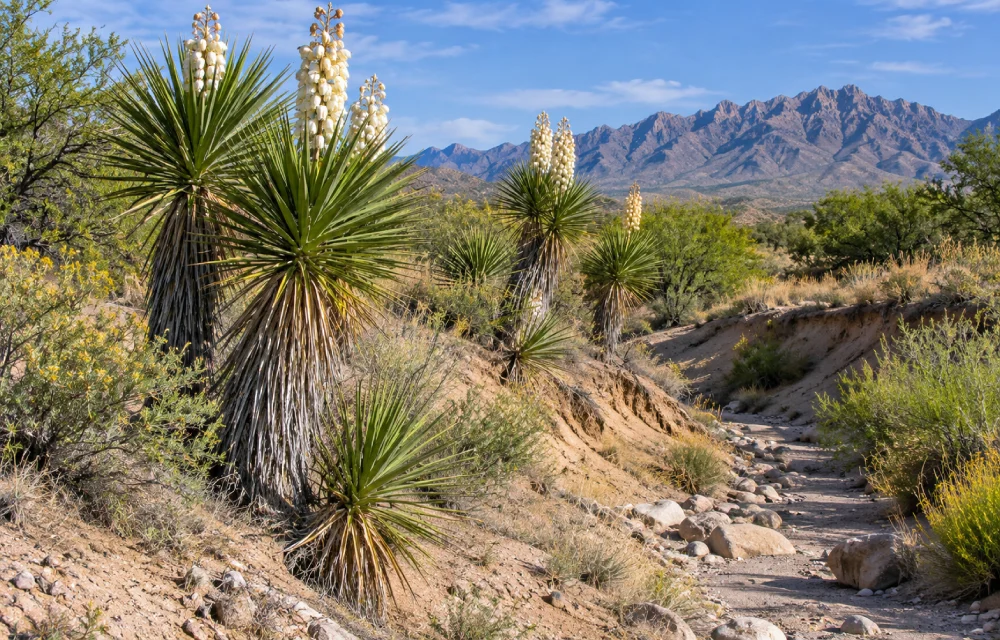
The soaptree yucca is one of the classic plants of the Chihuahuan Desert.
It develops narrow leaves and can eventually form a trunk.
During its flowering season, tall stalks rise above the leaves and produce clusters of creamy-white flowers.
This is a good plant for homeowners who want a natural desert appearance.
It prefers full sun and well-drained soil. Be sure to allow enough space for its mature size.
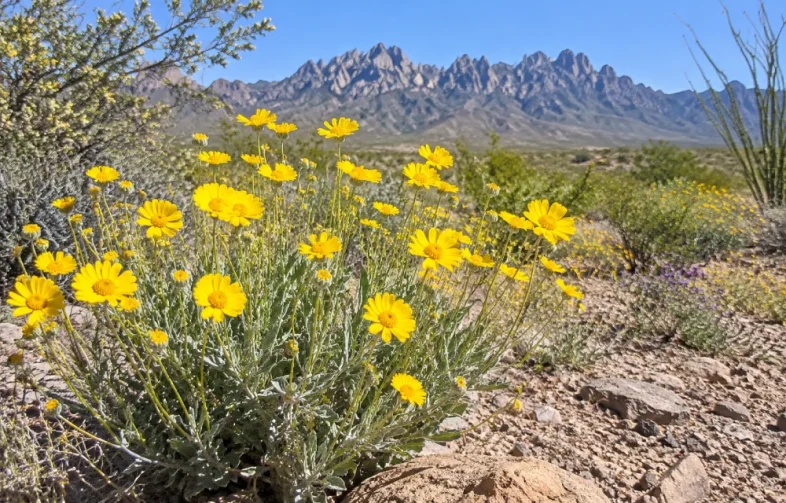
7. Desert Marigold (Baileya multiradiata)
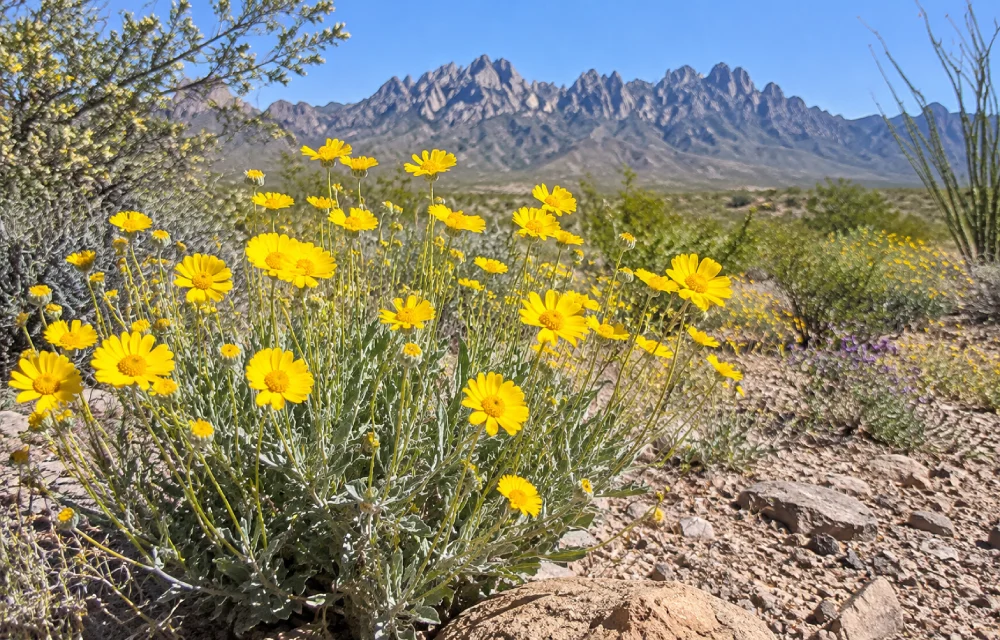
Want some yellow flowers without planting thirsty annuals every year?
Consider desert marigold.
This native wildflower produces cheerful yellow blooms above gray-green foliage.
It does especially well in sunny, well-drained areas.
Desert marigold can bloom over a long season when conditions are favorable, and it may reseed itself.
It’s a nice addition to a natural-looking flower bed or desert rock garden.
8. Blackfoot Daisy (Melampodium leucanthum)
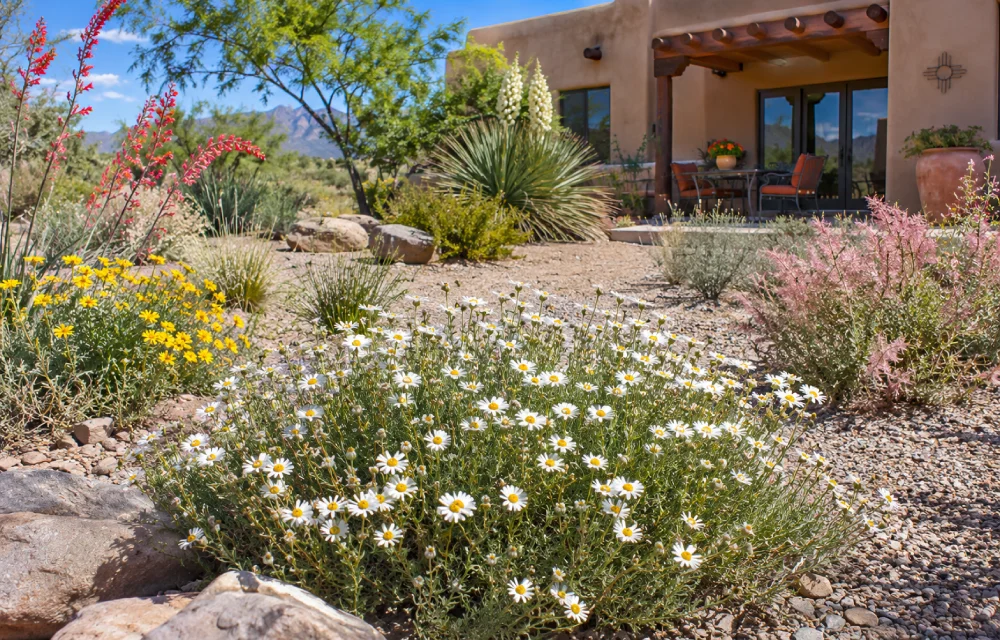
Blackfoot daisy is another small flowering perennial worth considering.
It produces white, daisy-like flowers with yellow centers.
The plant prefers full sun and excellent drainage. Heavy, constantly wet soil can cause problems.
It works well along borders, in rock gardens, and in smaller spaces where you want seasonal flowers without using large amounts of water.
Why Should You Use Native Plants in Your Landscape?
There are several good reasons to consider native plants, especially when landscaping in southern New Mexico.
1. Many require less water. Once established in the right location, many native desert plants can survive on considerably less irrigation than traditional landscape plants.
2. They support local wildlife. Native flowering plants can provide nectar, pollen, seeds, nesting material, and shelter for birds and insects.
3. They are adapted to local growing conditions. Many can handle our strong sunlight, poor soils, dry winds, and seasonal temperature changes.
4. They can reduce maintenance. Properly selected native plants may need less fertilizer, pruning, and other routine care.
5. They create a natural Southwest appearance. Native grasses, shrubs, flowering perennials, and trees can make your landscape look colorful without trying to make the desert resemble a tropical garden.
However, don’t assume that every native plant is automatically low-maintenance.
Some native plants prefer mountain climates, shady canyons, or moist areas near rivers and streams.
Planting those species in a hot, dry front yard could create more problems than you expected.
Do Native Plants Need Water?
Yes, especially when they’re newly planted.
One of the biggest mistakes homeowners make is assuming a native desert plant doesn’t need watering.
Even drought-tolerant plants need moisture to establish their roots.
If you plant a desert willow or native shrub during the warmer months, you’ll need to water it regularly until its root system becomes established.
After that, you can usually reduce watering frequency.
The exact amount depends on the plant, soil, weather, and how long it’s been in the ground.
Remember, drought-tolerant doesn’t mean you should never water it.
In fact, many native plants look better and produce more flowers with occasional deep watering during prolonged dry spells.
Are Native Plants Better Than Non-Native Plants?
Not necessarily in every situation.
I believe a good Southwest landscape can include both native and well-adapted non-native plants.
You might want a desert willow for summer flowers, rosemary for fragrance, and a Chinese pistache for fall color.
There’s nothing wrong with combining plants that have different origins, provided they aren’t invasive and their growing requirements are compatible.
The key is to understand how much water each plant needs and where it will grow best.
Don’t plant a thirsty shrub next to a cactus and expect them to do equally well on the same watering schedule.
For more ideas, see our Desert Plants Names and Pictures guide.
You can also explore these 10 Desert Landscaping Ideas for Southwestern Homes.
How to Choose Native Plants for Your Southwest Yard
Before buying a native tree, shrub, or flowering plant, ask yourself a few questions.
- How much sunlight does the area receive? Full sun, morning sun, and afternoon shade are not the same.
- What type of soil do you have? Many desert plants prefer well-drained soil and will struggle in constantly wet clay.
- How large will the plant become? A small nursery plant can eventually grow much larger than you expected.
- How much water will it need? Newly planted natives usually need more water than established ones.
- Is the plant actually native to your area? Something native to Arizona or northern New Mexico may have different growing requirements from plants native to the Las Cruces area.
- Will it work with your existing plants? Try grouping plants with similar watering requirements.
If you’re planting in Las Cruces or El Paso, remember that summer temperatures can climb above 100°F, while winter nights may drop below freezing.
You need plants that can handle both extremes.
Spring and fall are usually good planting seasons for many native trees and shrubs because the temperatures are not as extreme.
Frequently Asked Questions About Native Plants in the Southwest
1. What makes a plant native to the Southwest?
A native plant is one that occurs naturally within a particular Southwest region without being introduced there by people. Its native range may cover one desert, several states, or a smaller geographic area.
2. Are all cactus plants native to New Mexico?
No. Many cactus species grow naturally in New Mexico, but others come from different parts of the Americas. Not every cactus sold at a nursery is native to New Mexico.
3. Is red yucca native to New Mexico?

Red yucca is native to parts of Texas and northeastern Mexico. It’s widely planted in New Mexico because it tolerates heat, drought, and our growing conditions. However, it shouldn’t automatically be considered a local New Mexico native.
4. Do native plants need fertilizer?
Many native desert plants grow well without regular fertilizer. Too much fertilizer may encourage weak or excessive growth. It’s best to understand the requirements of the particular plant before feeding it.
5. Can native plants grow in clay soil?
Some can, but many desert plants require good drainage. If your soil stays wet for long periods, choose plants that tolerate those conditions rather than assuming every native plant will survive.
6. Are native plants resistant to insects and diseases?
Many native plants are well adapted to local growing conditions, but they are not immune to insects or disease. Aphids, scale insects, root rot, and other problems can still occur.
7. What are some native flowering plants for southern New Mexico?
Desert marigold, blackfoot daisy, Apache plume, and desert willow are examples worth considering. Their suitability depends on the planting site and local conditions.
8. Is rosemary a native Southwest plant?
No. Rosemary comes from the Mediterranean region. However, it can be an excellent landscape plant in suitable areas of the desert Southwest.
9. Do native plants attract hummingbirds and butterflies?
Many do. Native flowering plants provide important food sources for local pollinators. Desert willow and red yucca are examples of plants that attract hummingbirds in suitable Southwest landscapes.
10. Can I have a colorful landscape using native plants?
Absolutely. Native plants aren’t limited to dull green shrubs and cactus. You can combine flowering trees, colorful perennials, ornamental grasses, and desert shrubs to create an attractive landscape throughout much of the year.
Final Thoughts on Native Plants in the Southwest
Native plants have an important place in our desert landscapes.
They’ve been growing in this part of the country long before our neighborhoods, roads, and garden centers existed.
But remember, not every plant sold as a “Southwest native” is native to your particular location.
My suggestion is to start with a few plants that are naturally suited to your area. Learn how they grow, give them the right soil and sunlight, and avoid watering them too frequently once they’re established.
You don’t have to replace your entire landscape with native plants. A good combination of native and adapted plants can give you a colorful, attractive yard without wasting water.
For additional information about native plant communities, visit the Bureau of Land Management’s New Mexico Native Plants Program.
You can also explore New Mexico State University’s Low-Water Landscape Plant Resources for plants suited to our climate.
Need Help Choosing Plants for Your Yard?
Visit Guzman’s Garden Centers in Las Cruces, New Mexico. We can help you find native and desert-adapted trees, shrubs, and flowering plants for your landscape.
If you’re new to gardening in the Southwest, check out my Southwest Gardening Made Simple eBook for practical tips on plants, watering, and landscaping in our dry climate.
What native plants are growing in your yard? Let me know in the comments below. I’d like to hear which ones are doing well in your part of the Southwest.
Why Are Southwest Native Plants Hard to Find at Local Nurseries?
One thing many homeowners don’t realize is how difficult it can be for local garden centers to find Southwest native plants from wholesale growers. Many large wholesale nurseries focus on popular landscape plants that sell throughout the country, rather than plants native to southern New Mexico and the Chihuahuan Desert. At Guzman’s Garden Centers in Las Cruces, we do our best to keep a good selection of native plants on hand. However, these plants often sell quickly, and once they’re gone, finding replacements isn’t always easy. Sometimes we have to wait weeks or even months before certain varieties become available again. So, if you see a native plant you’ve been wanting for your landscape, it’s a good idea to purchase it while it’s available. There’s no guarantee we’ll be able to get more anytime soon.
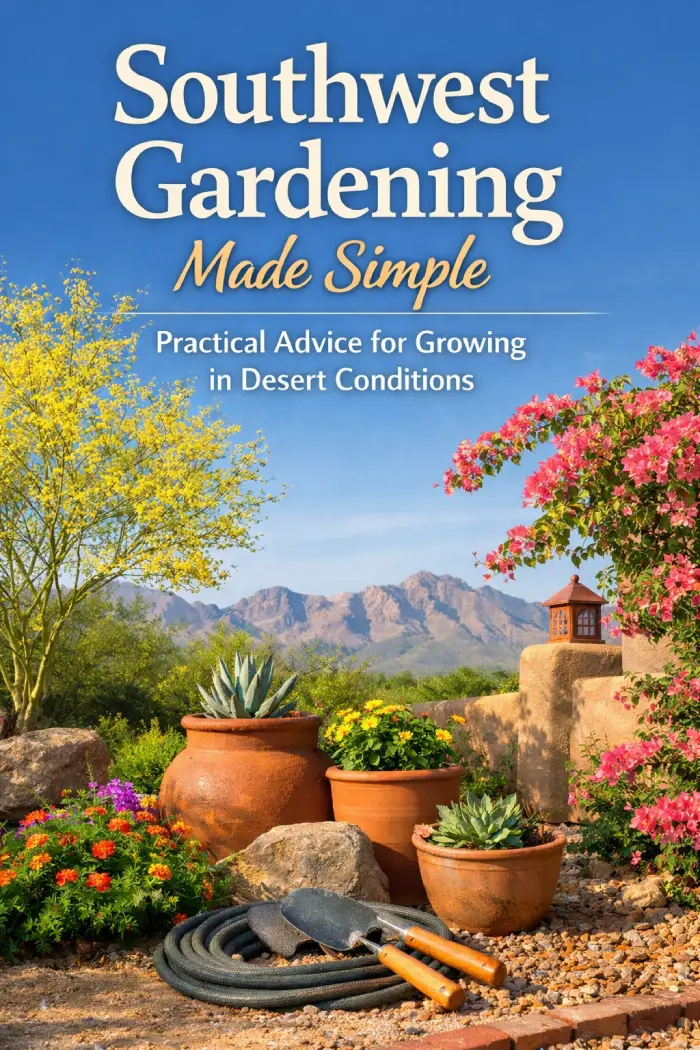
New to Southwest Gardening?
Stop wasting money on plants that will not survive our heat and drought.
My Southwest Gardening Made Simple eBook shows you which trees, shrubs, flowers, and vegetables actually thrive in New Mexico, Arizona, and West Texas.
The best plants for hot, dry climates
Common mistakes that kill Southwest plants
Easy-to-follow advice for beginners

Paul Guzman is a lifelong Southwest gardener and gardening writer with decades of experience helping homeowners grow beautiful landscapes in the desert Southwest. He writes for Guzman’s Garden Centers in Las Cruces, New Mexico, with contributing expertise from Gary Guzman, owner of Guzman’s Garden Centers. If you have any questions or enjoyed this post, feel free to share your thoughts in the comments below.