Last updated on July 9th, 2026 at 04:01 pm
Yaupon Holly Tree (Ilex vomitoria)
The Yaupon Holly (Ilex vomitoria) is a versatile evergreen that can be grown as either a small tree or a large shrub. It has small, glossy, dark green leaves that remain attractive throughout the year, giving your landscape color even during the winter months. Its dense, twiggy branching habit makes it an excellent choice for privacy screens, hedges, foundation plantings, or as a specimen plant.
At maturity, a Yaupon Holly typically reaches about 15 feet tall and 15 feet wide, although some varieties remain much smaller. Under normal growing conditions, it generally reaches its mature size in 8 to 10 years. In late spring, it produces clusters of small white flowers that attract bees and other beneficial pollinators. Female plants later develop bright red berries if a male plant is growing nearby. These berries provide an attractive winter display and are an important food source for birds.
Is It a Tree or a Bush?
The answer is both—it depends on how you prune and train it.
If you remove the lower branches while the plant is young, the Yaupon Holly develops into an attractive multi-trunk or single-trunk ornamental tree. If left unpruned, it naturally forms a dense, rounded evergreen shrub that works well as a screen or informal hedge.
One thing to remember is that the branches become very dense with age, and the stiff twigs can be surprisingly sharp. Wearing sturdy gloves and long sleeves while pruning is a good idea, as the branches can easily scratch or puncture your skin.
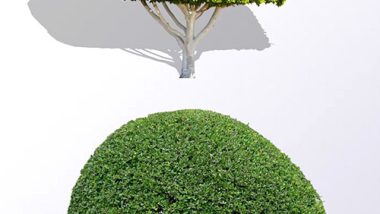
The one pictured below is a mature Yaupon Holly, nicely trimmed.

Where to plant the Yaupon Holly Tree?
It’s a great-looking small tree for the patio or out in the open. Small enough to plant in a courtyard or smaller backyards. The berries will start with a light green color and will turn a bright red towards the end of the fall. These berries will last throughout the winter season.
They love the full hot sun and are considered a moderate watering tree, but make sure to give them plenty of water during the first 2-3 years after initial planting. If you need to plant more than one, it is best to space them out at least 10 ft. apart.
Yaupon Hollies are insect- and disease-resistant
The poor soil throughout the Southwest can result in the yellowing of leaves on the Yaupon holly. This can be remedied by incorporating iron into the soil. I recommend Growmore’s EDDHA Chelated iron, as it works wonders on any plant that appears chlorotic (yellowing of the leaves). Do not use a fertilizer with a high analysis of nitrogen.
Most birds are attracted to the bright red berries and will eat them for sustenance throughout the winter season. The female Yaupon holly will produce the berries.
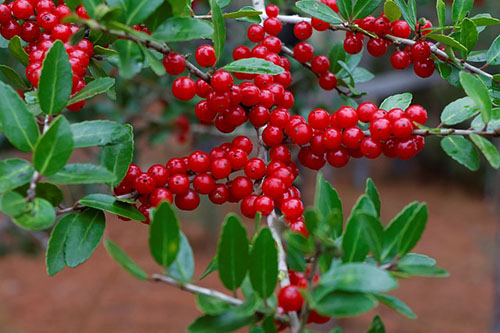
The Yaupon Holly Tree produces bright red berries, pictured below. These berries are not toxic to wildlife but can cause problems if ingested by humans.
According to Wildedible.com, The Stems and Leaves can be used to make tea. Read more below.
Yaupon holly tea has been used for ages by southeastern U.S. Indian tribes for both recreation and ceremony. Early white settlers knew the tea as “the black drink.” Ceremonially, it was sometimes made as a strong brew which intensified the tea’s emetic qualities inducing vomiting and purification, hence the Latin name vomitoria. Read more here.
The Weeping Holly Plant
Other varieties are similar, such as the Weeping Yaupon Holly (Ilex vomitoria ‘Pendula’)
For something totally different, plant the Weeping Holly,y as you can see by the photo over at Monrovia.com. It has a sweeping downward look, perfect for those looking for something different.
Berries on the Yaupon Holly Tree
Male vs. Female Yaupon Holly
Only female Yaupon Holly plants produce the bright red berries that make this evergreen so attractive during the fall and winter months. However, a female plant will only produce berries if a male Yaupon Holly is growing nearby to provide the necessary pollen during the flowering season.
Telling the difference between male and female Yaupon Holly plants is not easy. They look nearly identical, with the same glossy evergreen leaves, branching habit, and growth rate. In fact, unless the plants are flowering or producing berries, even experienced gardeners often have difficulty distinguishing one from the other.
If berries are important to your landscape, it’s a good idea to purchase plants that have already been identified as male or female. Planting at least one male within pollinating distance of one or more female plants will ensure a reliable display of colorful berries for years to come. These berries not only add winter interest to the landscape but also provide a valuable food source for many species of birds.
Despite the challenges, there is a method to differentiate between the sexes by closely examining the flowers produced by the male Yaupon Holly. These male flowers bloom in early spring, offering a window of opportunity for those who are specifically looking to identify male plants. By observing the characteristics of these flowers in detail, one can gain insights into the plant’s gender despite the inherent challenges in visual identification. Read more over at – Melindamyers.com
The Dwarf Stokes Yaupon Holly
This Dwarf Yaupon Holly stays much smaller than the standard variety, typically growing only about 2–3 feet tall and spreading to around 3 feet wide. Its dense, compact form and evergreen foliage allow it to provide year-round structure and color in the landscape. Extremely adaptable, it tolerates poor soil conditions, heat, and periods of drought once established. Because of its naturally tidy growth habit and ability to handle pruning well, it makes an excellent low hedge or border plant when you want to create a neat, formal look in garden beds, along walkways, or in front of foundations.

USDA Hardiness Zone: 7 – 10
More evergreen shrubs for the Southwest right here.
New to Southwest Gardening?
Stop wasting money on plants that will not survive our heat and drought.
My Southwest Gardening Made Simple eBook shows you which trees, shrubs, flowers, and vegetables actually thrive in New Mexico, Arizona, and West Texas.
The best plants for hot, dry climates
Common mistakes that kill Southwest plants
Easy-to-follow advice for beginners

Paul Guzman is a lifelong Southwest gardener and gardening writer with decades of experience helping homeowners grow beautiful landscapes in the desert Southwest. He writes for Guzman’s Garden Centers in Las Cruces, New Mexico, with contributing expertise from Gary Guzman, owner of Guzman’s Garden Centers. If you have any questions or enjoyed this post, feel free to share your thoughts in the comments below.