There are many types of mint plants that will grow quite well throughout the Southwest. Mint is a fragrant, fast-growing perennial herb that is relatively easy to grow. You can use the leaves for cooking, making tea, flavoring drinks, or simply enjoy their wonderful fragrance on your outdoor patio.
Most mint plants are cold-hardy and will come back year after year. However, there are a few things you should know about growing mint, especially here in Las Cruces, New Mexico, where the summer sun can be quite intense.
Does Mint Grow Better in Shade or Full Sun?
Mint will grow in full sun or partial shade. However, here in the desert Southwest, it will typically look much better if planted where it receives morning sunlight and afternoon shade.
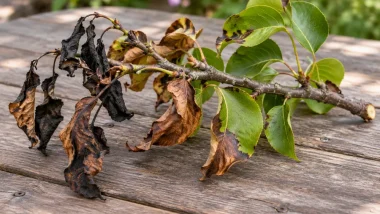
About four to six hours of morning sunlight is a good starting point. Too much direct afternoon sunlight during June, July, and August can cause the leaves to wilt, turn brown, or develop scorched edges.
The east side of your home or underneath a patio with filtered sunlight is an excellent location for growing mint. Avoid planting it in deep shade, as this can result in thin, leggy growth.
8 Popular Types of Mint Plants
1. Spearmint (Mentha spicata) – Yerba Buena
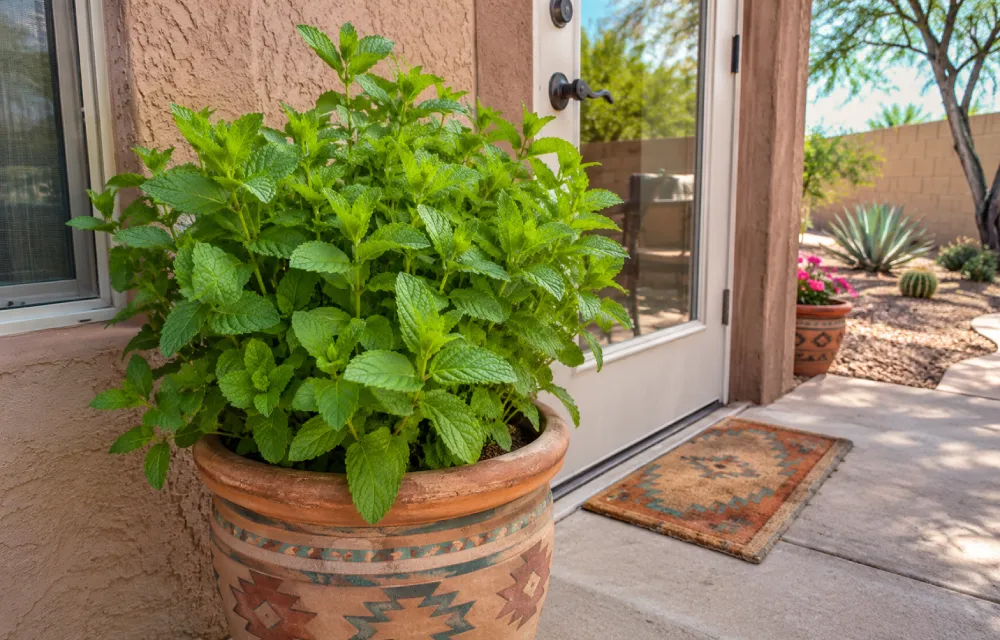
Spearmint is one of the most popular types of mint plants. It produces bright green, somewhat wrinkled leaves with a refreshing, mildly sweet flavor. It is excellent for making iced tea, adding to salads, and flavoring cold drinks.
- Height: 12-36 inches.
- Cold tolerance: Very good.
- Sun exposure: Morning sun and afternoon shade.
- Growth rate: Fast.
- Watering needs: Moderate to frequent during summer.
2. Peppermint (Mentha × piperita)
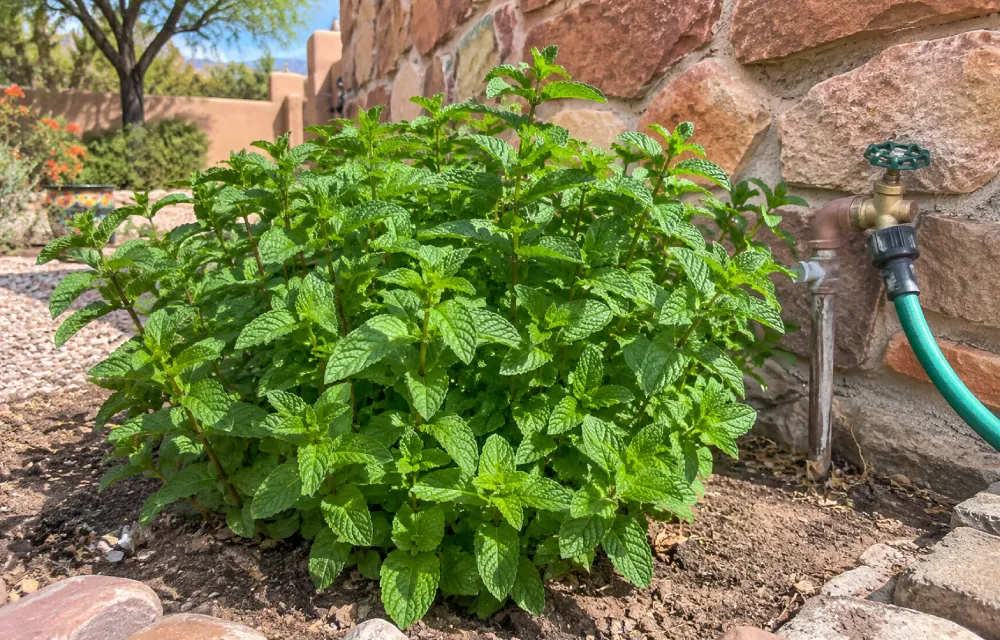
Peppermint has a stronger fragrance and a higher menthol content than spearmint. Its leaves are typically darker green, and the stems sometimes have a reddish-purple color.
It is commonly used in herbal teas, desserts, and candies. Peppermint is also one of the more cold-hardy mint varieties.
- Height: 12-36 inches.
- Cold tolerance: Very good.
- Sun exposure: Full sun to partial shade.
- Growth rate: Fast.
- Watering needs: Keep the soil moderately moist.
3. Chocolate Mint (Mentha × piperita ‘Chocolate’)
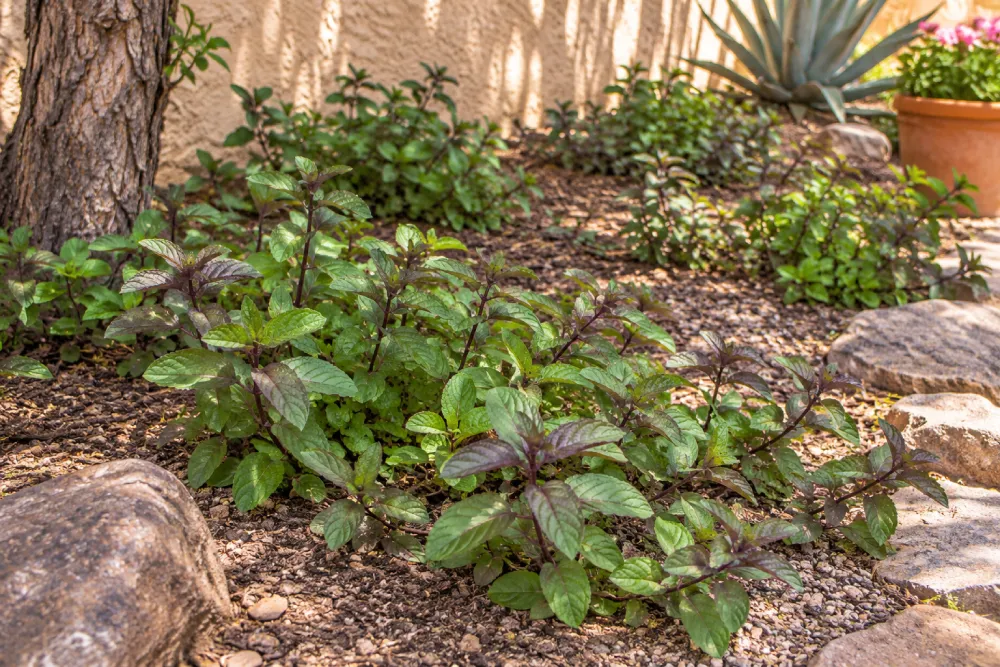
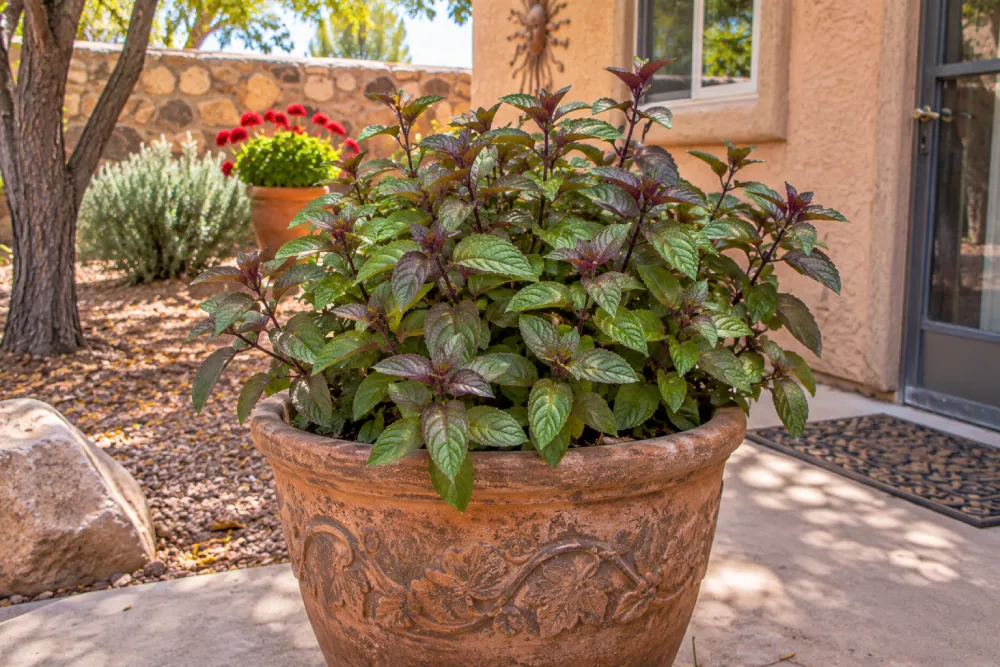
Chocolate mint has dark green leaves, brownish-purple stems, and a fragrance that resembles chocolate peppermint candy.
It is a great plant to grow in a decorative container near your patio. Use the leaves in hot chocolate, desserts, tea, or ice cream.
- Height: 12-24 inches.
- Cold tolerance: Good.
- Sun exposure: Partial shade in hot climates.
- Growth rate: Fast.
- Watering needs: Regular watering.
4. Apple Mint (Mentha suaveolens)
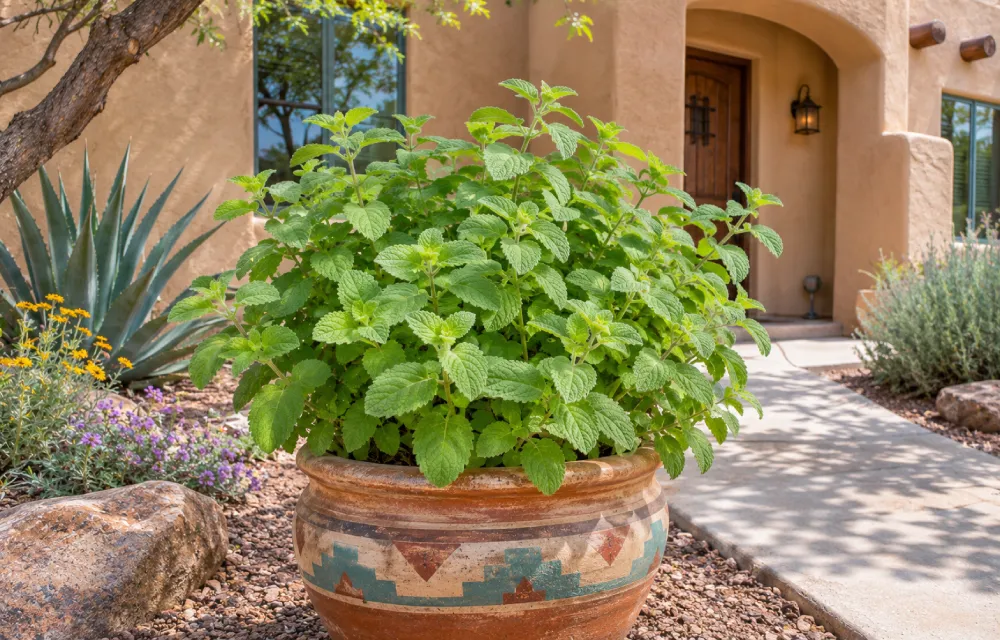
Apple mint, sometimes called woolly mint, produces rounded, light green leaves with a soft, fuzzy texture. The leaves have a mild, fruity mint fragrance.
It is an attractive plant for an outdoor herb garden and will produce small flowers that attract bees and other beneficial insects.
- Height: 18-36 inches.
- Cold tolerance: Very good.
- Sun exposure: Full sun to partial shade.
- Growth rate: Fast.
- Watering needs: Moderate to frequent.
5. Pineapple Mint (Mentha suaveolens ‘Variegata’)
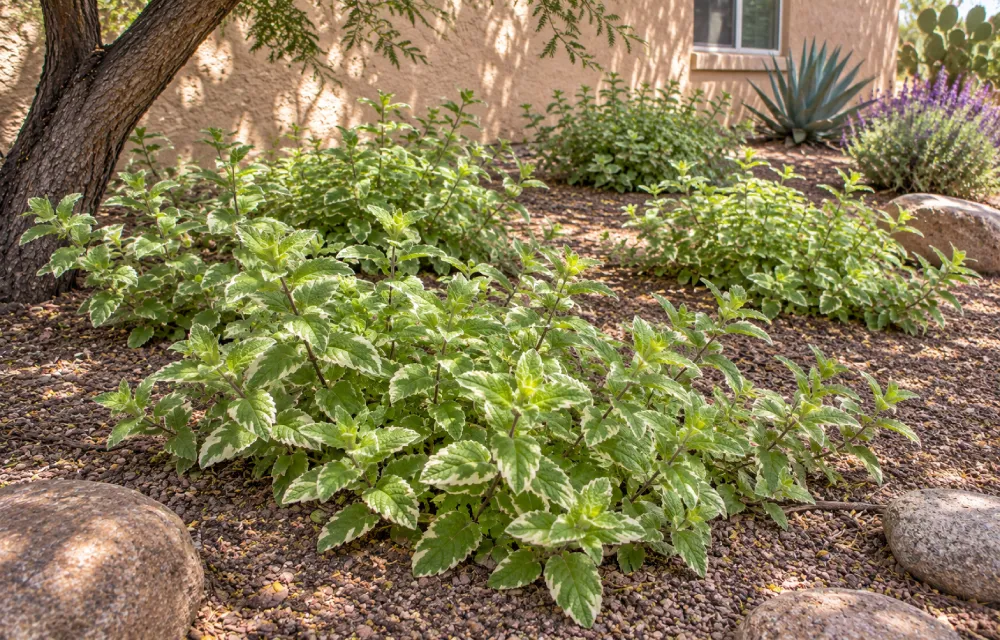
Pineapple mint is an attractive variety with green leaves surrounded by creamy-white edges. It has a mild, fruity fragrance and looks especially good in decorative pots.
This particular mint is more susceptible to sunburn than solid green varieties. Give it plenty of protection from our hot Southwestern afternoon sun.
- Height: 12-24 inches.
- Cold tolerance: Good.
- Sun exposure: Partial shade.
- Growth rate: Moderate to fast.
- Watering needs: Regular watering.
6. Orange Mint (Mentha × piperita ‘Citrata’)
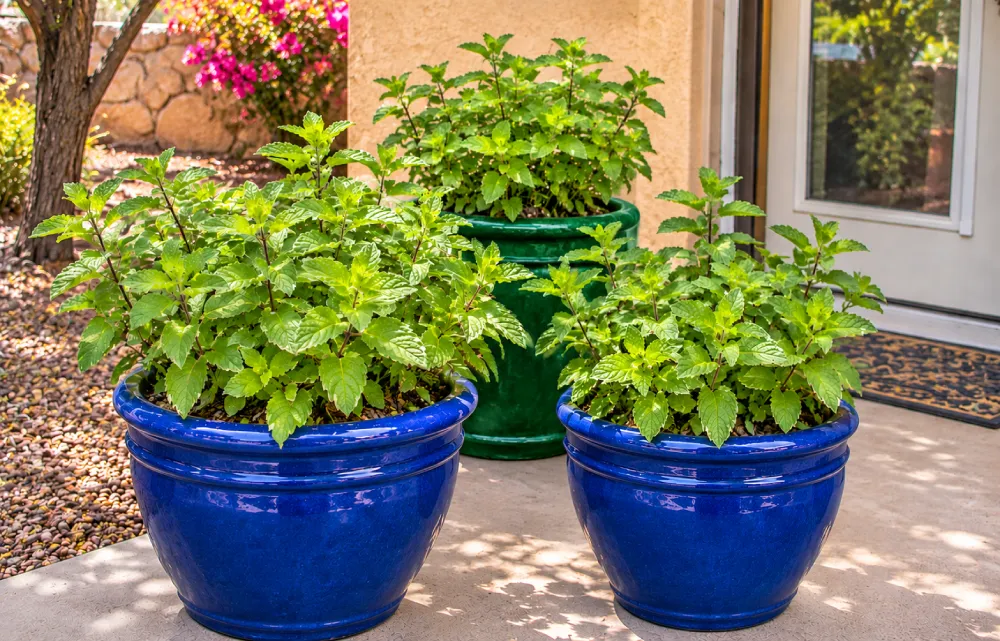
Orange mint, also called bergamot mint, produces a pleasant citrus-like fragrance when you rub its leaves between your fingers. It is excellent for fruit salads, lemonade, and herbal teas.
Plant it near an outdoor seating area where you can enjoy its fragrance.
- Height: 12-24 inches.
- Cold tolerance: Good.
- Sun exposure: Morning sun and afternoon shade.
- Growth rate: Fast.
- Watering needs: Moderate to frequent.
7. Ginger Mint (Mentha × gracilis)
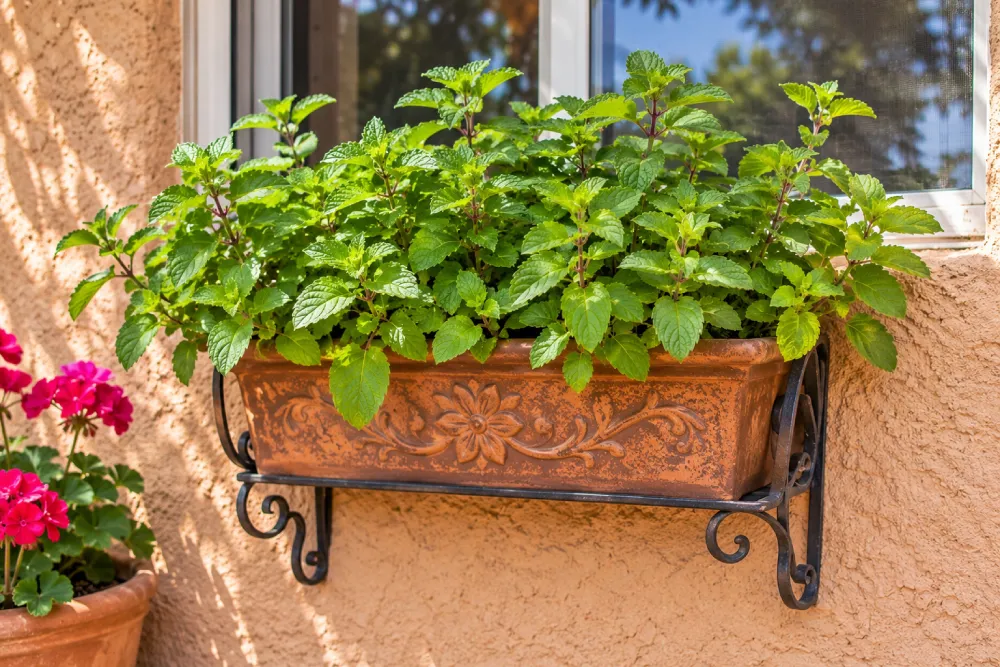
Ginger mint has a mild, spicy mint fragrance. Some varieties produce attractive green leaves with yellow streaks, making them a good choice for ornamental herb gardens.
Give variegated varieties some protection from intense afternoon sunlight.
- Height: 12-24 inches.
- Cold tolerance: Good.
- Sun exposure: Partial shade in the Southwest.
- Growth rate: Fast.
- Watering needs: Regular watering.
8. Mojito Mint (Mentha × villosa)
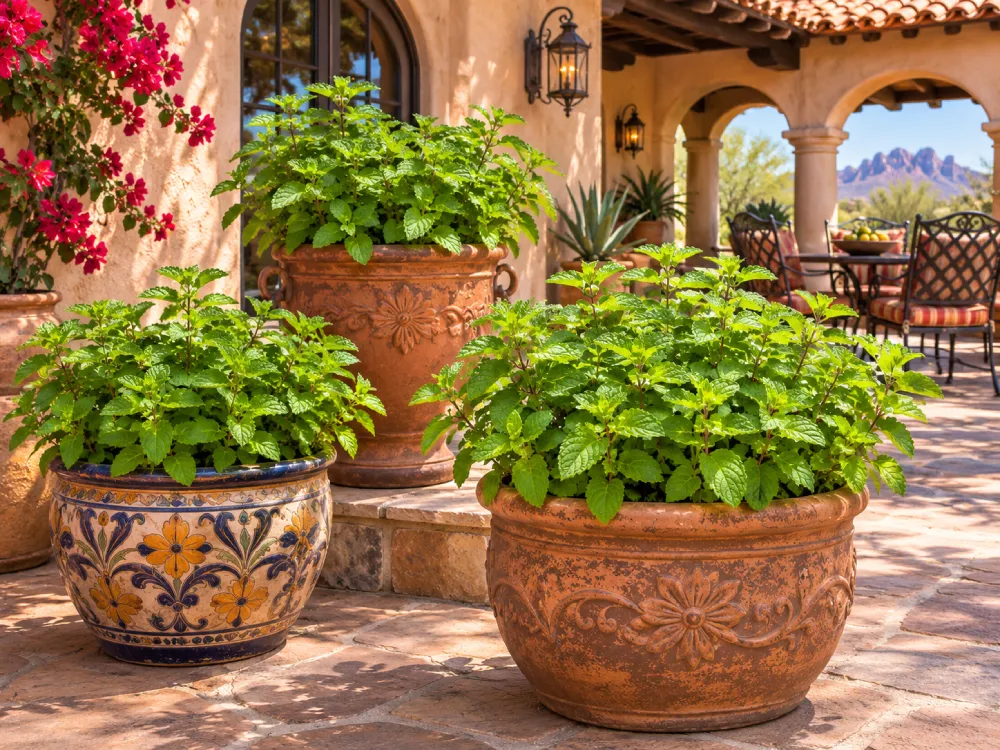
Mojito mint has a mild, refreshing flavor that is not quite as strong as peppermint. It is commonly used in mojitos, lemonade, iced tea, and other refreshing summertime drinks.
It is an excellent mint variety to grow in containers near your kitchen or outdoor patio.
- Height: 12-24 inches.
- Cold tolerance: Moderate to good.
- Sun exposure: Morning sun and afternoon shade.
- Growth rate: Fast.
- Watering needs: Regular watering.
How Cold Can Mint Plants Tolerate?
Most common mint plants are cold-hardy perennials. Established varieties such as spearmint, peppermint, and apple mint can survive temperatures well below freezing when planted in the ground.
Some hardy varieties can survive winter temperatures as low as -20°F under suitable growing conditions.
Here in Las Cruces, it is normal for mint plants to turn brown and die back during the winter months. This does not necessarily mean the plant is dead. The underground roots will often remain alive and produce new growth once temperatures warm up in early spring.
Mint planted in containers is more vulnerable to freezing temperatures because the roots are above ground. Move your pots to a protected location during unusually cold weather.
For more information on cold-hardy mint varieties and growing requirements, visit Utah State University Extension’s guide on how to grow mint in your garden.
Mint Plant Comparison Chart
| Type of mint | Cold tolerance | Best Southwest location |
|---|---|---|
| Spearmint | Very good | Morning sun |
| Peppermint | Very good | Partial shade |
| Chocolate mint | Good | Partial shade |
| Apple mint | Very good | Morning sun |
| Pineapple mint | Good | Filtered sunlight |
| Orange mint | Good | Partial shade |
| Ginger mint | Good | Partial shade |
| Mojito mint | Moderate to good | Morning sun |
Cold tolerance and mature size will vary depending on the cultivar, growing conditions, and whether the mint is planted in the ground or in a container.
Growing Mint in Pots and Containers
One of the best ways to grow mint is in a pot or container. Why? Because mint can spread rapidly throughout your garden.
Mint produces underground stems that can spread into nearby flower beds, lawns, and vegetable gardens. Once established, it can be difficult to remove completely.
Use a container that is at least 12-16 inches wide with good drainage holes at the bottom. Fill it with a good-quality potting soil that retains moisture but drains well.
Here in the Southwest, larger containers are preferable because they will not dry out as quickly during the hot summer months.
Mint is not the only herb that grows well in containers here in the Southwest. Rosemary is another excellent choice, especially if you are looking for a low-water herb. Learn more about how to grow rosemary in the Southwest.
How Often Should You Water Mint Plants?
Unlike rosemary, lavender, and many other herbs that grow well in the desert Southwest, mint likes a little more moisture.
Do not let the soil dry out completely for extended periods. Water thoroughly whenever the top inch of soil begins to feel dry.
During the hottest part of summer, mint growing in pots may need water daily. Plants growing in the ground will generally require less frequent watering.
During the winter months, reduce your watering considerably, but do not allow the roots to remain completely dry.
Too much water, especially in poorly drained soil, can cause root rot and other fungal problems.
For more information on watering garden plants in our desert climate, read our article on how often you should water plants in Las Cruces.
The Best Soil for Growing Mint
Mint grows best in fertile soil that contains plenty of organic matter. Much of our soil here in southern New Mexico is alkaline, sandy, or compacted.
Mix some well-aged compost into your existing garden soil before planting. This will help improve moisture retention and soil structure.
Adding a thin layer of organic mulch around your mint plants will also help keep the roots cooler during summer and protect them during colder winter weather.
When Is the Best Time to Plant Mint?
Early spring and early fall are excellent times to plant mint in the lower elevations of southern New Mexico.
Spring planting gives the roots time to become established before the hot summer months. Early fall planting allows the plant to develop roots while temperatures are cooling down.
You can also plant mint during summer, but you will need to provide additional shade and pay close attention to watering.
How to Fertilize Mint Plants
Mint does not require large amounts of fertilizer. A light application of an all-purpose fertilizer in early spring is usually sufficient for plants growing in fertile garden soil.
Mint growing in containers may benefit from occasional applications of a diluted liquid fertilizer during the growing season.
Avoid over-fertilizing your mint plants. Too much fertilizer can produce excessive, weak growth and may reduce the intensity of the leaves’ fragrance and flavor.
Should You Let Mint Plants Flower?
Mint plants produce small white, pink, or lavender-colored flowers, depending on the variety. These flowers attract bees, butterflies, and other beneficial insects.
If you are growing mint primarily for its leaves, pinch off the flower buds to encourage additional leafy growth.
However, if you want to attract pollinators into your garden, allow some of your mint plants to flower.
How to Propagate Mint Plants
Mint is one of the easiest herbs to propagate from cuttings.
Cut a healthy stem about four to six inches long. Remove the lower leaves and place the stem in a glass of clean water near a bright window, away from intense sunlight.
Change the water every few days. You will often see small roots developing within one to two weeks.
Once the roots are well developed, transplant the cutting into a small pot filled with good-quality potting soil.
You can also propagate mint by dividing an established plant in early spring or fall.
Common Mint Plant Problems, Pests and Diseases
Mint plants are relatively easy to maintain, but they can occasionally develop problems.
Spider mites: These tiny pests are more common during hot, dry weather. Look for small yellow speckles on the leaves and fine webbing underneath them.
Aphids: Small insects that feed on tender new growth, sometimes causing the leaves to curl.
Mint rust: A fungal disease that produces orange or rusty-brown spots, particularly on the undersides of the leaves.
Powdery mildew: A fungal disease that appears as a whitish powder on the foliage.
Root rot: Usually caused by excessive watering or poorly drained soil.
Leaf scorch: Brown, dry leaf edges can indicate excessive sunlight, hot winds, or insufficient watering.
Provide good air circulation, avoid constantly wet foliage, and inspect your plants regularly.
If you need to use an insecticide or fungicide, ensure the product is specifically labeled for use on edible herbs.
Frequently Asked Questions About Mint Plants
Does mint come back every year?
Yes. Most mint varieties are perennial plants that return from their roots in spring, even after the foliage dies back during winter.
Is mint a drought-tolerant plant?
Not particularly. Mint requires more moisture than most Mediterranean and desert-adapted herbs.
Can you grow mint indoors?
Yes. Place your mint near a bright window with plenty of natural light. Use a container with good drainage and keep the soil slightly moist.
Can you plant different types of mint together?
Yes, but I recommend growing each variety in its own container. More aggressive varieties can quickly crowd out slower-growing plants.
Does mint repel mosquitoes?
Crushed mint leaves release fragrant oils, but simply placing mint plants around your patio will not reliably keep mosquitoes away.
What is the easiest type of mint to grow?
Spearmint and peppermint are excellent choices for beginner gardeners. Both are vigorous, cold-hardy, and relatively easy to maintain.
Conclusion – Growing Mint in the Southwest
There are many types of mint plants that will do well here in Las Cruces and throughout the Southwest. The secret to keeping your mint plants looking good is to provide regular watering, good soil, and some protection from the intense afternoon sun.
My recommendation is to grow mint in containers rather than directly in your garden. This will help prevent it from taking over your flower beds and make it easier to move the plants when necessary.
Visit Guzman’s Garden Centers in Las Cruces, New Mexico, for herbs, vegetable plants, potting soils, fertilizers, and advice on growing plants in our Southwestern climate. Herb availability will vary according to the season.
Be sure to sign up for our free gardening newsletter for more tips on growing plants throughout the desert Southwest.
New to Southwest Gardening?
Stop wasting money on plants that will not survive our heat and drought.
My Southwest Gardening Made Simple eBook shows you which trees, shrubs, flowers, and vegetables actually thrive in New Mexico, Arizona, and West Texas.
The best plants for hot, dry climates
Common mistakes that kill Southwest plants
Easy-to-follow advice for beginners

Paul Guzman is a lifelong Southwest gardener and gardening writer with decades of experience helping homeowners grow beautiful landscapes in the desert Southwest. He writes for Guzman’s Garden Centers in Las Cruces, New Mexico, with contributing expertise from Gary Guzman, owner of Guzman’s Garden Centers. If you have any questions or enjoyed this post, feel free to share your thoughts in the comments below.