What to Plant Now for a Colorful Fall Yard: Is your yard looking a little worn out after another Las Cruces summer? You are probably not alone. Months of hot sunshine can leave flowers tired, pots looking bare, and the front entrance ready for something fresh.
The good news is that you still have time to add color.
Fall gardening in the Desert Southwest gives us a chance to enjoy flowers without quite so much summer heat. A few colorful plants near the front door, along a walkway, or beside your patio can make a noticeable difference. You do not have to redo the whole yard.
But here is something to remember: September in Las Cruces can still feel like summer. Choose plants for the temperatures we are actually having, and save some of the cool-season flowers for when the weather settles down.
Let’s look at what to plant now for a colorful fall yard—and which plants are worth waiting a little longer for.
Start With Mums for Classic Fall Color
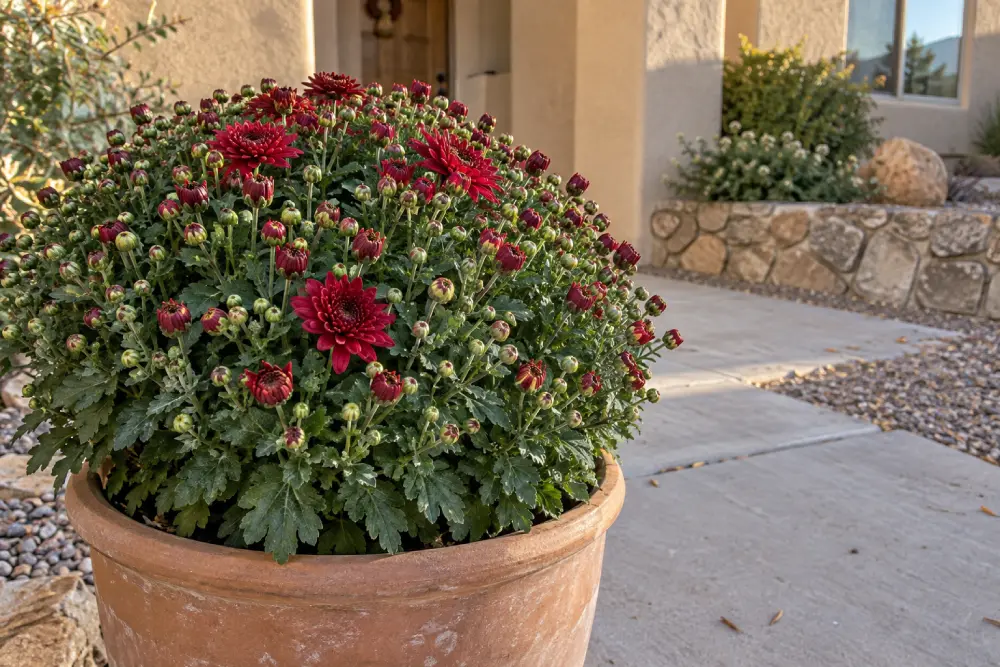
When people think about fall flowers, chrysanthemums usually come to mind first. We simply call them mums.
Their rounded shape and colorful blooms work well in decorative containers, flower beds, and front entrances. Yellow, bronze, orange, purple, white, and crimson red give you plenty of choices.
For a simple display, place one large mum in a decorative pot near your entrance. If you have more room, use three pots of different heights and repeat one or two flower colors.
Choose mums with plenty of unopened buds. A plant covered entirely in open flowers looks beautiful today, but one with buds just beginning to show color generally gives you a longer display to enjoy.
While afternoons remain hot, a location with morning sunshine and some afternoon shade can help keep the plant from drying out so quickly. As temperatures cool, a sunnier spot may work well.
Check the soil regularly. A large mum in a small nursery pot can dry out surprisingly fast, especially beside a sunny wall. Water the soil thoroughly and let excess water drain.
Mums planted in the ground may return, depending on the variety, planting time, and growing conditions. However, a fall purchase is not a guarantee of a permanent perennial.
For more detail, see our guide to caring for chrysanthemums.
Add Pansies When the Weather Cools

Pansies are hard to beat for cheerful cool-season color. Their flowers come in yellow, purple, blue, white, burgundy, and combinations that almost look painted.
They fit nicely into pots, borders, and small beds near a walkway. You can use one color for a simple arrangement or mix several for a brighter display.
The trick in Las Cruces is timing.
Do not rush pansies into a hot, exposed bed simply because the calendar says fall. If afternoons are still very hot, wait for cooler conditions. A south- or west-facing wall can make their planting spot much warmer than the air temperature suggests.
Once the weather cools, give them a sunny location with well-drained soil. Remove faded flowers to keep the plants looking tidy and encourage continued flowering.
Pansies can provide color through much of our cool season, although a hard freeze may temporarily slow flowering or damage blooms. Results depend on the variety and the weather.
Use Violas Around the Edges of Pots
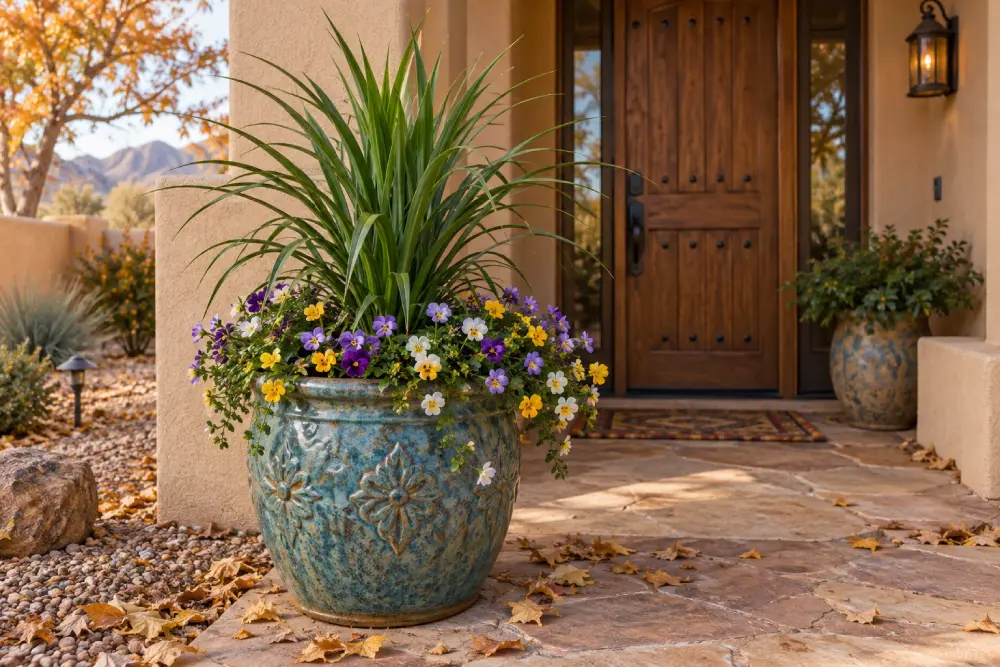
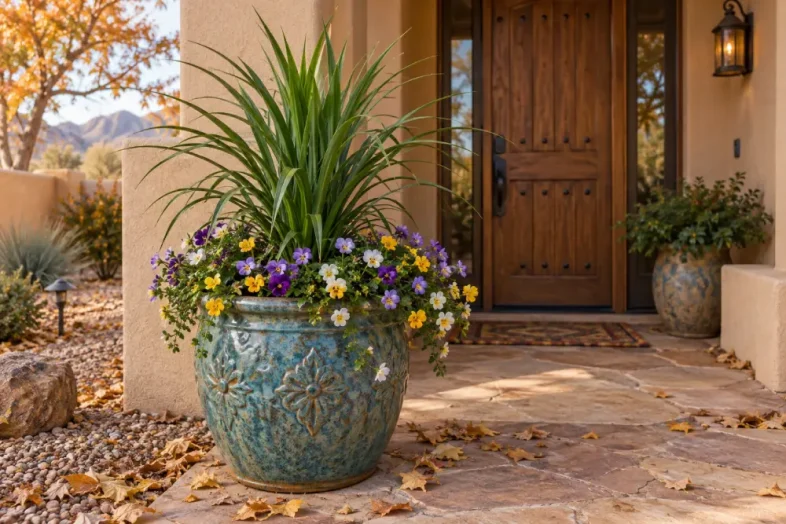
Violas have smaller flowers than pansies, but they often produce plenty of them. They are useful when you want color around the edge of a container or along the front of a flower bed.
Try purple violas around a pot of yellow pansies. Or combine white violas with burgundy pansies for a softer arrangement.
Like pansies, violas are better suited to cooler weather than lingering September heat. Give them room to grow instead of packing every inch of the container with plants.
A pot does not need to look completely full on planting day. With proper care, the plants will fill some of that space themselves.
Plant Dianthus for Pink, Red, and White Flowers
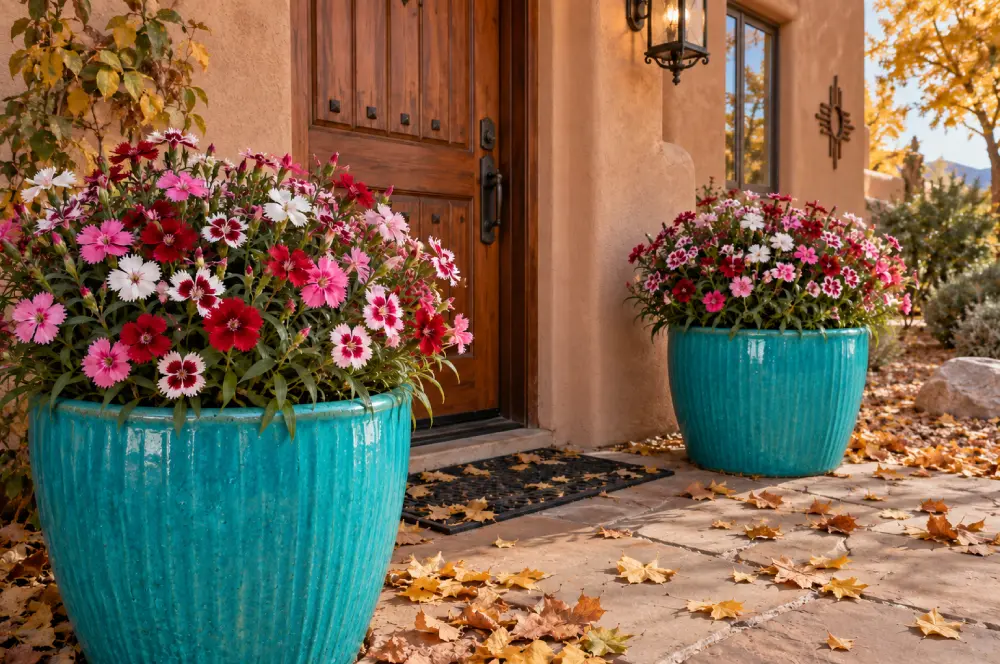
Dianthus is another good choice for a colorful fall planting. Many varieties have flowers with fringed edges, and some have a pleasant fragrance.
Their compact growth makes them useful near the front of a bed or in containers where taller plants would block the view.
Pink dianthus can soften the look of a gravel yard. Red and white varieties look good near an entrance, especially when you repeat the colors in nearby pots.
Choose a sunny location with good drainage. Avoid planting too deeply or piling wet mulch against the crown, where the stems meet the roots.
Dianthus varieties differ in size, cold tolerance, and lifespan. Some are grown mainly for seasonal color, while others make longer-lasting garden plants. Check the plant label or ask which variety fits your location.
Once flowers fade, trim off the spent blooms to keep the planting looking fresh.
Try Calendula for Yellow and Orange Color
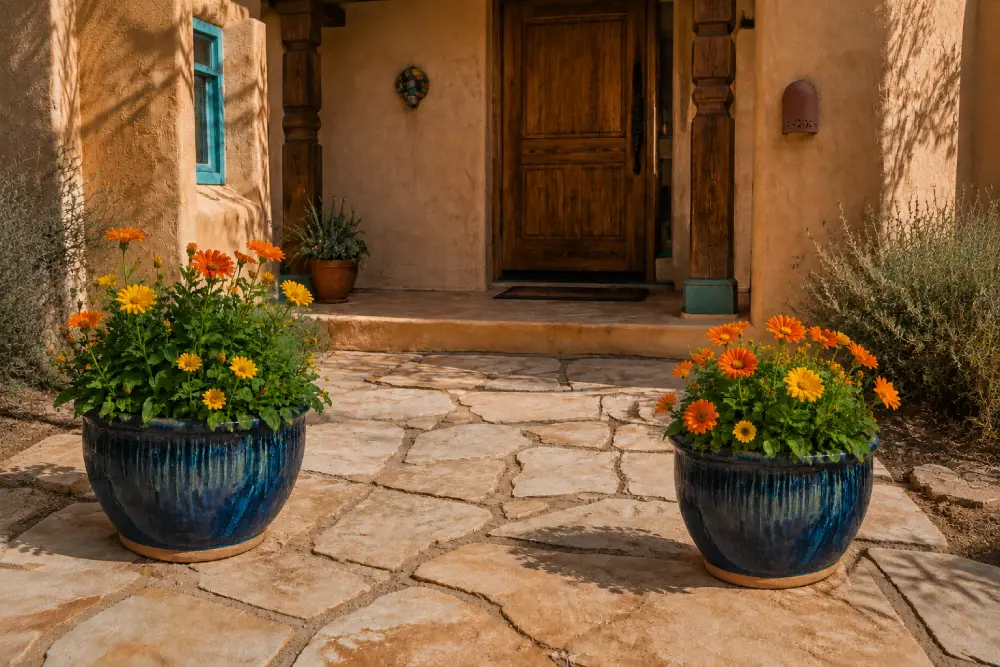
Calendula brings warm yellow and orange flowers to a cool-season garden. Those colors look right at home beside stucco, rock walls, and terracotta pots.
You may hear calendula called pot marigold, but it is a different plant from the familiar summer marigolds.
Use it in a sunny flower bed or a container with drainage holes. Like other cool-season flowers, it is best planted when intense summer heat begins easing.
Remove faded flowers to help extend the display. If you want to collect seeds, leave a few flowers to mature toward the end of the season.
Calendula is a good option when you want something colorful without making the whole planting complicated.
Add Snapdragons for Height
Not every fall flower needs to form a little mound. Snapdragons give your planting some upright growth, which helps break up a row of rounded plants.
They come in several sizes. Short varieties work well in containers and borders, while taller types can stand behind lower-growing flowers.
Try taller snapdragons toward the back of a bed, with pansies or violas in front. In a large pot, a compact or medium-height variety can provide the center height.
Check the label before buying. A tall variety may overwhelm a small container.
Snapdragons generally perform better in cool conditions than in extreme heat. Give them sunshine, good drainage, and enough space for air to move between plants. Flowering can slow during cold spells and pick up again when conditions improve.
Include Colorful Leaves, Too
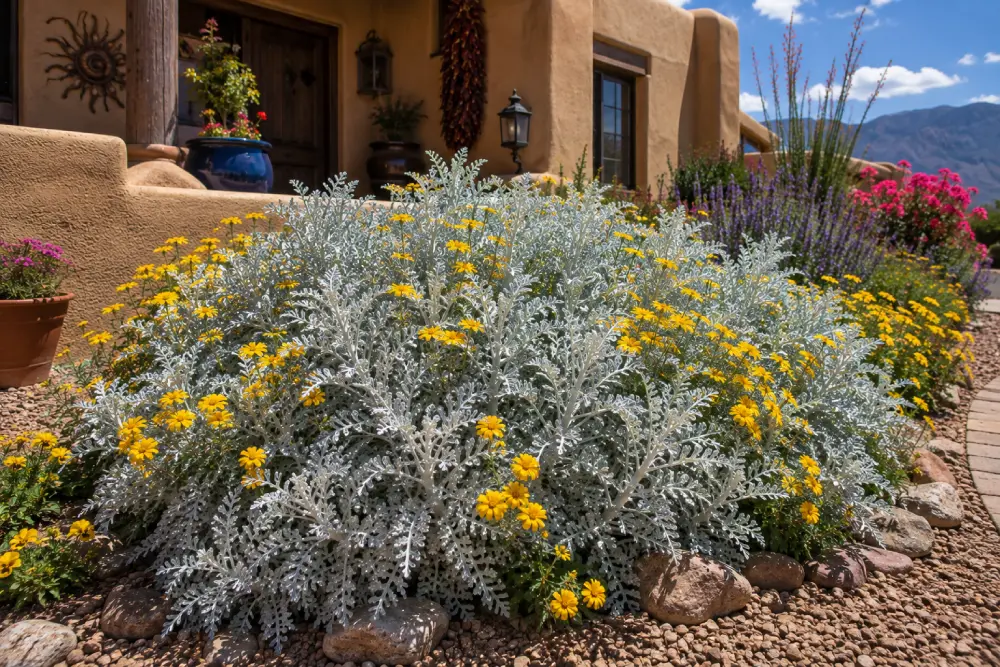
Flowers are only part of a colorful fall yard. Foliage can help a container or flower bed look attractive between blooms.
Dusty miller provides silvery leaves that pair well with purple, burgundy, yellow, and orange flowers. It is especially useful when you want a little separation between strong colors.
Ornamental kale and cabbage offer pink, purple, white, and green foliage. Their strongest colors generally develop as temperatures cool, so do not expect a warm September planting to look exactly like a midwinter display.


Keep their eventual size in mind. One ornamental cabbage can become a substantial part of a container.
Coral bells, also called Heuchera, offer foliage in shades such as purple, caramel, lime, and deep burgundy. In our Southwest conditions, they need a protected location, usually with morning light and afternoon shade. They are a better choice for a sheltered patio planting than an exposed gravel bed receiving hot afternoon sun.
The goal is to choose foliage that fits the growing conditions of the flowers beside it.
Keep Enjoying Warm-Season Flowers Until Frost
You do not have to remove healthy summer flowers to make room for fall.
If your lantana, zinnias, marigolds, or other warm-season plants are still blooming, enjoy them while the weather allows. Trim off faded flowers where appropriate, check their watering, and tidy up damaged growth.
These plants can carry color into fall, but frost may end their display.
There is also a difference between keeping an established plant and buying a new one late in the season. Before purchasing more warm-season annuals, consider how much growing time remains and whether you would rather invest in flowers for the cooler months.
For more container ideas, visit our colorful plants for pots in New Mexico guide.
Make One Small Area Look Good
One of the easiest mistakes is spreading a few plants all over the yard. Each plant may be pretty, but the overall effect gets lost.
Instead, choose one area you see every day.
That might be the front entrance, the patio beside your favorite chair, or a small bed along the walkway.
Here are three combinations to consider:
- For immediate fall color: A bronze or yellow mum in a large decorative pot, with nearby pots repeating the same flower color.
- For cooler weather: Yellow pansies with purple violas around the edge of a wide container.
- For a sunny flower bed: Snapdragons toward the back, dianthus in the middle, and violas along the front.
Plant each combination when conditions suit its plants. You can also keep nursery pots inside decorative containers temporarily, making it easier to replace a finished mum with cool-season flowers later. Empty any water that collects inside the outer container.
Give Your Fall Plants a Good Start
Fresh flowers will not solve a drainage problem or a watering problem. Spend a little time preparing their new home.
For containers, use a quality potting mix and a pot with drainage holes. Avoid filling pots with heavy yard soil, which can become compacted and drain poorly.
For flower beds, loosen the planting area and work in a modest amount of finished compost where appropriate. If water stands in the bed after irrigation, address that before planting.
Water new plants thoroughly after planting. Then check moisture where the roots are growing. The surface may look dry while the soil underneath is still wet—or a nursery root ball may dry out while the surrounding soil remains damp.
As temperatures drop, plants often need water less frequently. Adjust according to soil moisture, plant needs, and exposure instead of following the summer schedule automatically.
A light layer of mulch can help moderate moisture, but keep it away from plant crowns and stems.
Bring a Little Fall Color Home
A colorful fall yard does not require dozens of plants. Sometimes one large mum beside the front door or two well-planted patio containers are enough to make the space feel fresh again.
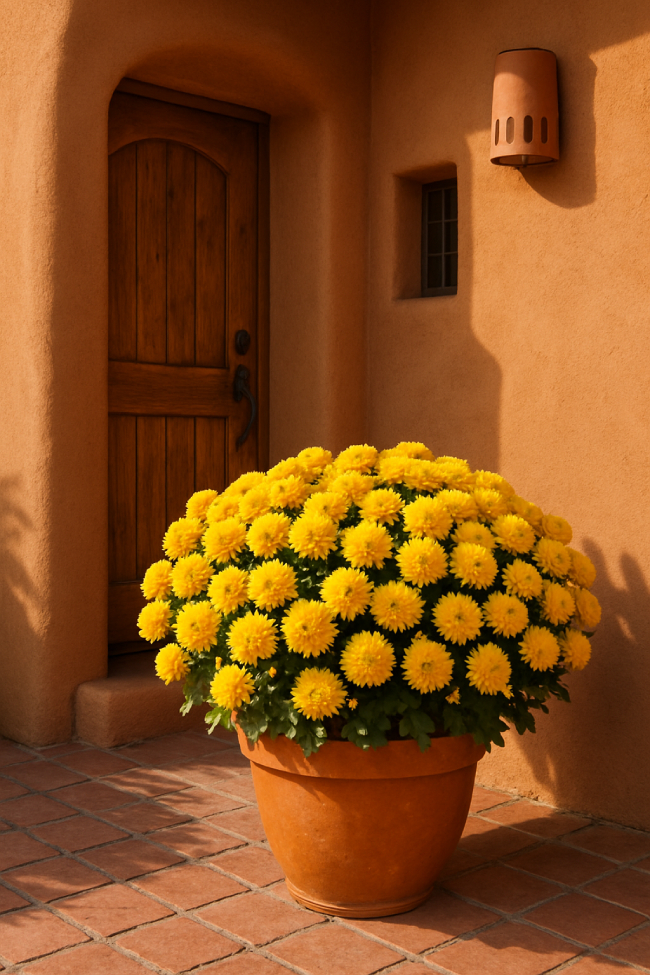
Start with a spot you enjoy, choose plants that suit its sunlight, and let the weather guide your planting time.
If you are unsure what will work, stop by either of our Guzman’s Garden Centers locations in Las Cruces. Tell us how much sun the area receives—or bring a picture—and we can help you choose plants for a colorful fall display.
“For more information on growing and caring for pansies, visit NC State Extension’s pansy guide.”
New to Southwest Gardening?
Stop wasting money on plants that will not survive our heat and drought.
My Southwest Gardening Made Simple eBook shows you which trees, shrubs, flowers, and vegetables actually thrive in New Mexico, Arizona, and West Texas.
The best plants for hot, dry climates
Common mistakes that kill Southwest plants
Easy-to-follow advice for beginners

Paul Guzman is a lifelong Southwest gardener and gardening writer with decades of experience helping homeowners grow beautiful landscapes in the desert Southwest. He writes for Guzman’s Garden Centers in Las Cruces, New Mexico, with contributing expertise from Gary Guzman, owner of Guzman’s Garden Centers. If you have any questions or enjoyed this post, feel free to share your thoughts in the comments below.