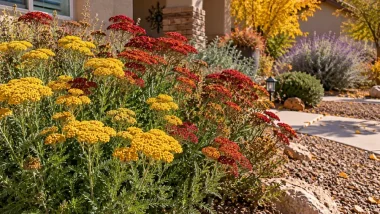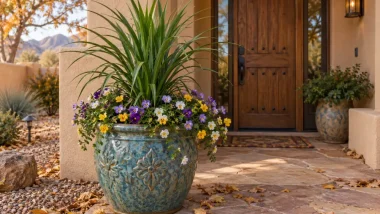
We spend a lot of time in southern New Mexico wishing for rain. Then, sometimes, Mother Nature decides to give us several days’ worth all at once.
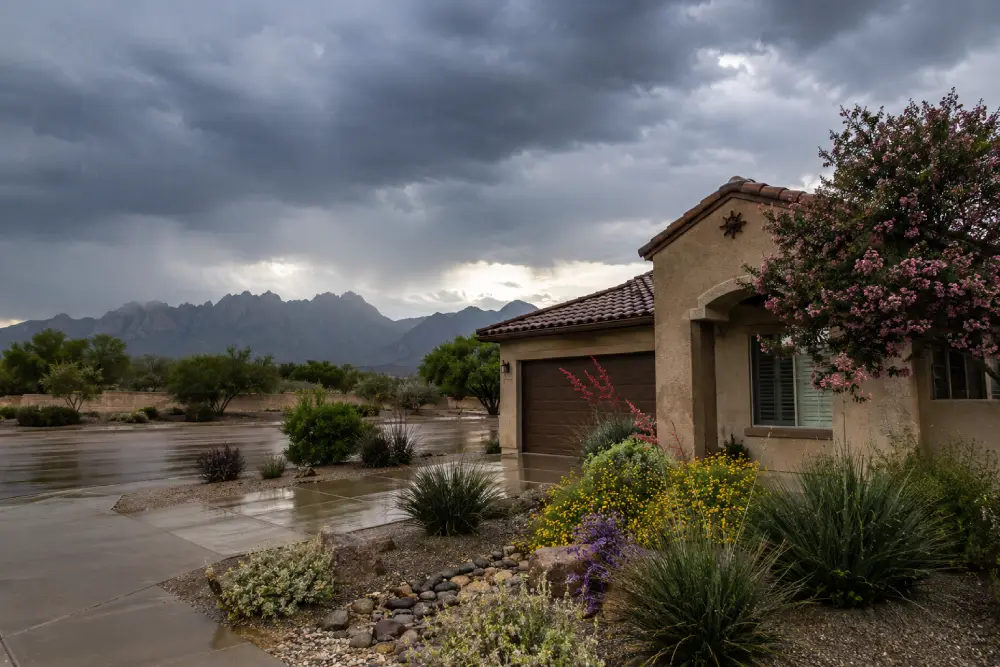
After several days of heavy monsoon rains in Las Cruces and throughout southern New Mexico, your landscape may look greener and healthier than it has in months. Our trees, shrubs, lawns, and garden plants certainly appreciate the moisture.
But there can be too much of a good thing.
Several days of heavy rain can leave soil saturated, wash away gravel and mulch, expose tree roots, encourage weeds, and create drainage problems. Plants that normally thrive in our dry climate can also struggle when their roots remain wet for too long.
So, what should you do after several days of heavy monsoon rain?
Before doing anything else, take a walk around your yard. Don’t automatically turn your irrigation system back on just because it is your normal watering day.
Here are some things you should check.
1. Turn Off Your Irrigation System
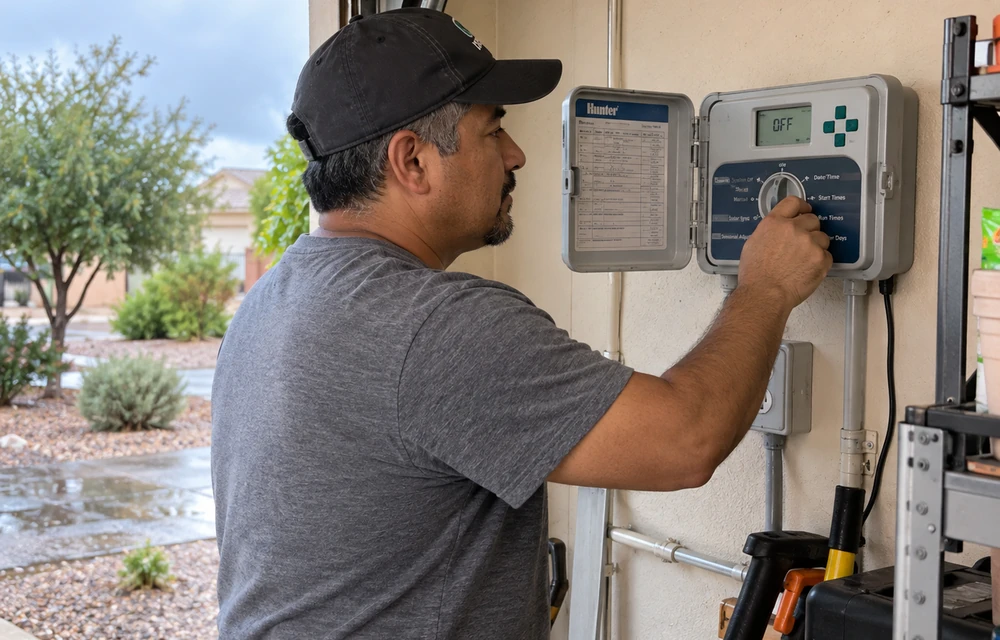
This should be the first thing you do after receiving substantial rainfall.
Many homeowners in Las Cruces have their irrigation systems programmed to run on specific days. That’s fine during our long stretches of hot, dry weather, but irrigation schedules should be adjusted when Mother Nature does the watering for us.
If your soil is already wet, there is no reason to add more water.
Check the soil several inches below the surface. Don’t judge moisture by looking at the top inch of soil. Our intense New Mexico sun can dry the surface while the soil underneath remains very wet.
Use a long screwdriver, soil probe, or even a small hand trowel to check the moisture.
If the soil is still moist several inches down, leave your irrigation system off.
The amount of rain that falls is not always the same as the amount of water that actually reaches the root zone. Heavy monsoon downpours can produce a lot of runoff, particularly on hard, compacted, or sloping soil.
2. Look for Standing Water Around Trees and Shrubs
Most landscape plants need water, but their roots also need oxygen.
When soil remains saturated for an extended period, the spaces that normally contain air fill with water. This can stress roots and eventually contribute to root rot and other problems.
Walk around your trees and shrubs and look for areas where water is still standing.
Pay particular attention to low spots and areas surrounded by landscape walls or edging that might prevent water from draining.
If you see standing water several hours after the rain has stopped, don’t add more irrigation.
You may also have a drainage problem that should be corrected before the next heavy rain.
3. Don’t Work Muddy Soil
It can be tempting to head outside after a rainstorm and start cleaning everything up.
Give the soil some time to dry first.
Walking repeatedly over wet garden soil can compact it. Digging, tilling, or cultivating saturated soil can also damage its structure and leave you with hard clumps once everything dries.
This is especially important if you have clay or compacted soil.
Wait until the ground is moist but no longer muddy before doing major digging or cultivating.
You can still pick up fallen branches and other debris, but give your garden beds a little time before you start working the soil.
4. Check Your Trees Carefully
Heavy rain combined with strong monsoon winds can be hard on trees.
Saturated soil doesn’t hold tree roots as firmly as dry soil, especially if the tree has a shallow or poorly developed root system. How to Keep Trees Healthy in the Desert Southwest.
Take a good look at your trees.
Check for:
- Broken or hanging branches
- Newly leaning trees
- Exposed roots
- Soil lifting around the root ball
- Cracks or splits in large branches
- Erosion around the base of the tree
A slight lean that has been there for years is one thing. A tree that suddenly started leaning after a storm is something entirely different.
Large damaged or leaning trees can be dangerous. If you see major root movement or large broken limbs, contact a qualified tree professional rather than trying to correct the problem yourself.
5. Check for Erosion and Washed-Out Gravel
This is a big one in Las Cruces.
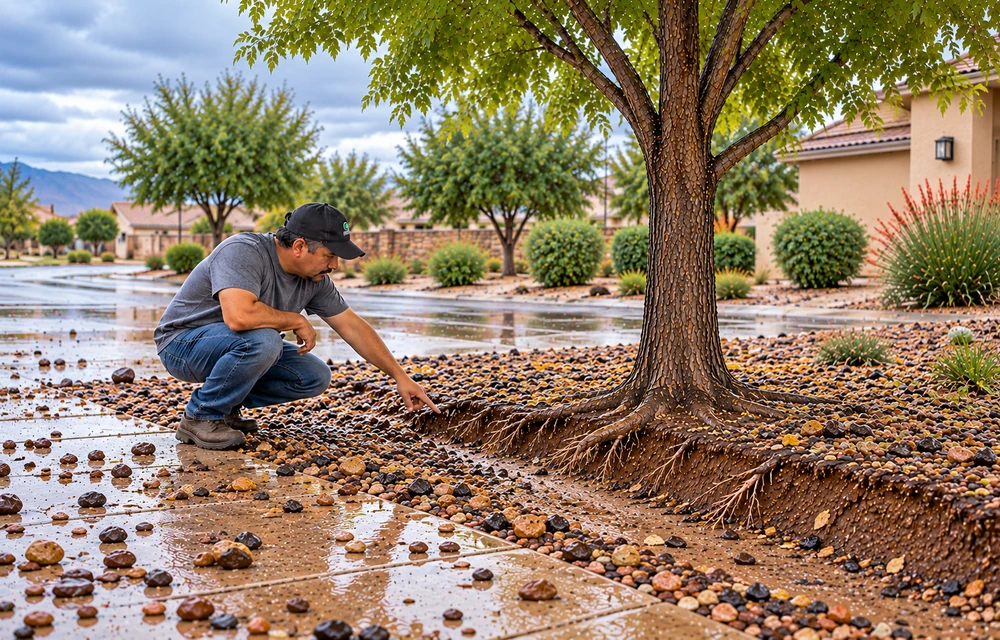
Many of our landscapes use decorative gravel, rock, decomposed granite, or mulch. Heavy rain can move all of it surprisingly fast.
Walk around your property and look for channels where water has cut through the landscape.
You may find gravel piled against a wall, mulch washed out of a flower bed, or bare soil where water rushed through the yard.
Don’t just rake everything back into place without thinking about why it happened.
The water was showing you where it naturally wants to go.
If the same area washes out every time we receive a heavy rain, you may need to redirect the water, improve the grade, install a drainage channel, or use larger rock to slow down the flow.
6. Take a Look at Your Container Plants
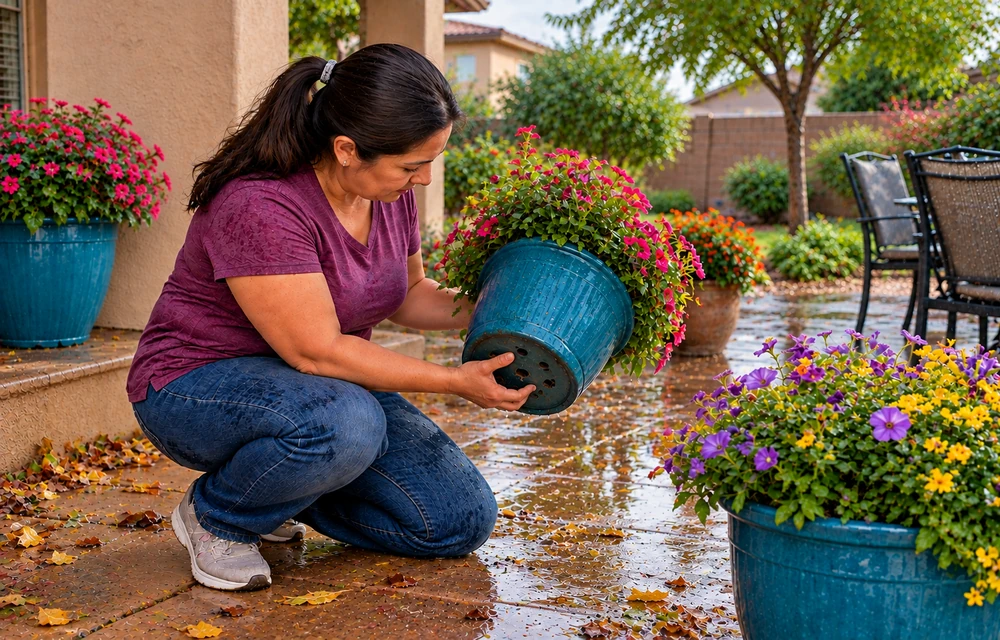
Don’t forget about your potted plants.
A large decorative container can collect a surprising amount of water during several days of rain.
Check the drainage holes underneath your pots. Leaves, roots, soil, and other debris can plug them.
If you use saucers underneath your containers, empty any standing water.
Most flowering annuals and many other container plants don’t like sitting in water for long periods.
If a container feels unusually heavy, the potting soil may still be saturated. Wait before watering it again.
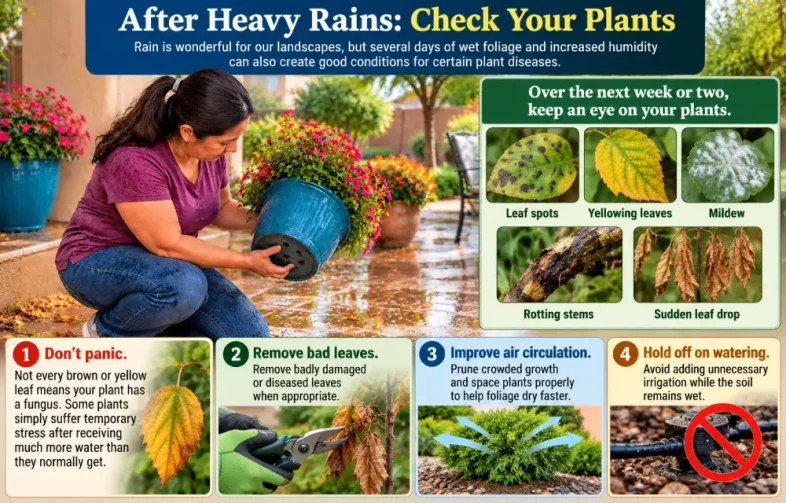
7. Watch for Fungus and Plant Diseases
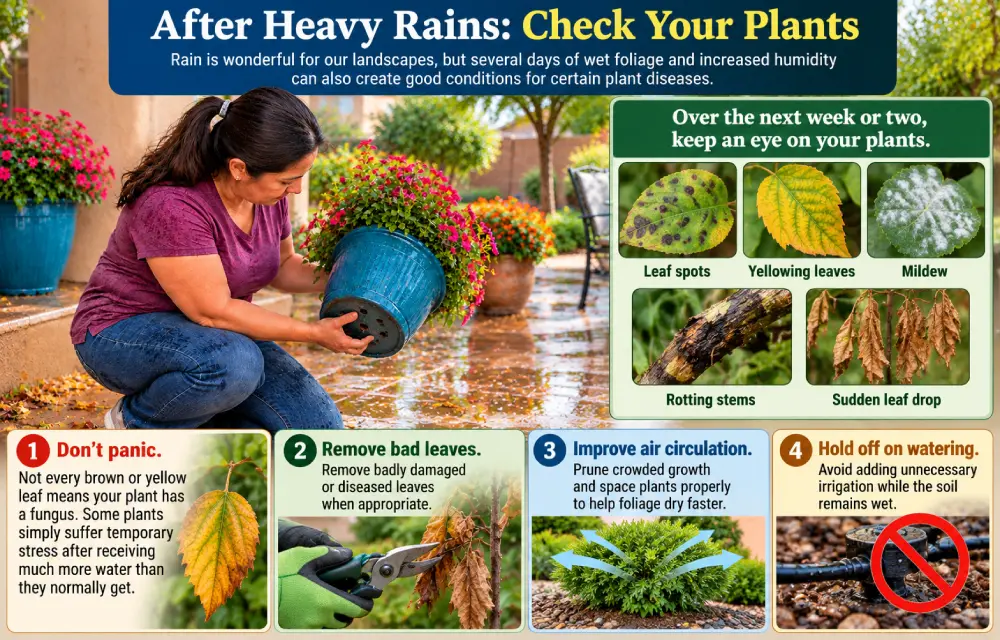
Rain is wonderful for our landscapes, but several days of wet foliage and increased humidity can also create good conditions for certain plant diseases.
Over the next week or two, keep an eye on your plants.
Look for unusual leaf spots, yellowing leaves, mildew, rotting stems, or leaves that suddenly begin dropping.
However, don’t automatically reach for a fungicide.
Not every brown or yellow leaf means your plant has a fungus.
Some plants simply suffer temporary stress after receiving much more water than they normally get.
Remove badly damaged or diseased leaves when appropriate, improve air circulation around crowded plants, and avoid adding unnecessary irrigation while the soil remains wet.
Insects and Diseases on Plants
8. Get Ready for Weeds
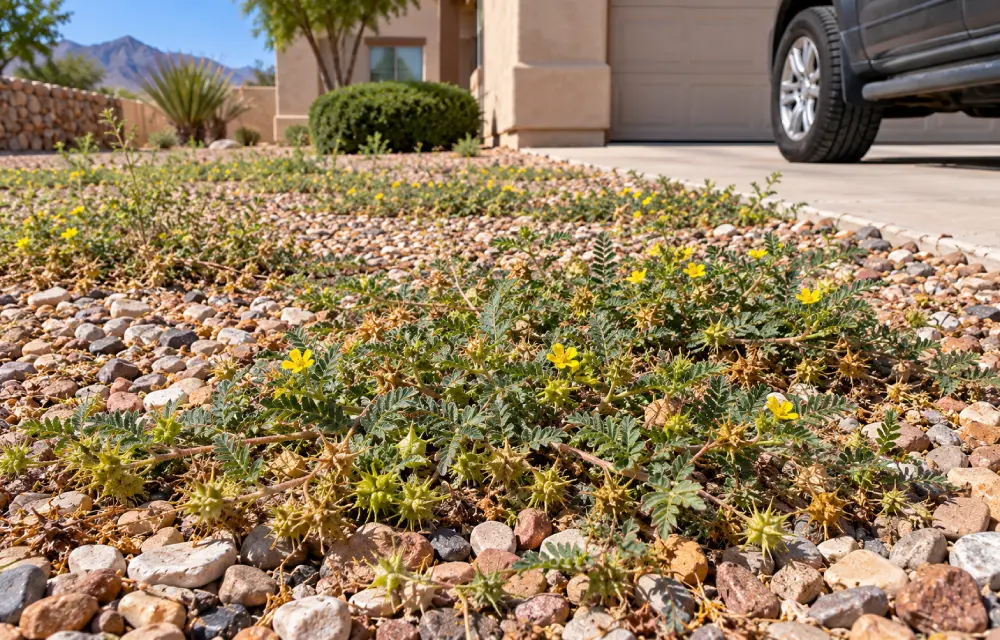
Unfortunately, your flowers aren’t the only plants that enjoy monsoon rains.
Weeds love them too. How to remove weeds after a monsoon rain
Weed seeds can sit in our desert soil for months waiting for the right conditions. Give them several days of moisture, and suddenly they are everywhere.
You’ll probably notice tiny weeds appearing within days of a good soaking.
This is actually one of the best times to get ahead of them.
Small weeds are much easier to pull than mature weeds with established root systems. The soil will also be softer after the rain, making many weeds easier to remove.
Try to remove them before they flower and produce another crop of seeds.
A little work now can save you a lot of work later.
9. Don’t Rush to Fertilize
Another mistake is assuming heavy rain means plants immediately need fertilizer.
Give them some time.
If the soil is saturated or plants are already stressed, adding fertilizer isn’t going to solve the problem. In some cases, it can create additional stress.
Let the soil drain and allow your plants to return to normal before deciding whether fertilizer is needed.
This is especially important as we move farther into fall. Many trees and shrubs don’t need a heavy dose of fertilizer this late in the growing season.
More fertilizer isn’t always better.
10. Check Your Vegetable Garden
If you have a fall vegetable garden, the rain may have been very helpful.
Lettuce, spinach, kale, Swiss chard, carrots, and other cool-season vegetables appreciate moisture, but they still need good drainage.
Check raised beds and garden rows for standing water.
Heavy rain can also splash soil onto the lower leaves of vegetables. Remove badly damaged foliage and keep an eye out for disease symptoms.
You may also discover that your freshly planted seeds have moved.
A strong downpour can wash small seeds into low spots or expose seeds that were planted too shallow.
Give your garden a few days and see what germinates before replanting everything.
11. Check Your Rain Gutters and Drainage Areas
Heavy monsoon rains are a good test of your home’s drainage system.
Look at where water came off your roof and where it traveled after reaching the ground.
Are your gutters clogged?
Are downspouts dumping large amounts of water next to your home’s foundation?
Did water collect next to a wall?
Did runoff from the roof wash out a flower bed?
These are problems that are easy to forget once everything dries out.
Make a note of them now while you can still see where the water traveled.
The next monsoon storm may expose the same problems again.
12. Don’t Assume You Are Finished Watering for the Season
After several days of heavy rain, it might seem like you won’t have to water again for weeks.
That isn’t necessarily true in southern New Mexico.
Our low humidity, sunshine, wind, and warm fall temperatures can dry the soil surprisingly fast.
Sandy soils can dry especially quickly.
The best approach is simple: check the soil before watering.
If the soil is still moist in the root zone, wait.
Once it begins drying, return to your normal watering schedule and adjust it according to the weather.
Plants don’t care what day of the week it is. They care whether their roots have enough moisture.
One Good Thing About Heavy Monsoon Rain
There is certainly a positive side to all this rain.
A good, soaking rain can wet a much larger area around trees than many drip irrigation systems do.
That’s important for established trees.
Tree roots don’t stay directly underneath the trunk. They spread outward through the surrounding soil, often well beyond what homeowners think of as the immediate root area.
Natural rainfall can provide moisture to areas of the root system that may not normally receive much water from a small irrigation basin or a few drip emitters.
You may also notice your desert-adapted plants responding quickly.
Texas sage is famous for producing spectacular blooms following summer rains. Desert willow, ornamental grasses, lantana, and many other Southwest plants can also respond beautifully to monsoon moisture.
And, of course, our desert landscape usually looks a lot greener after a good rain.
A Few Things NOT to Do After Heavy Rain
After several days of monsoon rain, avoid making these common mistakes:
- Don’t automatically turn your irrigation system back on.
- Don’t water a wilted plant until you check the soil. Wilt can sometimes occur when roots are sitting in saturated soil.
- Don’t dig or till muddy garden soil.
- Don’t fertilize waterlogged or severely stressed plants.
- Don’t pile additional soil around an exposed tree trunk or bury the root flare.
- Don’t ignore a tree that suddenly begins leaning.
- Don’t assume the soil is dry just because the surface looks dry.
- Never drive or walk through flowing water in streets, arroyos, or low-water crossings.
Take Advantage of the Rain
Here in southern New Mexico, we’ll take almost every drop of rain we can get.
Heavy monsoon rains can provide our landscapes with something that is difficult to duplicate with an irrigation system: widespread, natural moisture.
The important thing is knowing when your plants have had enough.
After several days of rain, give your landscape a chance to dry. Check your trees, containers, drainage areas, gravel, garden beds, and irrigation system.
And before you turn the sprinklers or drip system back on, stick your finger, a screwdriver, or a soil probe into the ground.
Sometimes the best thing you can do for your plants after a good New Mexico rain is simply leave the irrigation system off and let Mother Nature do the watering for a while.
“NMSU notes that prolonged wet conditions and heavy rainfall can increase the risk of several plant diseases.” More information here.
New to Southwest Gardening?
Stop wasting money on plants that will not survive our heat and drought.
My Southwest Gardening Made Simple eBook shows you which trees, shrubs, flowers, and vegetables actually thrive in New Mexico, Arizona, and West Texas.
The best plants for hot, dry climates
Common mistakes that kill Southwest plants
Easy-to-follow advice for beginners

Paul Guzman is a lifelong Southwest gardener and gardening writer with decades of experience helping homeowners grow beautiful landscapes in the desert Southwest. He writes for Guzman’s Garden Centers in Las Cruces, New Mexico, with contributing expertise from Gary Guzman, owner of Guzman’s Garden Centers. If you have any questions or enjoyed this post, feel free to share your thoughts in the comments below.