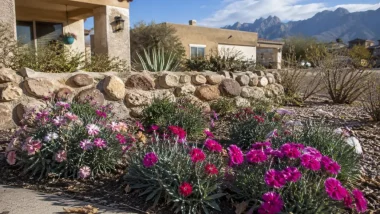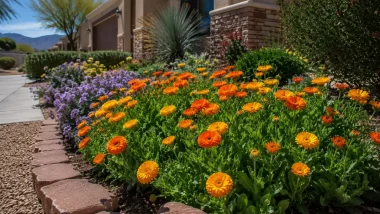
Types of soil in the Southwest. If you have ever tried digging a planting hole in Las Cruces, you already know that our soil can be challenging. In one part of town, you might find loose sandy soil that drains almost too quickly. A few miles away, the soil may be hard, rocky or filled with heavy clay. Then there is caliche—the pale, cement-like layer that can stop a shovel, plant roots and water in their tracks.
Understanding your soil is one of the most important steps you can take before planting a tree, shrub, lawn or flower bed. It affects how quickly water drains, how often plants need irrigation and which nutrients are available to their roots.
Let’s look at the most common types of soil in the Southwest and what you can do to make each one easier to garden in.
Why Is Southwest Soil So Different?
Soil in the Desert Southwest is heavily influenced by low rainfall, high temperatures, wind and the rocks from which it developed. Because we receive limited rainfall, plant material does not accumulate and break down as quickly as it does in wetter parts of the country.
As a result, native desert soils are usually low in organic matter. Many are also alkaline, meaning their pH is above 7. New Mexico soils commonly range from about 6.5 to 8.4, according to New Mexico State University.
Do not assume that every part of your yard has the same soil. Construction, grading and imported fill dirt can create several different soil conditions around one home.
Caliche Soil
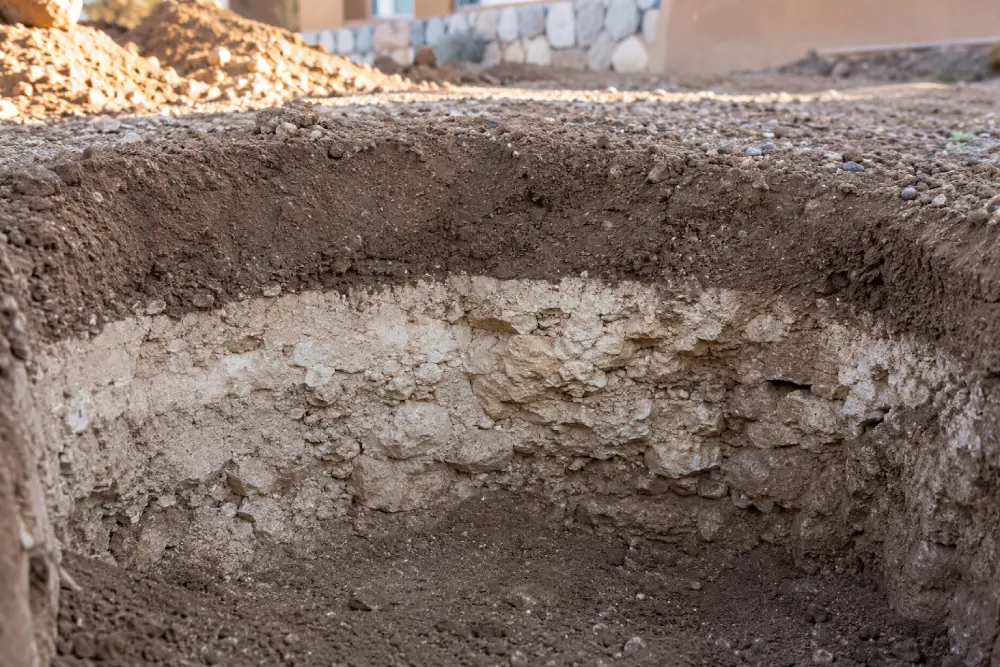
Caliche is one of the most difficult soil conditions we encounter in southern New Mexico, Arizona and West Texas.
Caliche develops when calcium carbonate accumulates in the soil and cements soil particles together. It may appear as scattered white or light-tan chunks, but it can also form a solid underground layer several inches or even several feet thick.
Caliche is not simply hard or compacted dirt. Compacted soil consists of soil particles pressed tightly together. Caliche is a mineral-cemented layer that can be almost as hard as concrete. Growing plants in Caliche soil.
Why Caliche Causes Plant Problems
A solid caliche layer can:
- Prevent roots from growing deeply
- Trap irrigation water above the layer
- Create a poorly drained planting hole
- Limit air movement through the soil
- Cause salts to accumulate around plant roots
- Contribute to iron and other nutrient deficiencies
One of the most common mistakes is digging a hole down to caliche, filling the hole with improved soil and planting directly over it. The hole can act like a container without a drainage opening. Water collects at the bottom, and the plant’s roots may eventually suffocate or rot.
What to Do About Caliche
If the layer is relatively thin, break through it and remove the larger pieces. Before planting, fill the hole with water and watch how quickly it drains. If water remains in the hole for an extended period, select another location, improve the drainage or plant on a raised mound.
A thick, solid caliche layer may require a digging bar, jackhammer or mechanical equipment. For a large tree, it is usually better to create a broad planting area than a narrow hole through the caliche.
Sulfur may gradually affect soil chemistry when used correctly, but it will not quickly dissolve a thick caliche layer. Do not pour strong acids into a planting hole. That can be dangerous and may damage the soil and plant roots.
The University of Arizona has additional information about managing caliche in home landscapes.
Sandy Soil
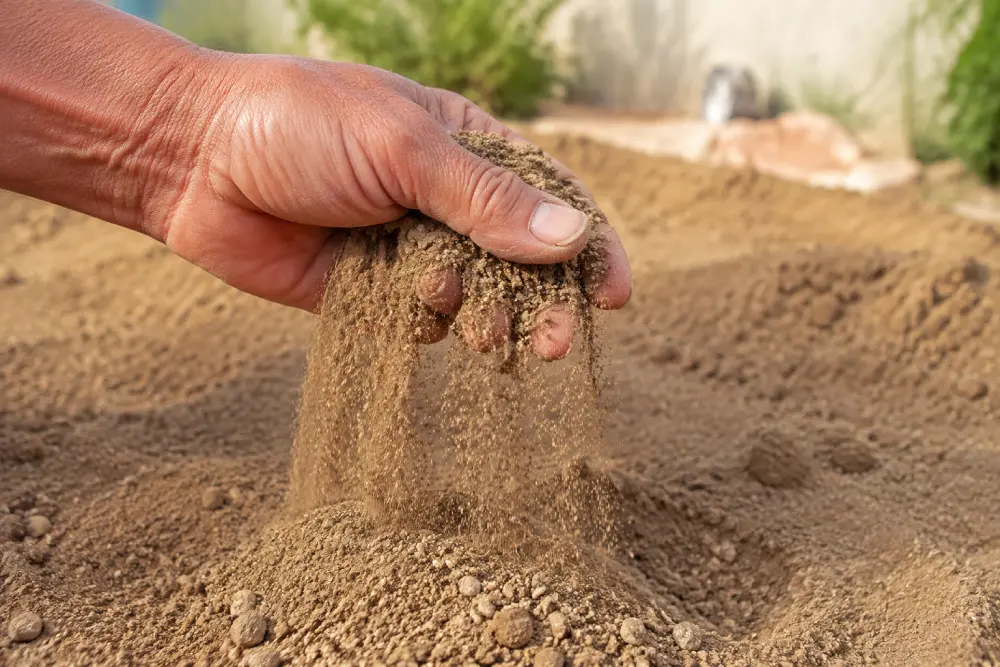
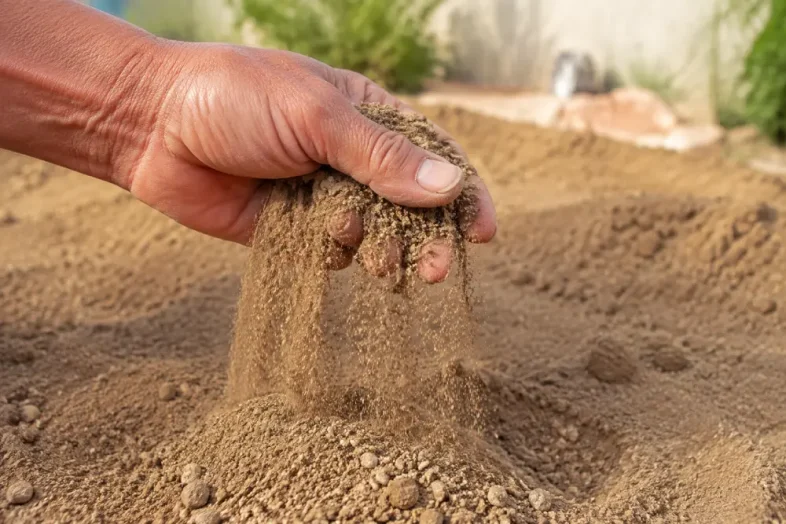
Sandy soil contains larger particles that feel gritty when rubbed between your fingers. It usually drains rapidly and is easier to dig than clay or caliche soil.
Fast drainage can be helpful for desert plants that dislike wet roots. However, sandy soil may dry out very quickly during our hot, windy weather. Water and fertilizer can also move below the root zone before plants have a chance to use them.
Signs of Sandy Soil
You may have sandy soil if:
- Water disappears almost immediately after irrigation
- The soil feels gritty and falls apart in your hand
- Plants wilt soon after watering
- Fertilizer seems to provide only short-lived results
- Newly planted trees and shrubs require frequent attention
How to Improve Sandy Soil
Mixing compost into a flower or vegetable bed can help sandy soil hold water and nutrients. Work the material into a broad area instead of placing it only in individual planting holes.
For trees and shrubs, avoid filling the hole with a rich mixture that is completely different from the surrounding native soil. This can encourage roots to circle inside the amended area. Backfill primarily with the soil removed from the hole and use organic mulch over the surface.
Apply irrigation slowly and over a wide area. Check the soil below the surface instead of assuming that a quick watering reached the entire root zone.
Clay Soil
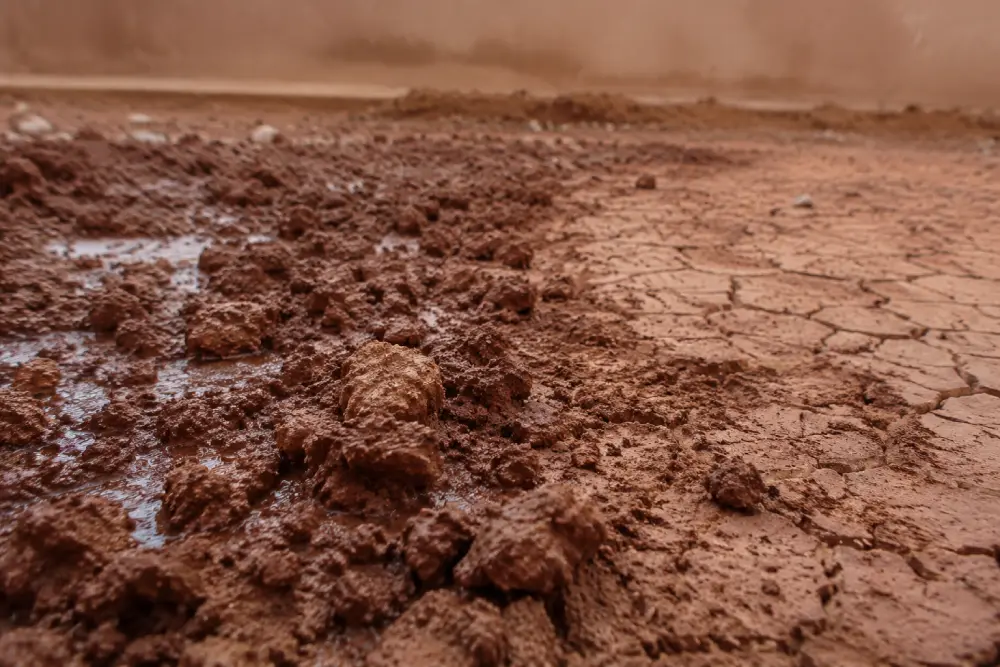
Clay soil consists of extremely small particles. It can hold considerable water and nutrients, but the tiny spaces between its particles can slow drainage and reduce the amount of oxygen available to roots.
Wet clay feels sticky and can be molded in your hand. Once dry, it may become extremely hard and develop deep surface cracks.
Problems Associated With Clay Soil
Heavy clay can:
- Drain slowly
- Become waterlogged after irrigation
- Form hard clods when dry
- Restrict root development
- Become compacted by foot or equipment traffic
- Make planting difficult when it is too wet or too dry
Clay soil should not be worked while it is soaking wet. Digging, tilling or walking over wet clay destroys its structure and creates additional compaction.
How to Improve Clay Soil
Regular additions of properly finished compost can gradually improve clay soil structure. Spread the compost across the entire bed and mix it into the upper soil layer.
Avoid adding a small amount of fine sand to heavy clay. Unless sand is incorporated in the correct proportions over a large area, the mixture can become even harder and more concrete-like.
Gypsum is also frequently promoted as a cure for all clay soils. It is primarily useful for certain soils with excessive sodium. It should not be added automatically without knowing whether sodium is actually the problem. A soil test will help you select the right amendment.
Raised beds are often the simplest answer when you want to grow vegetables or flowers over extremely heavy clay.
Rocky and Gravelly Soil
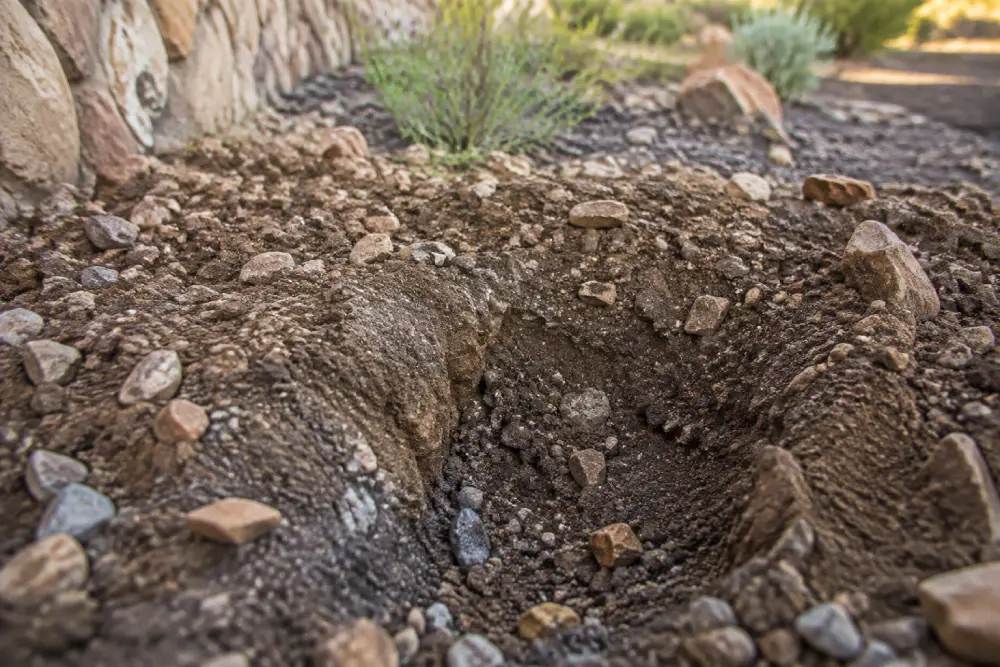
Rocky soil is common around the foothills and newer developments in Las Cruces. It may contain gravel, stones and larger rocks with very little fine soil between them.
Rocky soil often drains well, but it can be difficult to dig and may not hold enough moisture or nutrients for some plants. A shallow layer of soil over bedrock or caliche creates an additional challenge because roots have nowhere to grow.
Gardening in Rocky Soil
Remove larger rocks from the immediate planting area, but you do not need to screen out every small piece of gravel. For flower and vegetable beds, add compost to increase the amount of fine material that holds moisture.
When planting trees and shrubs, dig a hole at least two to three times wider than the root ball whenever possible. The hole should not be deeper than the root ball. A wide planting area gives new roots a better opportunity to move into the surrounding soil.
Rocky locations are often well suited to drought-tolerant plants, including many native and desert-adapted shrubs, ornamental grasses and perennials.
Silty Soil
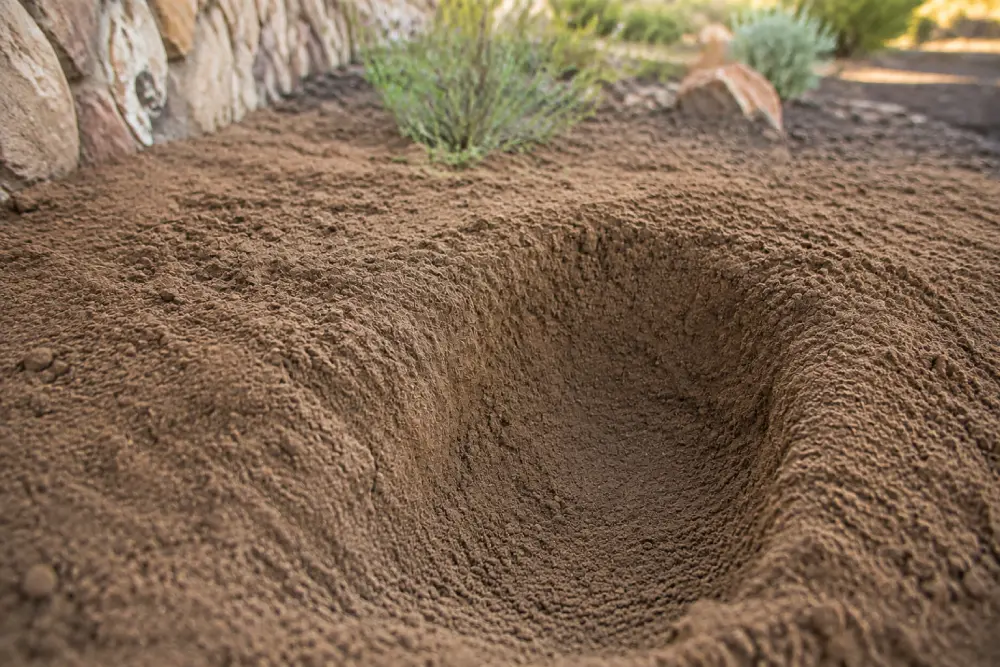
Silt particles are smaller than sand but larger than clay. Silty soil feels smooth or flour-like when dry and slightly slippery when wet.
Pure silty soil is not as common in residential landscapes, but it may be found near old river channels, arroyos and areas where fine particles have been deposited by water or wind.
Silty soil can be fertile and hold moisture well. However, it may compact, crust or erode if left bare. Compost, mulch and plant roots help protect its structure.
Loamy Soil
Loam is a balanced combination of sand, silt and clay. It holds moisture and nutrients while still allowing excess water to drain. This is the soil gardeners usually hope to find.
True loam is not especially common in an untouched desert yard. However, garden soil can become more loam-like over time through repeated additions of compost, surface mulch and good watering practices.
Remember that “topsoil” sold in bags or by the truckload is not automatically loam. Ask what the material contains and inspect it before ordering a large amount.
Salty or Alkaline Soil
Salinity and alkalinity are not soil textures, but they are important Southwest soil conditions.
White crusting on the surface may indicate an accumulation of salts. Salts can come from native soil minerals, irrigation water, excessive fertilizer and some manures or composts.
High salt levels make it harder for roots to absorb water. A plant in salty soil can appear wilted even when the ground is moist.
Alkaline soil can also make iron, zinc and other nutrients less available. Yellow new leaves with greener veins are often a sign of iron chlorosis, although other problems can cause similar symptoms.
Do not add sulfur, gypsum or extra fertilizer based solely on appearance. NMSU recommends soil testing because pH, lime, salinity and sodium require different treatments.
A Simple Home Soil Texture Test
You can learn quite a bit by moistening a handful of soil and squeezing it gently.
- Sandy soil: Feels gritty and will not hold together well.
- Clay soil: Feels sticky and forms a firm ribbon or ball.
- Silty soil: Feels smooth and holds together without being as sticky as clay.
- Loamy soil: Forms a loose ball but crumbles easily when pressed.
- Caliche: Appears as pale, chalky lumps or a hard light-colored layer.
- Rocky soil: Contains a high percentage of gravel and stones.
This test provides a rough idea of soil texture, but a laboratory soil test can identify pH, salinity, sodium, lime, organic matter and nutrient levels.
The Drainage Test
Before planting a valuable tree or shrub, dig the planting hole and fill it with water. Allow it to drain and then fill it again.
If the water remains for many hours without noticeable movement, you may have heavy clay, compaction or an underground caliche layer. If it disappears almost immediately, you probably have sandy or very gravelly soil.
The goal is not to make every soil drain as quickly as sand. Plants need a balance between drainage, moisture retention and oxygen.
The Best Way to Improve Southwest Soil
There is no single amendment that fixes every soil problem. The best approach depends on what you have and what you want to grow.
In most garden beds, these practices will help:
- Have the soil tested before applying corrective products.
- Add finished, low-salt compost gradually instead of all at once.
- Cover the surface with organic mulch where appropriate.
- Water slowly and deeply enough to reach the root zone.
- Avoid working or walking over wet soil.
- Select plants adapted to your drainage and soil conditions.
- Use raised beds when the native soil cannot be practically improved.
Native desert soil is not necessarily bad soil. Many of our best heat- and drought-tolerant plants prefer lean, rocky or sandy ground. The important thing is matching the plant to the location.
More on improving southwest soil.
Before and after planting articles.
- “before planting a tree” → How to Plant a Tree Properly
- “water slowly and deeply” → How Often Should You Water in Las Cruces?
- “drought-tolerant plants” → Drought-Tolerant Native Plants
Final Thoughts
The types of soil found in the Southwest can change dramatically from one neighborhood to another—and sometimes from one side of your yard to the other.
Before you plant, take a few minutes to examine the soil, check the drainage and look for caliche. That little bit of work can prevent years of plant problems.
If you are unsure what will grow in your soil, bring us a sample or talk with one of our garden professionals at Guzman’s Garden Centers. We can help you select plants and soil amendments that make sense for Las Cruces and our Desert Southwest growing conditions.
Frequently Asked Questions
Is caliche the same as clay?
No. Clay consists of very small soil particles that become sticky when wet. Caliche is soil cemented together by accumulated calcium carbonate. Both can restrict drainage, but they are different problems.
Can plant roots grow through caliche?
Roots may grow through cracks or weak areas, but they usually cannot penetrate a thick, solid caliche layer. Breaking through the layer or planting on a mound may be necessary.
Should I add sand to clay soil?
Usually not in small amounts. A little fine sand mixed with heavy clay can create an even harder soil. Compost and raised beds are generally safer options for a home garden.
Is rocky soil bad for plants?
Not always. Rocky soil may drain well and can be excellent for desert-adapted plants like cactus. Problems occur when there is too little fine soil to hold water or when bedrock limits root depth
How much compost should I add?
The right amount depends on the existing soil and the compost’s salt and nutrient content. Add it gradually and avoid repeatedly applying large quantities without a soil test.
How do I know if my soil is salty?
Possible signs include a white surface crust, burned leaf edges and poor growth despite adequate watering. A laboratory soil test is the most reliable way to measure salinity.
New to Southwest Gardening?
Stop wasting money on plants that will not survive our heat and drought.
My Southwest Gardening Made Simple eBook shows you which trees, shrubs, flowers, and vegetables actually thrive in New Mexico, Arizona, and West Texas.
The best plants for hot, dry climates
Common mistakes that kill Southwest plants
Easy-to-follow advice for beginners

Paul Guzman is a lifelong Southwest gardener and gardening writer with decades of experience helping homeowners grow beautiful landscapes in the desert Southwest. He writes for Guzman’s Garden Centers in Las Cruces, New Mexico, with contributing expertise from Gary Guzman, owner of Guzman’s Garden Centers. If you have any questions or enjoyed this post, feel free to share your thoughts in the comments below.