Desert landscaping does not have to look empty, colorless, or covered entirely with gravel. With the right combination of flowering plants, ornamental grasses, trees, boulders, and hardscape materials, you can create a beautiful landscape that looks good throughout the year.
The key is choosing plants that tolerate our intense sunlight, dry air, alkaline soil, and changing temperatures. You should also consider each plant’s mature size before placing it near a walkway, wall, window, or driveway.
Here are 10 stunning desert landscaping ideas that work especially well around homes in Las Cruces, New Mexico, and other parts of the Desert Southwest.
1. Welcome Visitors With Red Yucca
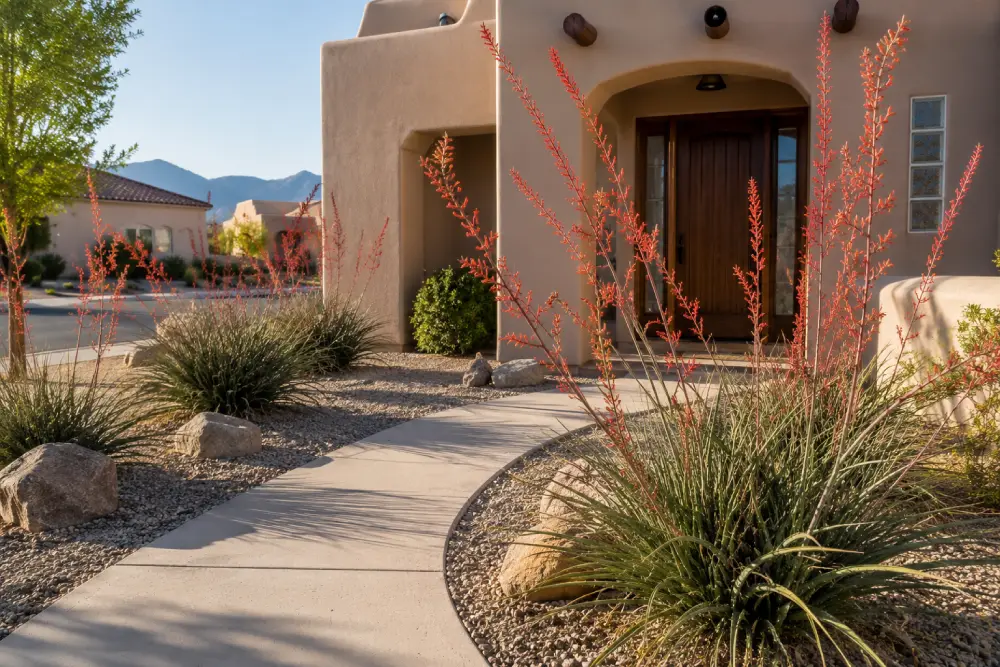
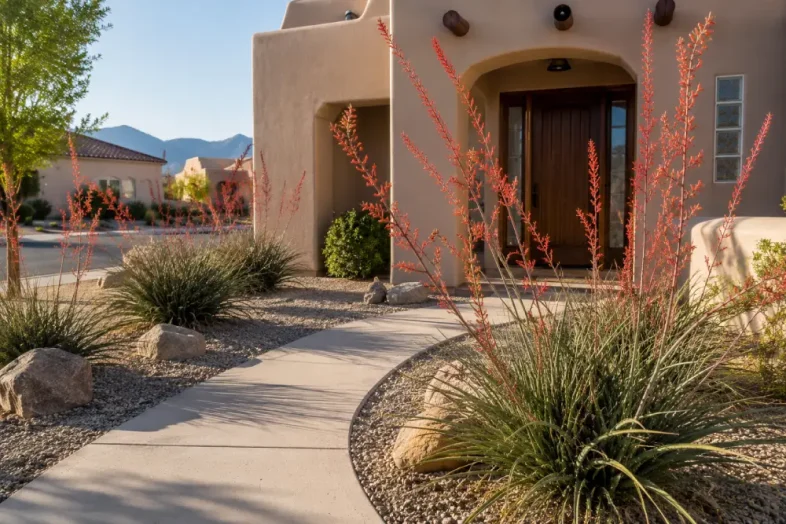
Red yucca (Hesperaloe parviflora) is one of the best plants for creating a colorful entrance. Its narrow, arching foliage remains attractive even when the plant is not blooming. During the warmer months, tall flower stalks rise above the foliage and produce coral-red or pink tubular flowers that hummingbirds love.
Plant red yucca along a curved walkway, near the driveway entrance, or on both sides of your front door. Give each plant enough room to spread so the long leaves do not extend across the walkway.
Red yucca is not a true yucca, but it has a similar architectural appearance. Once established, it tolerates heat and drought with very little trouble.
2. Add Filtered Shade With a Desert Willow
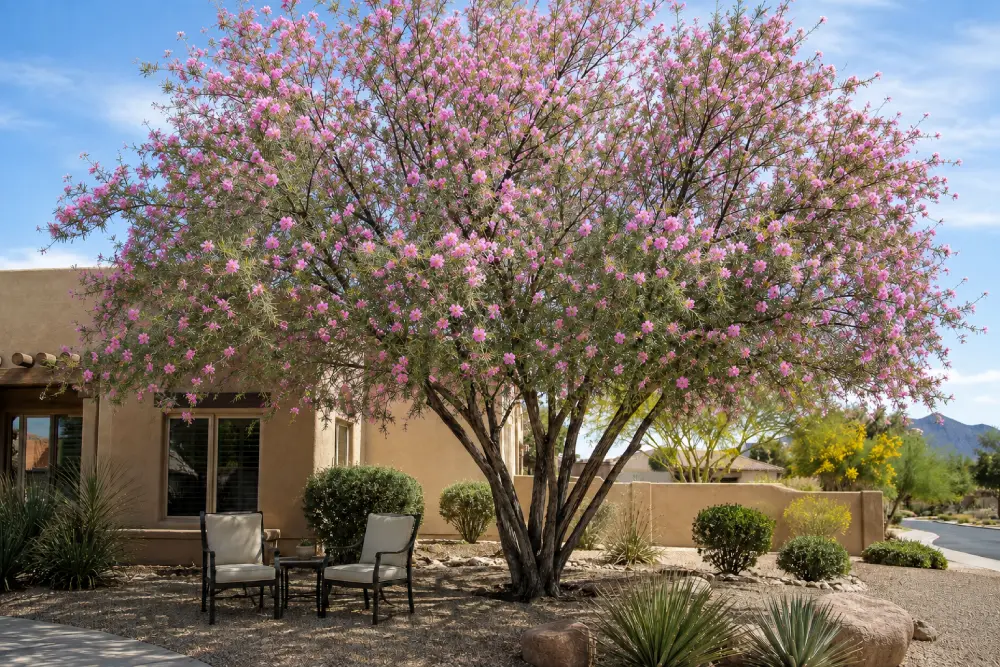
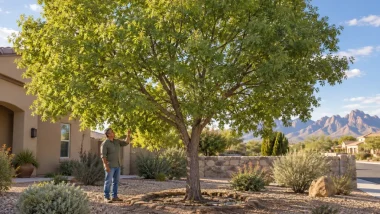
Every desert landscape needs at least one plant that provides height and shade. Desert willow (Chilopsis linearis) is an excellent choice because its open canopy allows filtered sunlight to reach the area below.
Its narrow leaves and pink, lavender, or white trumpet-shaped flowers give it a soft appearance. The flowers also attract hummingbirds and other pollinators.
Use a desert willow near a small sitting area, patio, or sunny section of the yard where light afternoon shade would be helpful. Remember that desert willow is deciduous, so it will lose its leaves during winter.
Keep it away from foundations, walls, and narrow walkways, and give it enough space to develop its natural form.
3. Combine Autumn Sage With Desert Marigold
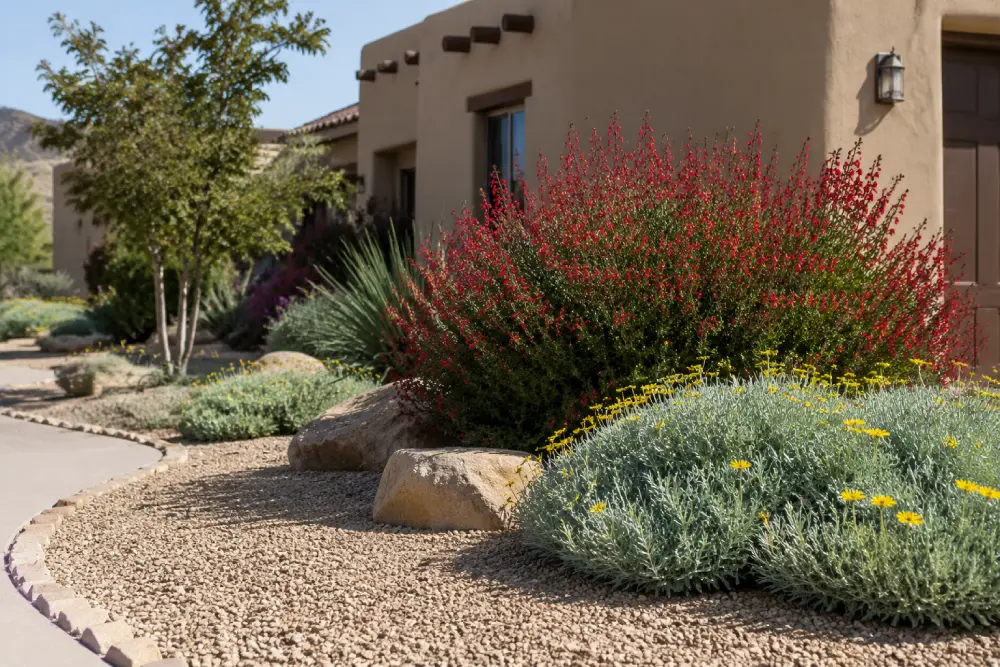
A colorful desert garden looks more natural when plants are arranged in groups instead of planted one at a time. Red autumn sage and yellow desert marigold make an especially attractive combination.
Autumn sage (Salvia greggii) produces red, pink, purple, or white flowers throughout much of the growing season. Desert marigold (Baileya multiradiata) adds bright yellow flowers above soft, silvery foliage.
Plant the taller autumn sage toward the back of the bed and place desert marigolds along the front. The combination of red, yellow, green, and silver creates noticeable color without requiring a traditional flower bed.
Occasional trimming will keep autumn sage compact and encourage additional flowering.
4. Create a Focal Point With Agave and Boulders
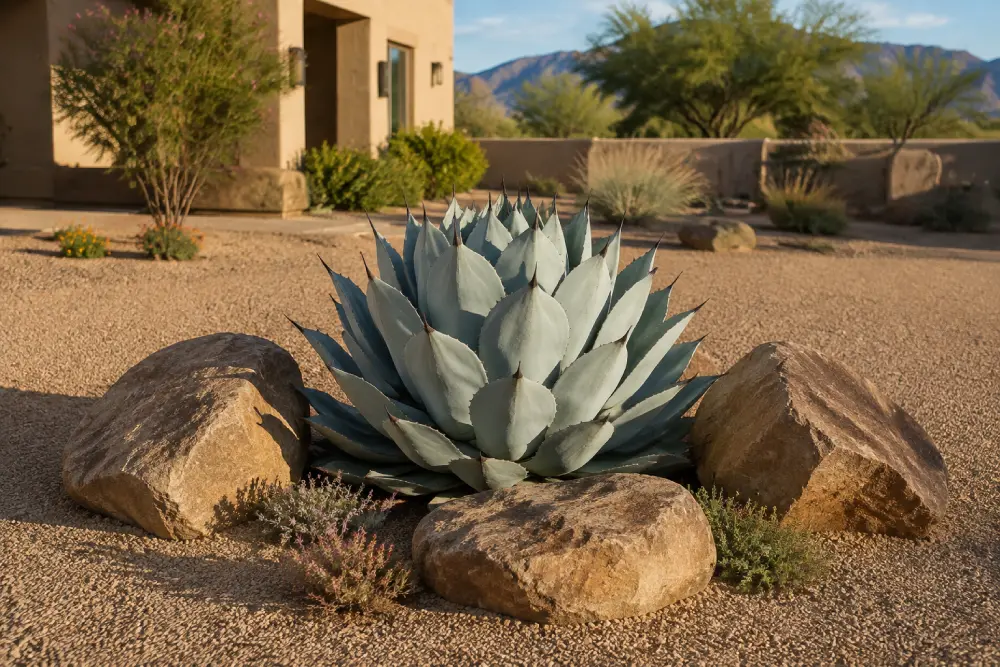
A single well-placed agave can have more visual impact than a bed filled with too many small plants. Parry’s agave (Agave parryi) has thick, blue-gray leaves arranged in a naturally symmetrical rosette.
Place one agave near two or three large boulders to create a simple focal point. Use rocks that match the natural colors found around your home and neighborhood.
Leave open gravel around the grouping so the shape of the agave remains visible. Avoid placing sharp-tipped agaves next to sidewalks, children’s play areas, or locations where people and pets frequently pass.
Agaves require excellent drainage. Constantly wet soil, especially during winter, can cause root and crown rot.
5. Use Texas Sage for Privacy and Background Color
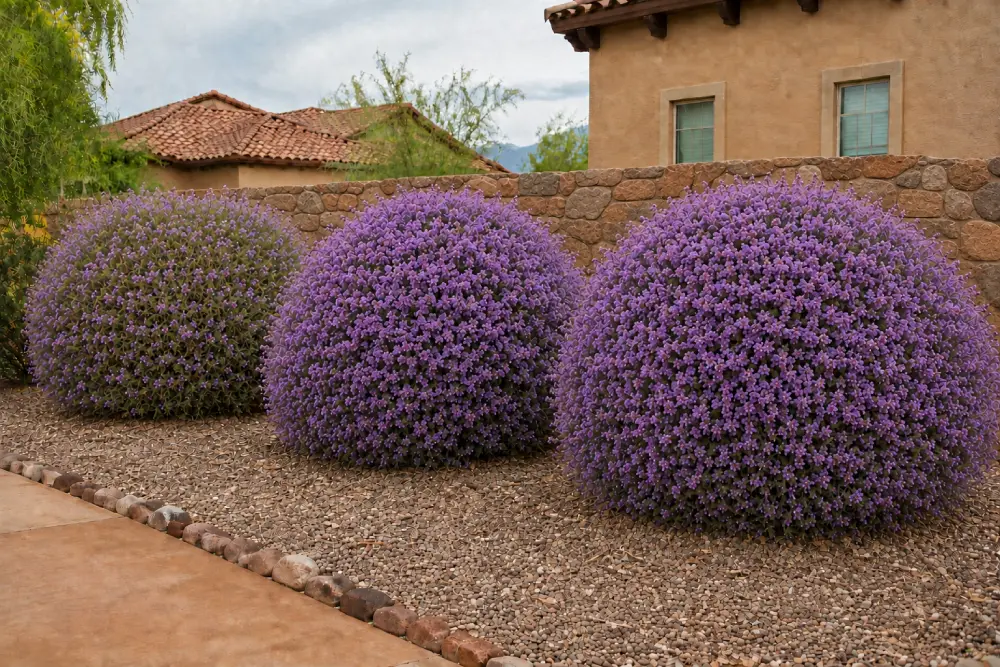
Texas sage (Leucophyllum frutescens) is a durable Southwestern shrub with silvery foliage and purple, lavender, pink, or white flowers. It often blooms after periods of summer humidity or rainfall.
Several Texas sage shrubs can be used to soften a wall, screen an unattractive view, or create privacy along a property line. Rather than shearing them into square boxes, allow the shrubs to maintain a more natural rounded shape.
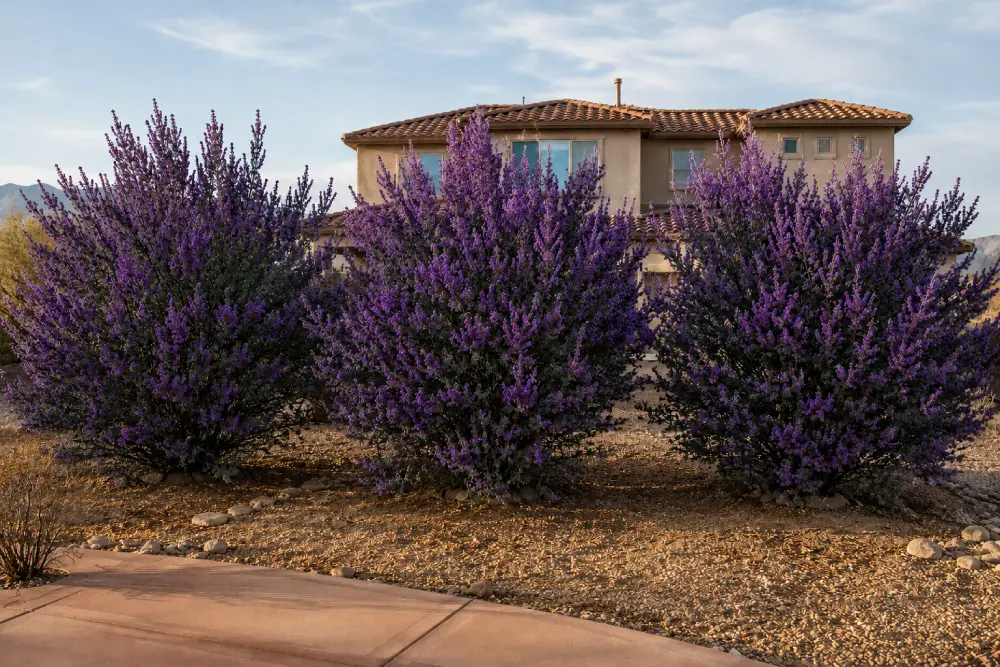
Check the mature size of the variety before planting. Some Texas sage varieties remain fairly compact, while others can grow six feet tall or more.
The gray foliage also makes an attractive background for red yucca, yellow-flowering perennials, ornamental grasses, and darker green shrubs.
6. Let Trailing Lantana Spill Over a Rock Wall
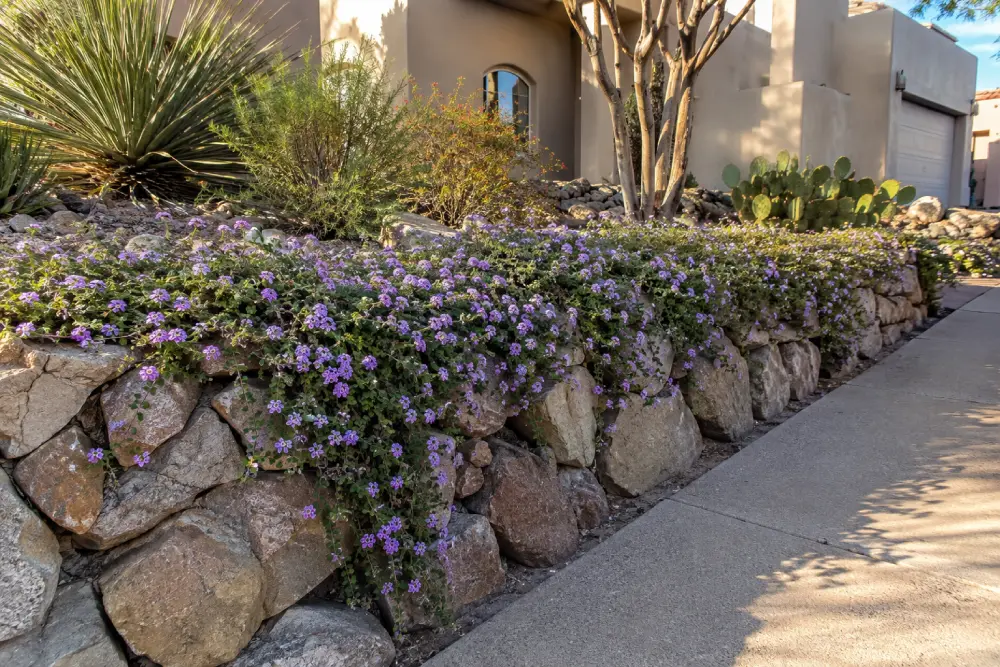
Trailing purple lantana (Lantana montevidensis) is an excellent choice for raised beds, slopes, containers, and the tops of rock walls. Its spreading branches naturally cascade downward and soften the hard appearance of stone and concrete.
Purple lantana blooms for a long period during warm weather and attracts butterflies. It tolerates heat and drought once established, although regular deep watering will help it bloom more consistently.
In colder parts of the Southwest, lantana may freeze to the ground during winter. Wait until the danger of a hard freeze has passed before cutting away damaged growth. New shoots frequently emerge from the base when warm weather returns.
Allow enough space for the plant to spread without covering sidewalks or steps.
7. Add Movement With Ornamental Grasses
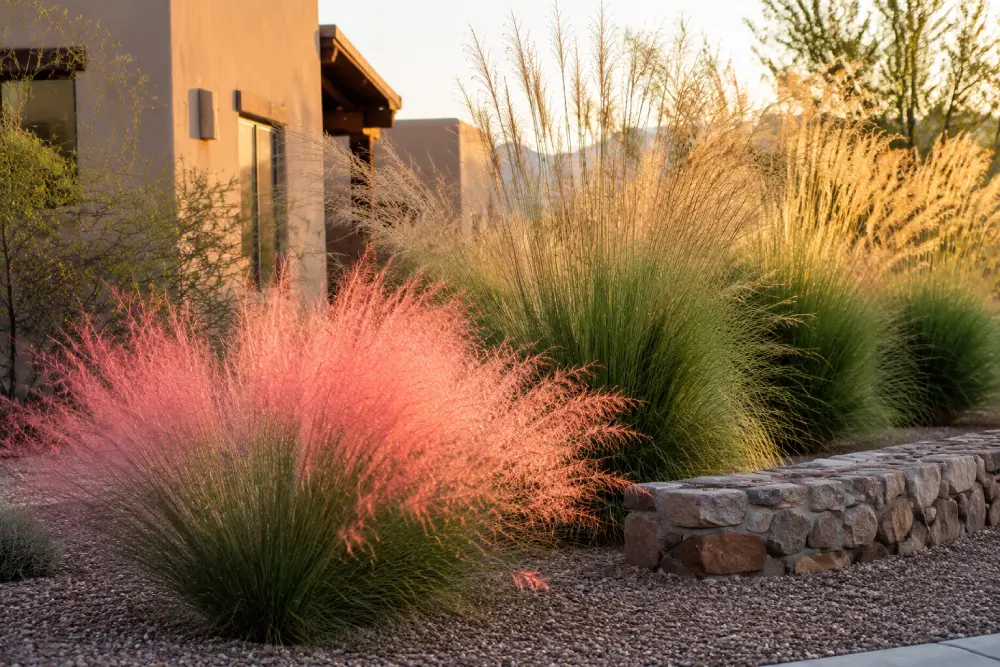
Ornamental grasses add movement, texture, and sound to the landscape. Their flower stalks sway in the wind and look especially attractive when illuminated by early-morning or late-afternoon sunlight.
Pink muhly grass (Muhlenbergia capillaris) produces airy pink flower clouds during late summer and fall. Deer grass (Muhlenbergia rigens) grows larger and produces tall tan flower stalks above its arching green foliage.
Plant grasses in odd-numbered groups or repeat them along a walkway or wall. Avoid lining up too many plants in a perfectly straight row unless you want a formal appearance.
Give each grass enough room to reach its mature width. Cutting ornamental grasses too frequently or placing them too close together can spoil their natural shape.
8. Plant a Southwestern Pollinator Garden
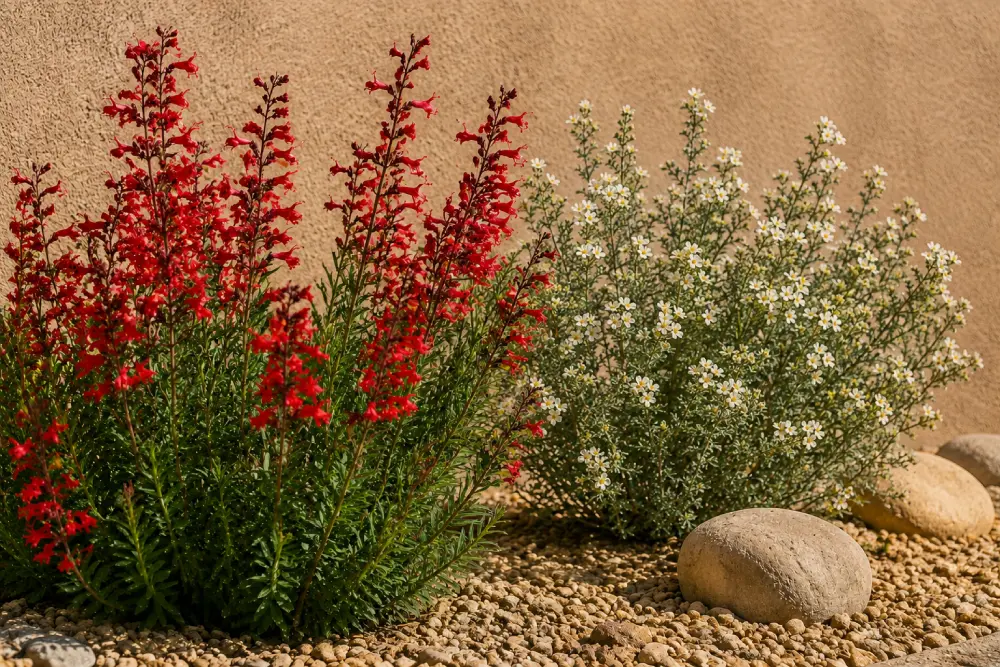
Penstemon produces upright stalks covered with tubular flowers that attract hummingbirds and bees. Fernbush (Chamaebatiaria millefolium) produces clusters of small white flowers during summer and attracts bees and butterflies. Its finely divided, fernlike foliage also adds texture to a Southwestern pollinator garden.
Combine these plants with desert marigold, autumn sage, gaura, or other regionally appropriate flowering plants. Choose varieties with different bloom periods so pollinators have a food source from spring through fall.
Avoid spraying insecticides while plants are blooming unless treatment is absolutely necessary. Always read and follow the product label.
9. Use Decorative Containers for Extra Color
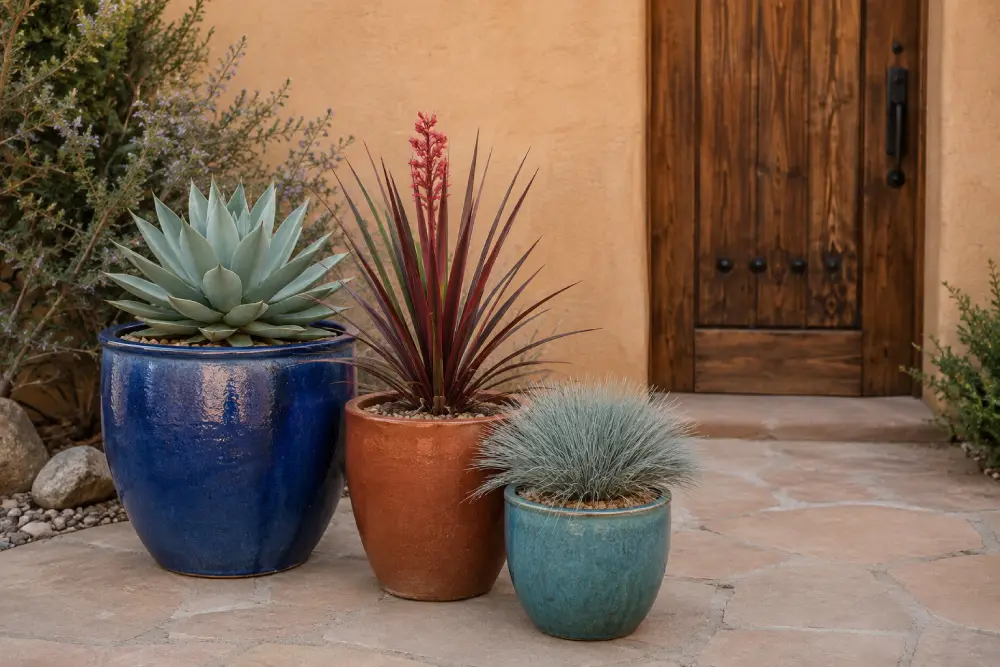
Decorative containers are useful around entrances, patios, courtyards, and areas where planting directly in the ground is difficult. Colorful glazed pots also provide year-round interest when flowering plants are between bloom cycles.
Try a large blue container with an agave, a terracotta pot with red yucca, or a smaller turquoise pot with Blue Fescue. Choose containers that complement the colors of your home instead of competing with them.
Every outdoor container must have an open drainage hole. Use a quality potting mix rather than soil taken directly from the yard.
Remember that container plants dry out faster than plants growing in the ground. Dark-colored pots also absorb heat and may require more frequent watering during the summer.
10. Highlight the Landscape With Accent Lighting
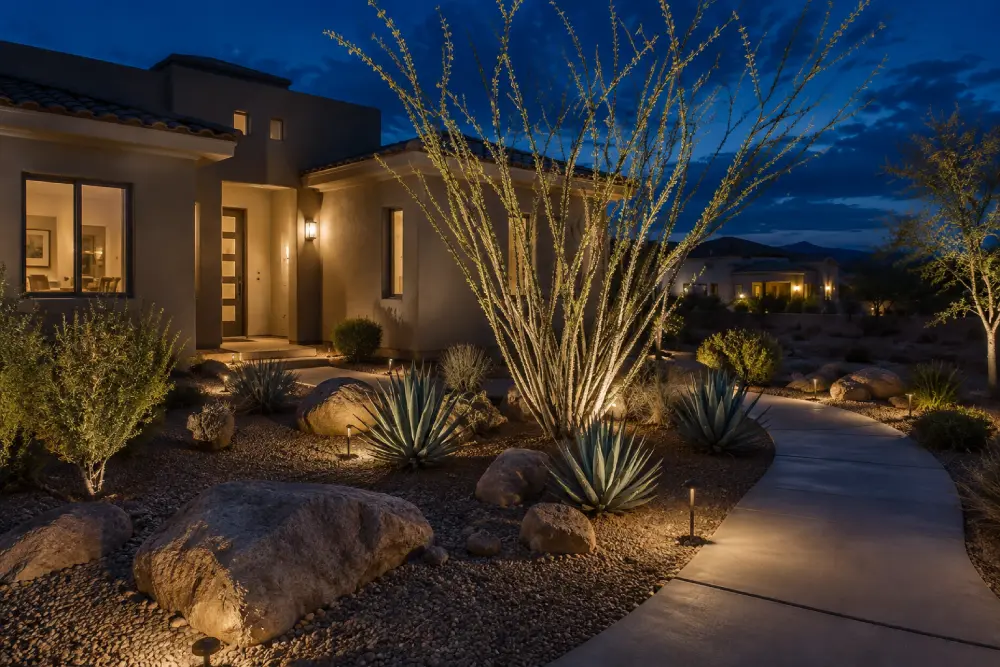
Desert plants can look just as impressive after sunset. Soft landscape lighting brings out the textures of agaves, boulders, ornamental grasses, tree trunks, and rock walls.
Use a small uplight to highlight the branching form of an ocotillo or place a low fixture near an agave to emphasize its symmetrical shape. Warm-white LED lighting usually looks more natural against tan stucco, gravel, and Southwestern stone.
Path lights can also improve visibility around steps and walkways. However, avoid using too many fixtures. A few carefully positioned lights will look better than a yard filled with bright spots.
Point lights away from windows and neighboring properties, and keep the fixtures low enough that the bulbs do not create glare.
How to Plan Your Desert Landscaping Ideas
Before purchasing plants, study the sunlight, drainage, soil, and available space in each part of your yard. Plants placed along a hot west-facing wall may need different care than those planted on the east or north side of the house.
Group plants with similar watering needs together. This makes irrigation easier and helps prevent drought-tolerant plants from receiving too much water. The EPA calls these groups “hydrozones” and recommends them as part of a water-efficient landscape.
Even drought-tolerant plants require regular watering while their roots become established. Gradually reduce the watering frequency as the plants mature, but continue to water deeply enough to reach the root zone.
Final Thoughts
The best desert landscaping ideas combine colorful plants, practical hardscaping, efficient watering, and enough open space for every plant to mature.
A successful desert landscape combines color, texture, shade, movement, and open space. You do not need to fill every bare area with another plant. Gravel, boulders, walkways, decorative containers, and carefully placed lighting can be just as important as the plants themselves.
Start with one section of the yard and build your landscape gradually. This gives you time to see how the plants grow and helps prevent overcrowding.
Visit Guzman’s Garden Centers in Las Cruces for help selecting desert plants, ornamental grasses, trees, shrubs, pottery, soil amendments, and other landscaping materials suitable for our Southwestern climate.
Frequently Asked Questions
Does desert landscaping mean no watering?
No. Drought-tolerant plants still need water, especially during their first growing season. Once established, many desert plants can be watered less frequently, but they should still receive a thorough soaking when needed.
Can desert landscaping include flowering plants?
Yes. Red yucca, autumn sage, desert marigold, penstemon, trailing lantana, Texas sage, and desert willow can provide plenty of seasonal color.
Is gravel enough to control weeds?
Gravel can reduce some weed growth, but it will not prevent every weed. Windblown seeds can germinate in dust and organic material that accumulate on top of the gravel.
What is the best time to plant a desert landscape?
Spring and fall are usually the best planting seasons in the Desert Southwest. Temperatures are milder, which gives roots time to establish before extreme summer heat or winter cold arrives.
Should all drought-tolerant plants be placed on the same irrigation schedule?
Not necessarily. Water requirements still vary among drought-tolerant plants. Group plants according to their individual watering needs, mature size, and exposure to sunlight.
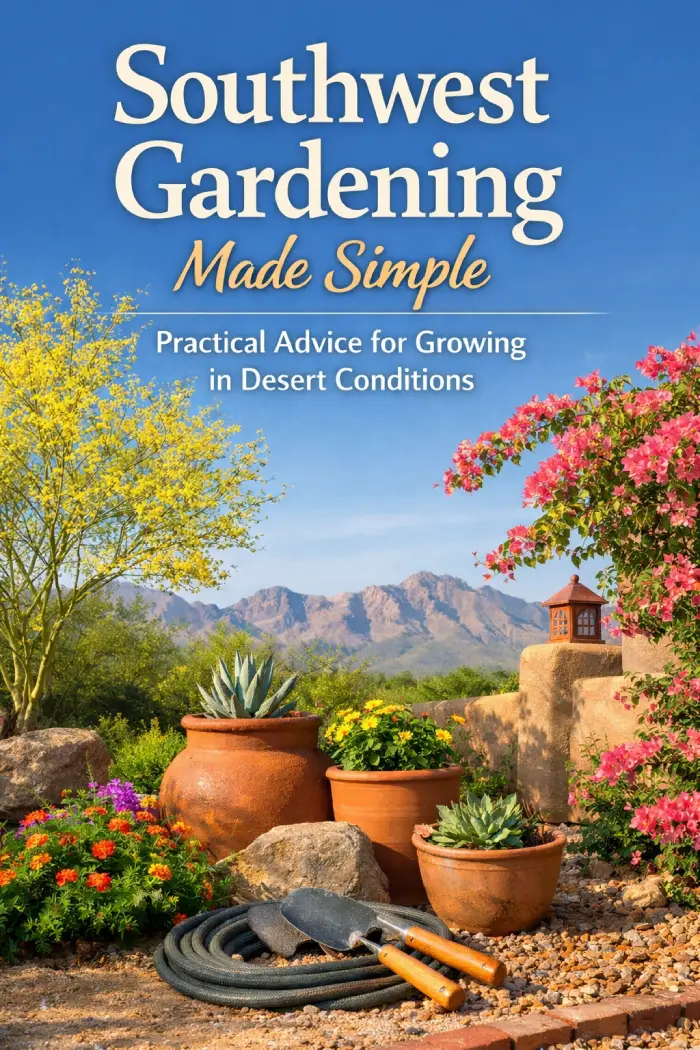
New to Southwest Gardening?
Stop wasting money on plants that will not survive our heat and drought.
My Southwest Gardening Made Simple eBook shows you which trees, shrubs, flowers, and vegetables actually thrive in New Mexico, Arizona, and West Texas.
The best plants for hot, dry climates
Common mistakes that kill Southwest plants
Easy-to-follow advice for beginners

Paul Guzman is a lifelong Southwest gardener and gardening writer with decades of experience helping homeowners grow beautiful landscapes in the desert Southwest. He writes for Guzman’s Garden Centers in Las Cruces, New Mexico, with contributing expertise from Gary Guzman, owner of Guzman’s Garden Centers. If you have any questions or enjoyed this post, feel free to share your thoughts in the comments below.