Last updated on May 29th, 2026 at 07:44 am
Roses for the southwest. How do you care for them? It is a bit tricky, especially in the Southwest, where temperatures can get as high as 115 or more during the mid-summer seasons. But the good news is that it is not as hard as some people may believe.
In the Southwest, there are 6 solid tips for making your roses look good.
- Give them plenty of water – 3-4 times per week during the summer. 4 or 5 ga. of water each time.
- Fertilize often, and water thoroughly before fertilizing. Always use Rose food fertilizer or at the very least, all-purpose fertilizers. Once per month, March through Late October.
- Observe your roses every week. At the first sign of insects or diseases, treat them ASAP. Identify rose problems
- They need at least 6 hours of sun each day. A little shade in the afternoon does wonders for roses.
- The Southwestern soil is poor and alkaline, so use rich, loamy organic compost when you first plant them.
- Roses should NOT stand in water, even during dormant winter months. Make sure your soil drains well, always!
Make Your Roses Look Good

Where to Plant Roses?
In the Southwest, they can be planted alone or with other companion perennials. You can plant them in containers and move them around. Be sure to give them enough room to fill out. Normally around 3-4ft. between plants. Remember to plant roses where falling snow, ice, or any other debris will not damage Your Roses.
In cooler climates, they can tolerate full sun, but the full blazing sun in the southwest can scorch the foliage. So, I recommend planting them in the morning sun and late afternoon shade if possible. They will still do well in the hot sun, providing extra water during the mid-summer months.
The Best time to prune growing roses is from December through early February. Only prune if there is a real need to do so. Pruning just for the sake of pruning is not a good idea. You do have to prune off dead branches or expired blooms. Deep watering is better than shallow watering.
Use a good “Mulch” on top to retain water, also bark, straw, or other similar materials will help to discourage weeds!
Plant them in good loamy compost mixed with topsoil or with your native soil. Typically, roses should be fertilized once in early spring, summer, and early fall. If you want them to look good and bloom more often, fertilize at least once per month. Don’t fertilize during colder climates or the winter season.
Roses are susceptible to aphids, thrips, powdery mildew, and other diseases. Read more about Rose’s problems here Rose Bush Problems.

Trimming Your Roses
Only prune and trim if there is a need to. Prune old, dying, dark brown branches and limbs. Prune off all expired blooms. And remove if needed, prune down to the third or fourth limb.
I recommend using the Corona pruner for pruning almost anything. This gardening tool has forged steel blades that hold a sharp cutting edge and are heat-treated for superior hardness and strength. This is what all our employees at Color Your World Nurseries use. Easy, long-lasting pruners. Next time you’re in one of our stores, make sure to ask for one. The Corona Clipper 3/4-Inch Forged Bypass pruner is ideal for rose pruning.
We recommend Miracle-Gro and Rose Food. This plant Food Will Last Up To 3 Months. For blooms try BR61 early in the season. Want to go organic? Use FoxFarm’s all-purpose organic and natural fertilizers.
Many of our roses come in 3 ga. peat pot containers, which are biodegradable and can be planted in the ground with the pot.
Fertilize when the Rose Plant leaves Come Out
Do not fertilize during winter. You will waste your fertilizer as these nutrients will only seep through the ground. However, you can apply a root stimulator or a root vitamin for new root growth. This holds true for most plants that go dormant during the winter.
Fertilize your plants again after the first bloom cycle to encourage continued growth and additional flowering throughout the season. In the Southwest, the growing season is often much longer than in other parts of the country, and many plants do not go dormant until late fall. In most areas, fertilizing can continue through early November, depending on weather conditions and the type of plant being grown.
As mentioned earlier, avoid fertilizing during December, January, and February. During these cooler months, most plants are either dormant or growing very slowly, making fertilizer unnecessary and potentially wasteful. New foliage and active growth typically begin to appear in mid- to late March as temperatures warm and daylight hours increase. At that point, regular fertilization can resume to support healthy growth, strong root development, and abundant blooms throughout the growing season.
Test your soil before you plant roses. The PH level should be around 7.0. The southwest has poor alkaline soil, and tests will usually register above 7.1 or so. Use good organic compost when planting, which will lower the alkaline level of your soil.
Types of Roses
Hybrid Tea & Grandiflora Roses
These are the classic roses most people think of when they picture a rose.
They produce large, well-formed blooms on long, straight stems, making them excellent for cutting and bringing indoors.
- Hybrid Tea roses typically produce one bloom per stem, giving them a clean, elegant look.
- Grandiflora roses produce clusters of blooms on tall stems, offering more flowers while still maintaining height and structure.
Best use: Cut flowers, formal gardens, and focal points.
Ground Cover Roses
Ground cover roses are low-growing, spreading plants that form a dense, flowering carpet.
They are:
- Low maintenance
- Fast spreading
- Great for covering large areas or slopes
While some climbing or rambling roses can be used this way, most ground cover roses are specifically bred to stay compact and spread outward.
Best use: Borders, slopes, and low-maintenance landscape areas.
Floribunda Roses
Floribundas are often described as “busy roses” because they produce multiple blooms in clusters instead of single flowers.
They:
- Bloom continuously throughout the season
- Create a full, colorful appearance
- Are typically more compact and rounded
Best use: Adding consistent color and fullness to garden beds.
English Roses
English roses combine the look of old-fashioned roses with modern performance.
They feature:
- Full, layered (double) blooms with a soft, classic appearance
- Strong fragrance
- Repeat blooming throughout the season
Best use: Landscaping, cottage-style gardens, and areas where fragrance is important.
Climbing Roses
Climbing roses produce long, flexible canes that can be trained to grow along trellises, fences, walls, or arbors.
Important tips:
- They do not climb on their own—you must guide and tie them
- In winter, prune back to 3–5 strong main canes
- This helps the plant direct energy into stronger growth and better flowering
Best use: Vertical interest, covering structures, and creating dramatic garden features.

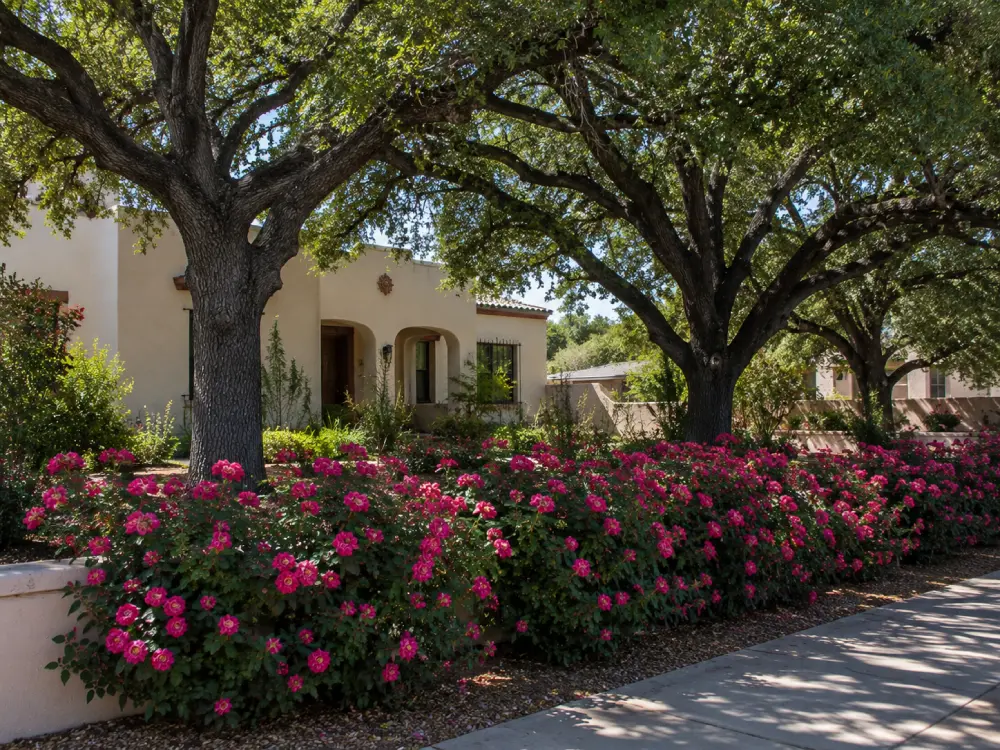
Hedge Rose – Used for low-maintenance fencing along property lines. Below is a nice hedge of Knockout roses shaded by three large Live Oak trees.
Shrub Rose – They are known for their trouble-free and easy maintenance.
Shrub roses are one of the easiest roses to grow. They naturally grow into a nice, rounded bush and don’t require a lot of pruning to keep them looking good. Most varieties grow about 3 to 6 feet tall and wide, producing lots of green foliage and colorful blooms throughout the growing season. Modern shrub roses, such as Knock Out® roses, will bloom repeatedly from spring until frost, giving you months of color with very little effort. Give them plenty of sunshine, regular water, and a little fertilizer during the growing season, and they will reward you with a beautiful display of flowers year after year.


Miniature Roses – Blooms’ structure and habit of hybrid teas, miniature roses are grown in containers used for landscaping in smaller areas. They will do great in the southwest. Plant them in containers or in the ground in full sun or partial shade. Do not plant them in full shade
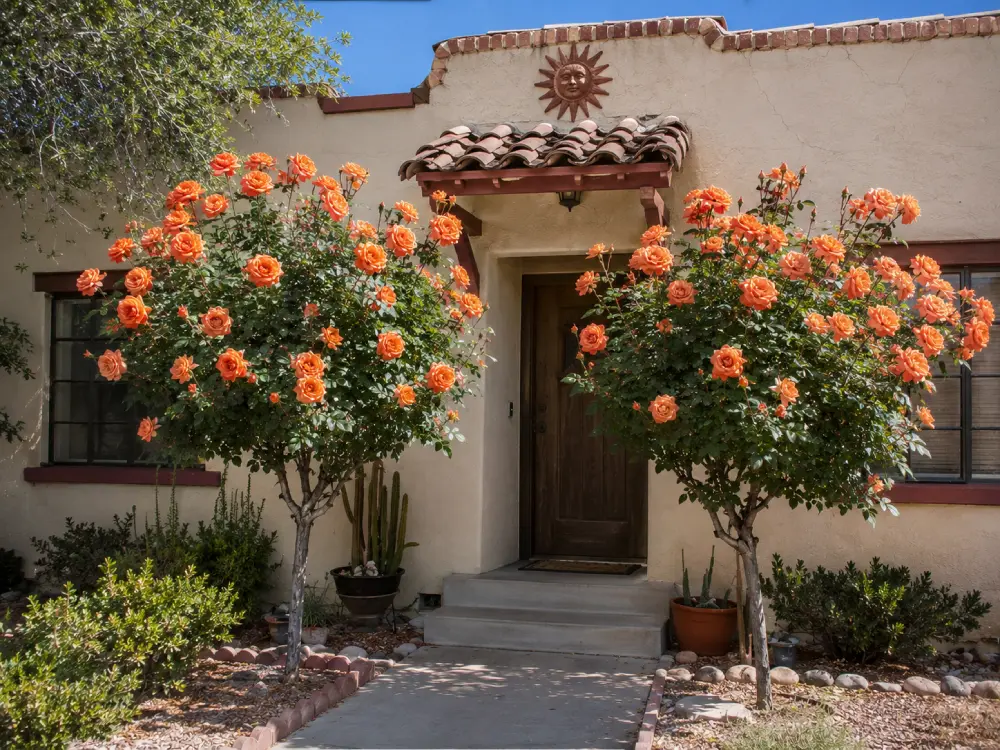
Tree Rose – Excellent for the patio or around large statuary and pond areas.
Tree roses are not a separate type of rose but rather a rose that has been grafted onto a tall, upright trunk to create the appearance of a small flowering tree. The rose blooms form a rounded canopy at the top of the stem, giving the plant a formal and elegant look. Most tree roses grow between 4 and 6 feet tall, depending on the height of the grafted trunk and the variety used. With regular watering, fertilizing, and occasional pruning, they will produce colorful blooms from spring through fall. Tree roses are excellent for framing entryways, accenting walkways, or creating focal points in the landscape.
Some of the best roses for tree rose forms include Floribunda roses, Grandiflora roses, and Hybrid Tea roses because they produce abundant flowers and maintain an attractive shape. Popular varieties often used as tree roses include ‘Iceberg,’ ‘Julia Child,’ ‘Peace,’ ‘Mr. Lincoln,’ ‘Double Delight,’ and many of the Drift® and Knock Out® roses. In the Southwest, varieties that tolerate heat and strong sunlight tend to perform the best. Plant tree roses in a location that receives at least six hours of direct sunlight daily, and provide deep, regular watering during the summer months to keep them healthy and blooming.
Due to the seasonal nature of our roses and the limited quantities of wide varieties.
Not all roses are available at various times. If the rose plant you are looking for is not available, Guzman’s Greenhouse or Color Your World may be able to recommend a substitute plant appropriate for your garden or landscape conditions.
Where do our roses come from? The majority come from Weeks Roses and Monrovia.com; they both have just about any type, color, and variety of roses available today.
Roses for the Southwest
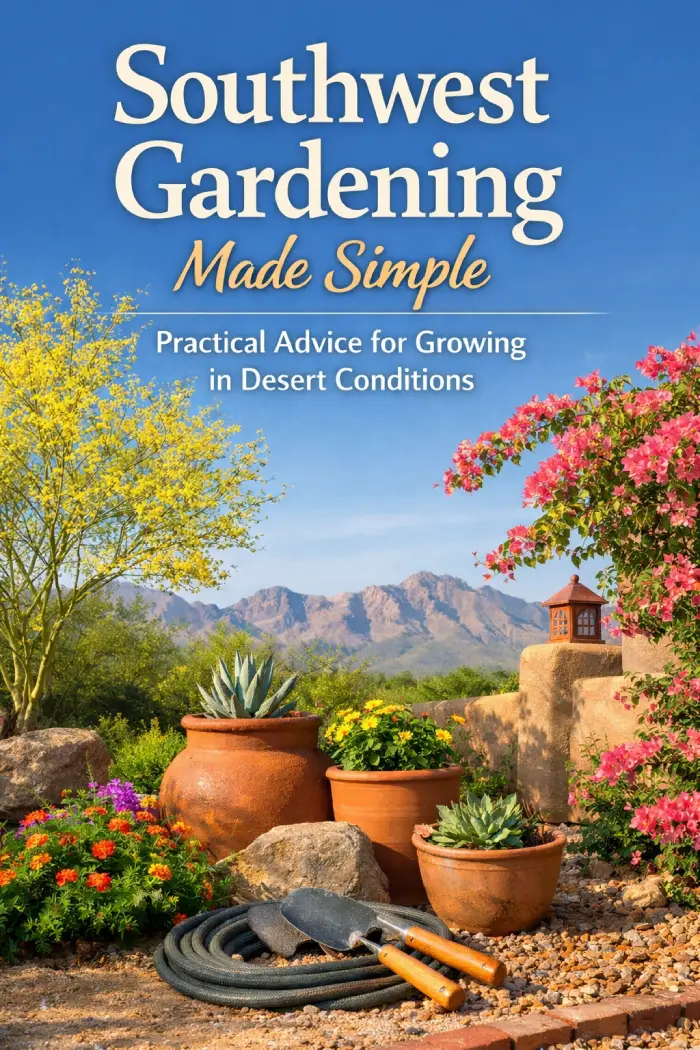
New to Southwest Gardening?
Stop wasting money on plants that will not survive our heat and drought.
My Southwest Gardening Made Simple eBook shows you which trees, shrubs, flowers, and vegetables actually thrive in New Mexico, Arizona, and West Texas.
The best plants for hot, dry climates
Common mistakes that kill Southwest plants
Easy-to-follow advice for beginners

Paul Guzman is a lifelong Southwest gardener and gardening writer with decades of experience helping homeowners grow beautiful landscapes in the desert Southwest. He writes for Guzman’s Garden Centers in Las Cruces, New Mexico, with contributing expertise from Gary Guzman, owner of Guzman’s Garden Centers. If you have any questions or enjoyed this post, feel free to share your thoughts in the comments below.