Last updated on July 10th, 2026 at 12:15 pm
How to Grow Rosemary in the Southwest (Complete Plant Care Guide)
If you’re looking for one herb that practically grows itself in the Southwest, rosemary should be at the top of your list.
Not only is it one of the easiest herbs to grow, but it’s also attractive enough to use as a landscape shrub. Its fragrant evergreen foliage, beautiful blue flowers, and excellent drought tolerance make rosemary a favorite throughout southern New Mexico, West Texas, Arizona, and similar desert climates.
Whether you plant it in your vegetable garden, grow it in a decorative container, or use it in your landscape, rosemary provides beauty, fragrance, and fresh herbs for cooking almost year-round.
One thing I’ve noticed over the years is that many gardeners accidentally kill rosemary by giving it too much attention. They water it too often, fertilize it too heavily, or plant it in soil that stays wet for days after watering.
The good news is that rosemary is much easier to grow than most people realize. Once established, it thrives on sunshine, well-drained soil, and relatively little water. If you understand those three things, you’ll have a healthy rosemary plant that can provide years of enjoyment.
In this guide, you’ll learn everything you need to know about planting, watering, fertilizing, pruning, harvesting, and growing rosemary successfully in the Desert Southwest.
Rosemary at a Glance
| Common Name | Rosemary |
| Botanical Name | Salvia rosmarinus |
| Plant Type | Evergreen Herb |
| Mature Size | 2–6 feet tall and wide |
| Sun Exposure | Full Sun |
| Water Needs | Low once established |
| Soil | Well-drained soil |
| Growth Rate | Moderate |
| USDA Zones | 8–10 |
| Flower Color | Blue, Lavender, Pink or White |
| Bloom Season | Winter through Spring |
| Attracts | Bees & Butterflies |
Table of Contents
Jump to:
- What Is Rosemary?
- Why Rosemary Grows So Well in the Southwest
- Choosing the Best Location
- How to Plant Rosemary
- How Often Should You Water Rosemary?
- How to Fertilize Rosemary
- Growing Rosemary in Containers
- Pruning Rosemary
- Winter Care for Rosemary
- Common Rosemary Problems
- Rosemary Pests and Diseases
- How to Harvest Rosemary
- Cooking with Fresh Rosemary
- Health Benefits of Rosemary
- Frequently Asked Questions
- Final Thoughts
What Is Rosemary?
Rosemary (Salvia rosmarinus) is an evergreen woody herb native to the Mediterranean region. If you’ve ever visited countries like Italy, Greece, or southern France, you’ve probably seen rosemary growing naturally along rocky hillsides and coastal landscapes.
Its native environment is surprisingly similar to much of the Desert Southwest. Long, sunny days, dry air, rocky soils, and periods with very little rainfall are exactly the conditions rosemary prefers.
Unlike annual herbs that need to be replanted every year, rosemary is a perennial. Once established, it continues growing year after year, producing fragrant needle-like leaves that are commonly used to season meats, vegetables, potatoes, soups, breads, and many other recipes.
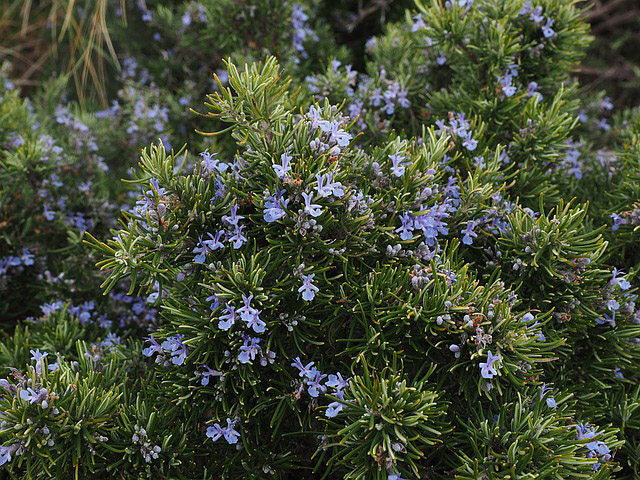
During late winter and spring, rosemary also produces clusters of blue, lavender, pink, or white flowers that attract honeybees and other beneficial pollinators.
Although most gardeners grow rosemary for cooking, it’s also an outstanding landscape plant. It works beautifully in xeriscapes, rock gardens, raised beds, decorative containers, and even as a low hedge.

Why Rosemary Grows So Well in the Southwest
Many plants struggle with our hot summers and dry climate.
Rosemary isn’t one of them.
In fact, it often performs better here than it does in cooler, wetter parts of the country because the conditions are so similar to its native Mediterranean home.
- Bright sunshine
- Low humidity
- Warm temperatures
- Excellent drainage
- Dry soil between waterings
Once established, rosemary is remarkably drought tolerant. It also stays attractive year-round, making it one of the best herbs for both edible gardens and Southwest landscapes.
Pro Tip: Rosemary loves sunshine, but it hates soggy roots. Plant it where water drains quickly and avoid locations that stay wet for days after irrigation.
Choosing the Best Location
Sunlight
Give rosemary at least six to eight hours of direct sunlight every day. Morning sun is excellent, but established rosemary has no problem handling intense afternoon sun in the Southwest.
Too much shade usually leads to leggy growth, fewer flowers, less fragrance, and slower growth.
Soil
Good drainage is absolutely essential.
Rosemary doesn’t mind sandy, rocky, or slightly alkaline soils, but it does poorly in soil that remains wet for long periods.
If you have heavy clay soil, consider planting rosemary in raised beds, berms, or containers.
Spacing
Although nursery plants start out small, many varieties eventually grow 4 to 6 feet wide. Proper spacing improves air circulation and reduces disease problems.
How to Plant Rosemary
Spring and fall are the best planting seasons because cooler temperatures allow roots to become established before summer heat or winter cold arrives.
Step 1
Dig a hole twice as wide as the nursery container but no deeper than the root ball.
Step 2
Remove the plant from its container and gently loosen any circling roots.
Step 3
Set the top of the root ball level with the surrounding soil.
Step 4
Backfill using your native soil. Rosemary adapts very well to most Southwest soils. You can use half organic compost and half topsoil.
Step 5
Water thoroughly after planting and apply two to three inches of mulch, keeping it several inches away from the stem.
Pro Tip: Don’t pile mulch against the stem. Leaving a small gap improves air circulation and helps prevent crown rot.
How Often Should You Water Rosemary?
Watering depends almost entirely on how long the plant has been in the ground.
Newly Planted Rosemary
During the first two to three weeks, water deeply every day or every other day, depending on your weather and soil.
The goal is to keep the root ball moist while new roots grow into the surrounding soil.
After the First Few Weeks
Once you see healthy new growth, reduce watering to every three to five days during warm weather.
Always allow the top couple of inches of soil to dry before watering again.
Established Rosemary
Plants that have been in the ground for about a year usually need a deep watering every 7–14 days during the growing season. Every two days or so during the hot summer months.
Water deeply rather than lightly to encourage a strong, drought-tolerant root system.
Signs You’re Watering Too Much
- Yellow leaves
- Black stems near the base
- Soft growth
- Leaves dropping suddenly
- Sour-smelling soil
If you notice these symptoms, reduce watering and check that the soil drains properly.
How to Fertilize Rosemary
One of the best things about rosemary is that it isn’t a heavy feeder.
In fact, applying too much fertilizer is one of the quickest ways to reduce its fragrance and encourage weak, leggy growth.
In most Southwest soils, rosemary grows perfectly well with little or no fertilizer. If your plant appears healthy, produces plenty of new growth, and has rich green foliage, there’s usually no reason to fertilize it.
When Fertilizer Can Help
If your rosemary has been growing in the same location for several years, or you’re growing it in a container, a light feeding once each spring can encourage fresh growth.
Use a balanced slow-release fertilizer or an organic fertilizer designed for herbs. Apply it according to the label directions, then water thoroughly.
Avoid fertilizers that are high in nitrogen. While they produce lots of leafy growth, they often reduce the strong aroma and flavor that make rosemary such a popular culinary herb.
Container Plants Need a Little More
Rosemary growing in containers loses nutrients more quickly because frequent watering gradually washes them from the potting mix.
A light feeding once or twice during the growing season is usually all that’s needed.
Pro Tip: If your rosemary already looks healthy, skip the fertilizer. Too much fertilizer causes far more problems than too little.

Growing Rosemary in Containers
Rosemary is one of the easiest herbs to grow in containers and is an excellent choice for patios, courtyards, balconies, and entryways throughout the Desert Southwest.
Growing rosemary in a decorative pot lets you harvest fresh sprigs just steps from your kitchen while adding year-round color and fragrance to your outdoor living space.
Choose the Right Pot
Select a container that is at least 12 to 18 inches wide and has one or more drainage holes.
Clay and terracotta pots work especially well because they allow excess moisture to evaporate faster than plastic containers.
Use a Well-Drained Potting Mix
Never use garden soil in containers. It compacts easily and drains too slowly.
Instead, use a quality commercial potting mix. Mixing in a little coarse sand or perlite improves drainage even more.
Watering Container Rosemary
Containers dry out much faster than plants growing in the ground, especially during our hot Southwest summers.
Check the soil every few days. If the top two to three inches are dry, water deeply until water drains from the bottom of the pot.
During periods above 100°F, you may need to water every few days. During winter, watering is much less frequent.
Best Location
Place containers where they receive at least six to eight hours of direct sunlight each day.
A south- or west-facing patio usually provides ideal growing conditions.
Pro Tip: Yellow leaves in containers are often caused by overwatering rather than underwatering. Always check the soil before watering again.
Pruning Rosemary
Rosemary responds very well to regular pruning. In fact, occasional trimming encourages a fuller, bushier plant with more fresh growth for harvesting.
The best time to prune is during late spring after flowering or in early summer.
Light Pruning
Trim a few inches from the ends of longer branches to encourage branching and maintain a compact shape.
Rejuvenating Older Plants
If your rosemary becomes woody with bare stems near the base, reshape it gradually over two or three seasons.
Avoid cutting deep into old leafless wood because rosemary doesn’t always produce new shoots from older stems.
Remove Dead Growth
Throughout the year, remove dead, broken, diseased, or winter-damaged branches using clean, sharp pruning shears.
Pro Tip: Regular harvesting counts as pruning. The more often you harvest fresh sprigs, the fuller your rosemary usually becomes.
Winter Care for Rosemary
Rosemary remains attractive throughout much of the winter, providing evergreen color while many other landscape plants are dormant.
Established plants easily tolerate the mild winters common across southern New Mexico, West Texas, and much of Arizona.
Young plants are more susceptible to unusually hard freezes.

Freeze Protection
If temperatures are expected to drop into the teens, water the soil the day before if it is dry and cover the plant overnight with frost cloth.
Remove the covering the following morning once temperatures begin warming.
Container Plants
Potted rosemary is more vulnerable because the roots are exposed to colder temperatures.
Move containers beneath a covered patio, next to a south-facing wall, or into an unheated garage during prolonged hard freezes.
Common Rosemary Problems
Rosemary is one of the easiest herbs to grow, but even this tough plant can occasionally develop problems. Fortunately, most are easy to correct.
Brown Leaves
Brown leaves are usually caused by overwatering, poor drainage, winter freeze damage, or the natural aging of older stems.
Yellow Leaves
Yellow leaves often indicate that the soil is staying wet for too long. Check the soil before watering again.
Leggy Growth
If rosemary becomes tall and sparse, it probably isn’t receiving enough sunlight. Move container plants or prune nearby shrubs that are creating shade.
Poor Flavor
Excess fertilizer often produces lush growth with less fragrance and flavor.
Pro Tip: Before treating any rosemary problem, always check the soil moisture first. Overwatering causes more problems than insects or disease.
Rosemary Pests and Diseases
One reason gardeners love rosemary is because insects usually leave it alone. Its aromatic oils naturally discourage many common garden pests.
Spider Mites
Spider mites are most common during hot, dry weather. A strong spray of water or insecticidal soap usually controls them.
Aphids
Aphids occasionally gather on tender new growth during spring. They’re easily washed away with water.
Powdery Mildew
This fungal disease appears as a white powdery coating on the leaves. Improve air circulation and avoid overhead watering.
Root Rot
Root rot is the most serious rosemary disease and almost always results from poorly drained soil or excessive watering.
Preventing root rot is much easier than trying to cure it.
How to Harvest Rosemary
One of the greatest rewards of growing rosemary is being able to step outside and harvest fresh sprigs whenever you need them.
Using clean pruning shears or scissors, cut stems that are four to six inches long. Harvest from several different areas of the plant instead of removing all the growth from one side. This encourages fuller growth while keeping the plant balanced.
For the best flavor, harvest rosemary in the morning after the dew has dried but before the afternoon heat arrives.
Avoid removing more than one-third of the plant at any one time. Regular harvesting actually encourages new growth and keeps rosemary looking full and attractive.
Pro Tip: Fresh rosemary has the strongest flavor just before the plant flowers in late winter or spring.
Cooking with Fresh Rosemary
Rosemary is one of the most versatile herbs you can grow. Its rich, pine-like aroma pairs well with countless dishes.
Fresh rosemary is excellent with:
- Chicken
- Beef
- Pork
- Lamb
- Potatoes
- Roasted vegetables
- Fresh breads
- Soups and stews
- Olive oils and marinades
Strip the leaves from the woody stems before chopping them into smaller pieces.

If your plant produces more than you can use fresh, dry several stems by hanging them upside down in a cool, dry room for two to three weeks. Store the dried leaves in an airtight container away from direct sunlight.
Health Benefits of Rosemary
Rosemary has been valued for centuries as both a culinary herb and a traditional medicinal plant.
Its leaves naturally contain antioxidants and other beneficial plant compounds that continue to be studied by researchers.
Some studies suggest rosemary may help support memory, digestion, and overall wellness. However, additional research is still needed, and rosemary should never replace professional medical care.
Most gardeners simply appreciate rosemary because it provides fresh herbs throughout the year while adding beauty, fragrance, and pollinator-friendly flowers to the landscape.
Note: This information is for educational purposes only and should not be considered medical advice. Always consult your healthcare provider before using herbs medicinally.
Frequently Asked Questions
Can rosemary survive winter in the Southwest?
Yes. Established rosemary survives most winters throughout southern New Mexico, West Texas, and Arizona. Young plants may benefit from frost protection during unusually cold nights.
Does rosemary come back every year?
Absolutely. Rosemary is an evergreen perennial that can live for many years with proper care.
How often should I water rosemary?
New plants need frequent watering while becoming established. Mature plants usually require deep watering every 7 to 14 days during the growing season.
Can rosemary grow in containers?
Yes. Rosemary grows exceptionally well in containers that provide excellent drainage and plenty of sunshine.
Does rosemary need full sun?
Yes. Rosemary performs best with six to eight hours of direct sunlight each day.
Why are my rosemary leaves turning brown?
Brown leaves are most often caused by overwatering, poor drainage, winter damage, or aging stems.
Can rosemary be grown indoors?
Yes, provided it receives several hours of direct sunlight from a bright south-facing window and has good air circulation.
Is rosemary safe around pets?
According to the ASPCA, rosemary is generally considered non-toxic to dogs, cats, and horses.
When is the best time to plant rosemary?
Spring and fall are ideal planting times because temperatures are cooler and roots establish more easily.
Can I eat rosemary flowers?
Yes. Rosemary flowers are edible and make an attractive garnish for salads, soups, breads, and many other dishes.
Final Thoughts
Rosemary has earned its reputation as one of the easiest and most rewarding herbs you can grow in the Southwest.
Once established, it tolerates heat, drought, poor soils, and years of neglect better than many landscape plants.
Whether you’re planting rosemary in your landscape, growing it in a decorative container, or harvesting fresh sprigs for your favorite recipes, this versatile evergreen herb provides beauty, fragrance, and fresh flavor throughout the year.
If you remember only one thing, make it this:
Give rosemary plenty of sunshine, excellent drainage, and resist the temptation to overwater it.
Do that, and your rosemary will reward you with years of healthy growth.
For additional growing information, see the Texas A&M AgriLife rosemary growing guide.
Texas master Gardener – Rosemary Plant Finder
Want More Southwest Gardening Tips?
If you enjoy practical, no-nonsense gardening advice written specifically for the Desert Southwest, join our FREE Southwest Gardening Newsletter.
Every week, you’ll receive seasonal gardening tips, watering advice, plant care guides, and expert recommendations based on real gardening experience here in southern New Mexico.
Join thousands of Southwest gardeners and subscribe today—it’s completely free!
You May Also Enjoy
- How to Keep Potted Plants Alive During 100°+ Weather
- How to Protect Plants from Extreme Heat
- How Often Should You Water Plants in Las Cruces?
- How to Prepare Your Southwest Garden for Monsoon Season
- How to Plant a Tree Properly

New to Southwest Gardening?
Stop wasting money on plants that will not survive our heat and drought.
My Southwest Gardening Made Simple eBook shows you which trees, shrubs, flowers, and vegetables actually thrive in New Mexico, Arizona, and West Texas.
The best plants for hot, dry climates
Common mistakes that kill Southwest plants
Easy-to-follow advice for beginners

Paul Guzman is a lifelong Southwest gardener and gardening writer with decades of experience helping homeowners grow beautiful landscapes in the desert Southwest. He writes for Guzman’s Garden Centers in Las Cruces, New Mexico, with contributing expertise from Gary Guzman, owner of Guzman’s Garden Centers. If you have any questions or enjoyed this post, feel free to share your thoughts in the comments below.