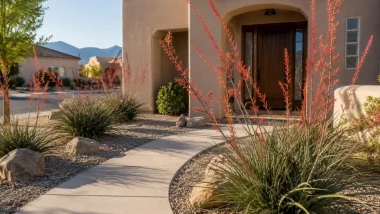
7 Simple steps to keep your trees healthy
Learning how to keep trees healthy in the Desert Southwest can be a challenge. Our trees deal with intense sunlight, dry air, strong winds, alkaline soil, and long periods without measurable rain. Even drought-tolerant trees need some help, especially when they are young or during our hottest months.
The good news is that most tree problems can be prevented with proper watering and a little regular maintenance. Here are seven practical steps that will help keep your trees strong and healthy in Las Cruces and throughout the Desert Southwest.
1. Water Trees Deeply
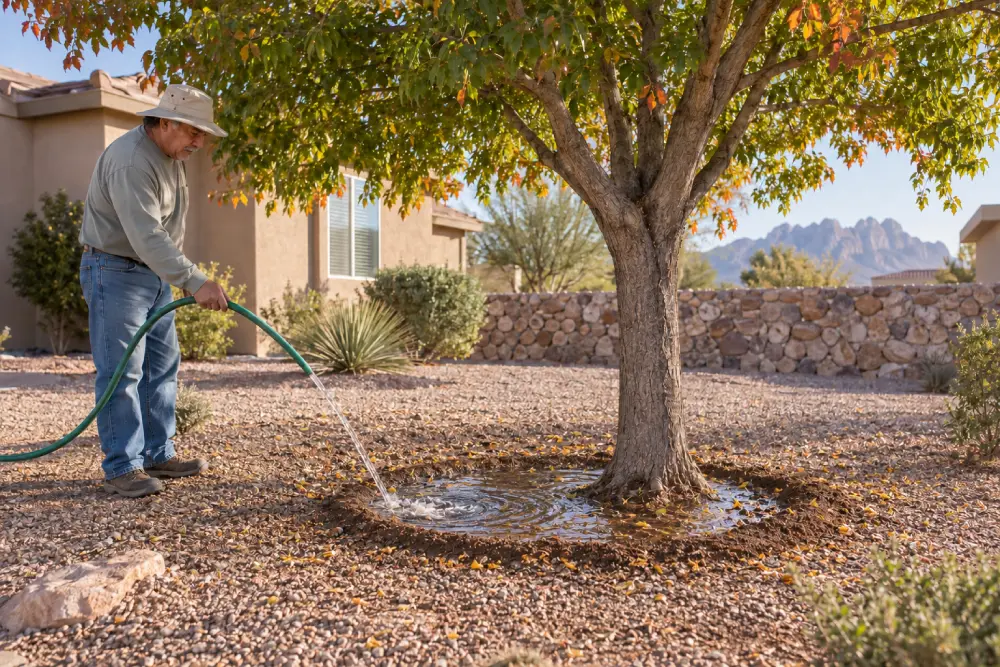
Watering correctly is the most important part of keeping a tree healthy in our desert climate.
Trees do better with a slow, deep soaking than with frequent shallow watering. Light watering encourages roots to remain close to the soil surface, where they dry out quickly during hot and windy weather.
Apply water slowly enough that it soaks deeply into the soil instead of running across the landscape. Drip irrigation, soaker hoses, and slow-running garden hoses can all work well.
Do not place all your emitters directly against the trunk. As a tree grows, its absorbing roots spread outward. Expand the watering area toward the drip line and beyond as the tree becomes larger.
Young trees require more frequent watering while their roots become established. Mature trees can usually go longer between waterings, but they still need an occasional deep soaking during extended dry periods.
Remember that every yard is different. Sandy soil drains quickly, while clay and caliche soils may take longer to absorb water.
2. Check the Soil Before Watering Again
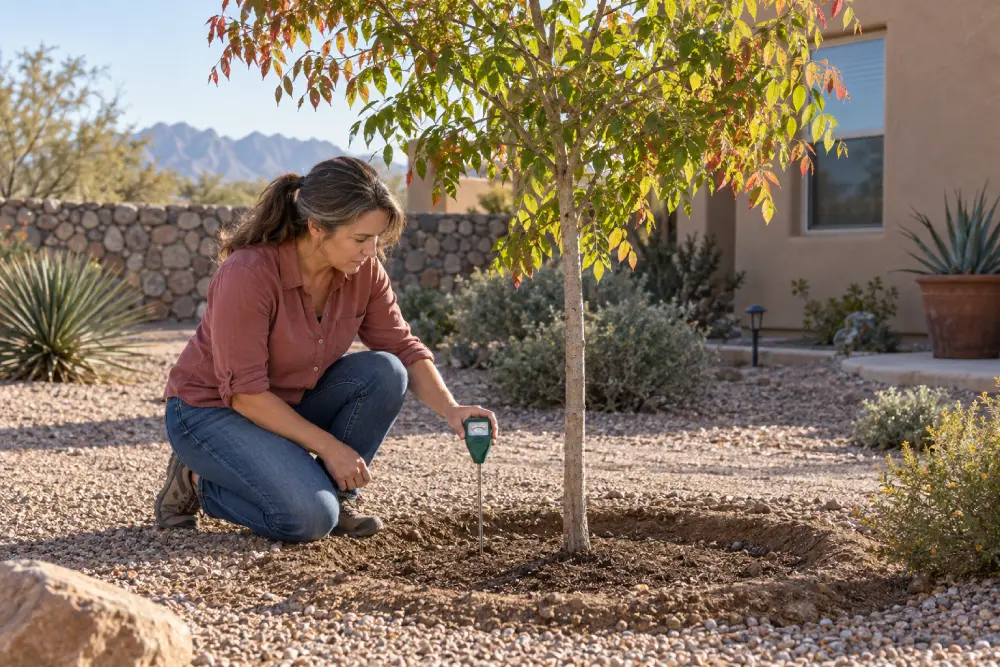
A watering calendar can be helpful, but it should not be your only guide. Temperature, wind, rainfall, soil type, tree size, and the type of tree all affect how often you need to water.
Check the soil several inches below the surface before turning the irrigation system back on. The top inch can look completely dry while the soil underneath is still moist.
A long screwdriver or soil probe is a simple way to check the ground. If it pushes into the soil easily, there may still be adequate moisture. If the soil is hard and dry several inches down, it is probably time to water.
Too much water can be just as harmful as too little. Constantly saturated soil pushes oxygen away from the roots and may eventually cause root rot.
Allow some drying time between deep waterings. The goal is moist soil—not soil that remains soggy every day.
3. Add Mulch Around the Root Zone
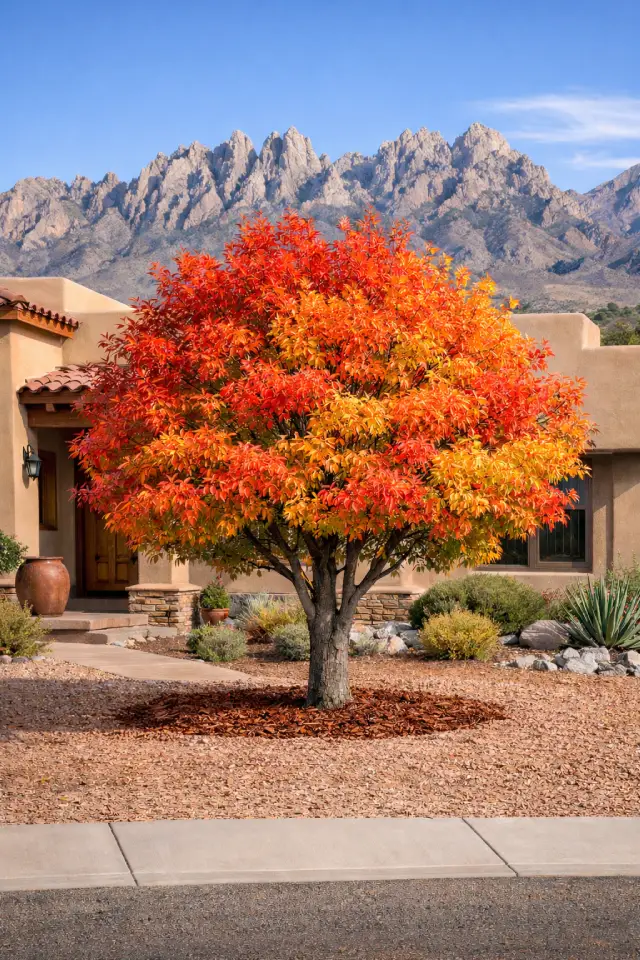
A two- to four-inch layer of organic mulch can make a big difference in our climate. Mulch helps conserve moisture, cools the soil, discourages weeds, and slowly adds organic matter as it decomposes.
Wood chips and shredded bark are good choices around most shade and ornamental trees.
Spread the mulch outward over as much of the root zone as practical, but do not pile it against the trunk. Leave several inches of open space around the base.
Avoid making a “mulch volcano.” Mulch stacked against the trunk holds moisture against the bark and creates favorable conditions for insects, disease, and decay.
The New Mexico State University guide to establishing fruit and shade trees also recommends a two- to four-inch layer of organic mulch and keeping grass away from young trees.
4. Keep the Root Flare Exposed
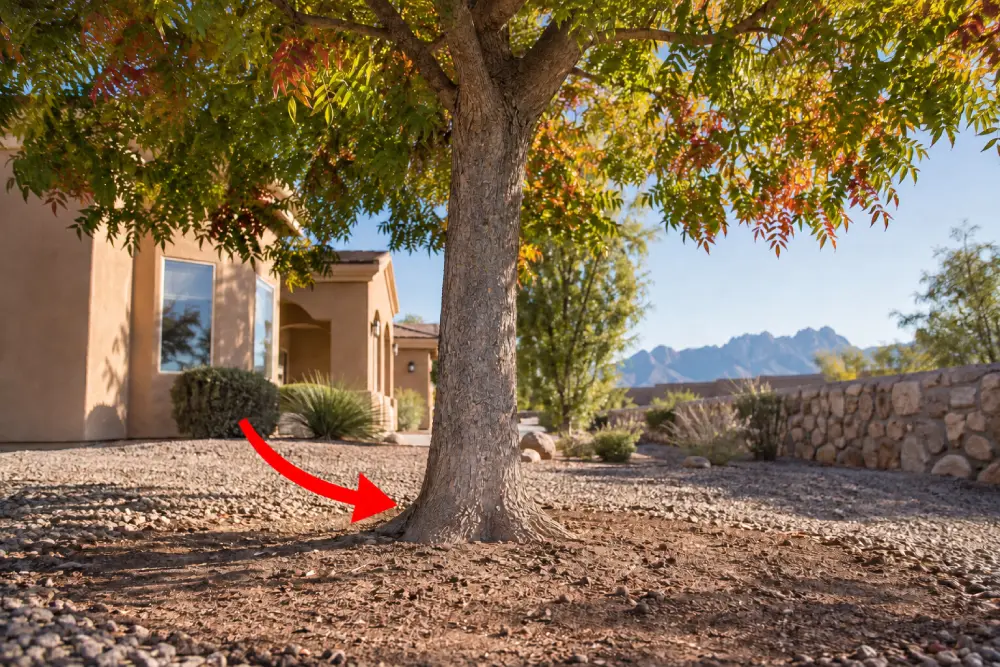
The root flare is the area where the trunk widens and meets the main roots. This part of the tree should remain visible above the soil.
Unfortunately, many trees are planted too deeply. Others become buried when soil, decorative gravel, or mulch is added around the trunk over the years. Read How to plant a tree properly.
A trunk that looks like a telephone pole going straight into the ground may be planted too deeply.
Covering the root flare keeps the bark damp and may encourage girdling roots. These roots can circle around the trunk and restrict the movement of water and nutrients as the tree grows.
If you are planting a new tree, locate the first main roots before placing it in the ground. The planting hole should be wide, but it should not be excessively deep.
5. Prune Carefully
Proper pruning helps improve the structure and appearance of a tree. Poor pruning can weaken it for many years.
Start by removing dead, broken, diseased, or crossing branches. Young trees may also need light corrective pruning to develop a strong structure.
Avoid removing too much of the canopy at one time. Leaves manufacture the food a tree needs to grow and recover. Excessive pruning also exposes previously shaded branches and trunks to our strong Southwest sun.
Never top a tree. Topping means cutting large branches back to stubs. This creates large wounds and encourages weak, fast-growing shoots that can break during high winds.
The International Society of Arboriculture’s tree-owner resources provide additional information about pruning, mature-tree care, mulching, pests, and tree risk.
Large branches, trees near power lines, and damaged mature trees should be inspected by a qualified tree professional. Tree work can be dangerous, especially when ladders and chainsaws are involved.
6. Fertilize Only When the Tree Needs It
More fertilizer does not always mean a healthier tree.
Trees growing in poor Desert Southwest soil may benefit from fertilizer, but applying too much nitrogen can produce weak, overly fast growth. This tender growth may be more vulnerable to insects, wind damage, heat, and cold weather.
Before fertilizing, look at the entire situation. Yellow leaves might indicate a nutrient deficiency, but they can also be caused by overwatering, poor drainage, damaged roots, iron chlorosis, insects, or disease.
Our alkaline soils frequently make certain nutrients difficult for plants to absorb, even when those nutrients are already present in the ground.
If you are unsure, have the soil tested or ask a knowledgeable garden professional to look at the tree. It is better to identify the problem before applying another product.
7. Inspect Your Trees Every Month
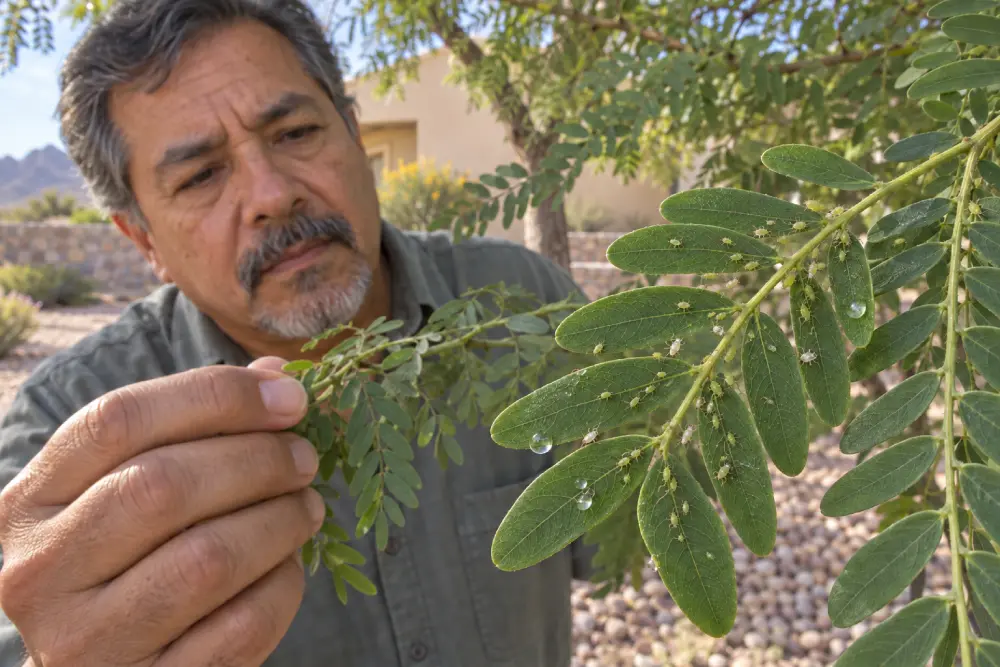
Take a few minutes once a month to walk around your trees. Many serious problems begin with small warning signs.
Look for:
- Broken or hanging branches
- Cracks in the trunk
- Loose or damaged bark
- Mushrooms growing near the trunk
- Holes, sawdust, or insect activity
- Yellowing or scorched leaves
- Dripping sap
- Exposed or circling roots
- Clogged irrigation emitters
- Water spraying directly against the trunk
- Stakes or wires cutting into the bark
Check trees after strong winds, heavy rain, and sudden freezes. Problems are much easier to correct when they are caught early.
A tree that suddenly leans, develops a major trunk crack, drops a large branch, or shows rapid decline should be inspected by a qualified arborist.
Adjust Tree Care With the Seasons
Tree care in the Desert Southwest changes throughout the year.
Spring
Inspect irrigation systems, remove dead branches, and check for new insect activity. Spring is also a good time to replenish mulch before extreme heat arrives.
Summer
Monitor soil moisture closely. Trees may need deeper or more frequent watering during extended heat, but avoid keeping the ground constantly saturated. Watch for leaf scorch and plugged emitters.
Fall
Continue watering while temperatures remain warm. Fall is also one of the best times to plant many shade trees because the roots can begin establishing before the following summer.
Winter
Do not assume trees need no water during winter. Evergreen trees and newly planted trees may still require supplemental water during long dry periods. Water on a mild day when the soil is not frozen.
Young, thin-barked trees may also need protection from sunscald on the southwest-facing side of the trunk.
Healthy Roots Grow Healthy Trees
Most tree health problems start below ground. Proper watering, good drainage, exposed root flares, and healthy soil are the foundation of a long-lived tree.
You do not have to fertilize constantly or water every day. The best approach is to check the soil, water deeply when necessary, and inspect the tree regularly.
A well-maintained tree can provide shade, beauty, energy savings, and value to your landscape for many years. If you are unsure which trees will work best in your yard, stop by either Guzman’s Garden Centers location in Las Cruces. We will be glad to help you choose a tree and explain how to care for it in our Desert Southwest climate.
Frequently Asked Questions
How often should I water a tree in the Desert Southwest?
There is no single schedule that works for every tree. Young trees need water more frequently than established trees. Soil type, temperature, wind, rainfall, and tree species also make a difference. Check the soil several inches down and water deeply when it begins to dry. How often to water plants in Las Cruces.
Where should I place drip emitters around a tree?
Place emitters over the active root zone instead of directly against the trunk. Move them farther outward and add more emitters as the tree grows. Mature tree roots commonly extend to and beyond the drip line.
Can a tree receive too much water?
Yes. Soil that remains constantly wet does not contain enough oxygen for healthy roots. Overwatering can cause yellow leaves, weak growth, root rot, and eventual tree decline.
Should landscape gravel touch the tree trunk?
No. Keep gravel, soil, and mulch away from the trunk and root flare. Materials piled around the trunk can trap moisture and hide decay or insect problems.
What is the best time to prune trees in New Mexico?
The proper timing depends on the species and reason for pruning. Dead or dangerous branches can be removed when necessary. Major pruning is often done while deciduous trees are dormant, but flowering trees and trees that produce heavy sap may require different timing.
Why Plant Shade Trees in New Mexico?
Should I fertilize my trees every year?
Not necessarily. Healthy trees with normal growth and good leaf color may not need annual fertilizer. Diagnose watering, drainage, soil, and root problems before assuming the tree needs more nutrients.
When should I call a professional arborist?
Call a qualified arborist when a tree has large dead branches, major cracks, sudden leaning, root damage, decay, or limbs near buildings and power lines. You should also seek professional help when pruning requires climbing or using equipment above ground.
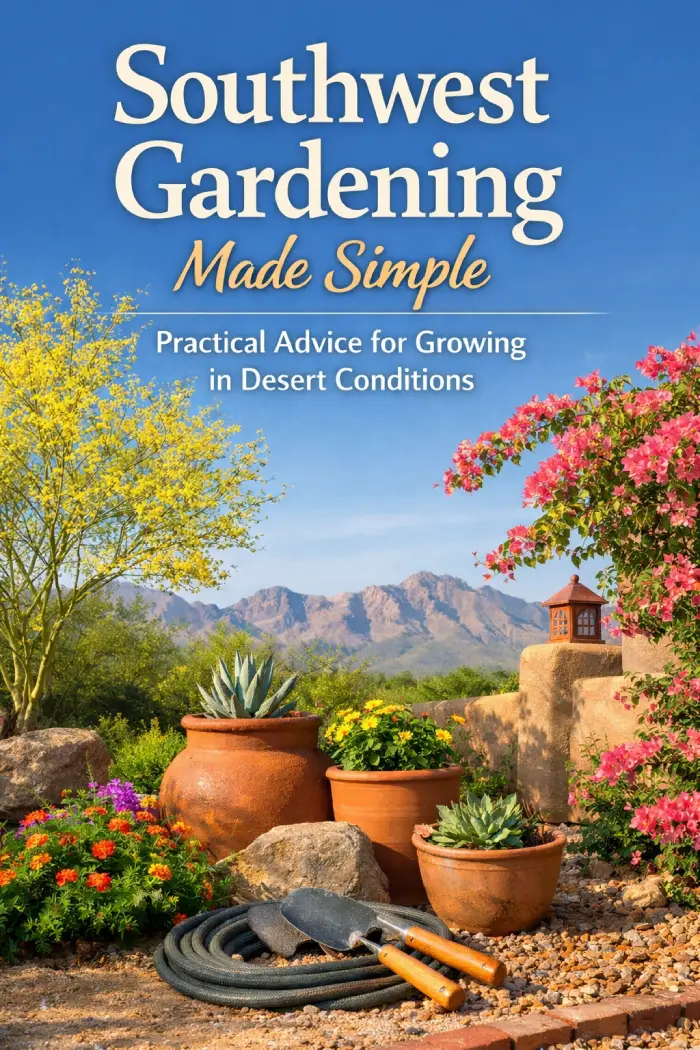
New to Southwest Gardening?
Stop wasting money on plants that will not survive our heat and drought.
My Southwest Gardening Made Simple eBook shows you which trees, shrubs, flowers, and vegetables actually thrive in New Mexico, Arizona, and West Texas.
The best plants for hot, dry climates
Common mistakes that kill Southwest plants
Easy-to-follow advice for beginners

Paul Guzman is a lifelong Southwest gardener and gardening writer with decades of experience helping homeowners grow beautiful landscapes in the desert Southwest. He writes for Guzman’s Garden Centers in Las Cruces, New Mexico, with contributing expertise from Gary Guzman, owner of Guzman’s Garden Centers. If you have any questions or enjoyed this post, feel free to share your thoughts in the comments below.