Last updated on June 28th, 2026 at 07:10 am
Have you ever purchased a beautiful plant from a nursery only to watch it struggle a few months later?
You’re not alone.
One of the biggest mistakes Southwest gardeners make is choosing plants based solely on appearance. A plant may look healthy at the garden center, but that doesn’t mean it will thrive in your yard.
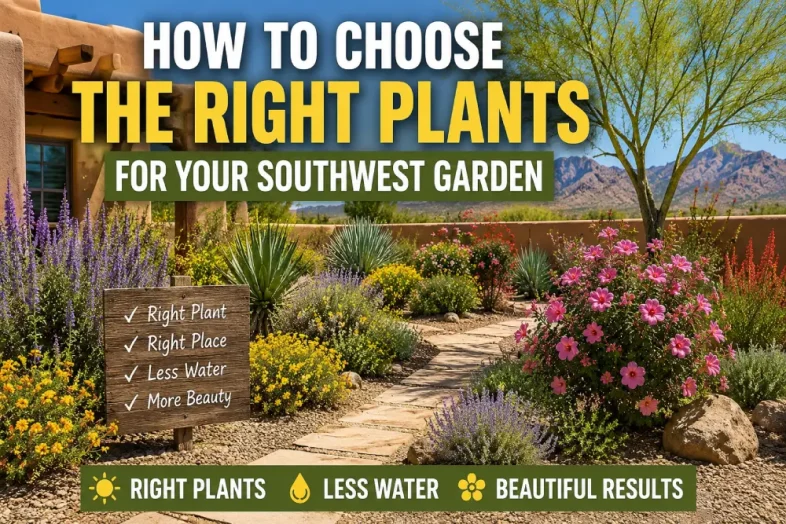
The secret to a beautiful landscape is selecting plants that are well-suited to our unique climate. In southern New Mexico, West Texas, and much of Arizona, we deal with intense summer heat, low humidity, alkaline soils, and very little rainfall. Fortunately, many plants thrive under these conditions if you choose wisely.
Start With Your Climate
Before buying any plant, ask yourself:
- Will it tolerate temperatures over 100°F?
- Can it survive periods of drought?
- Is it recommended for USDA Zones 7–9?
- Will it handle our alkaline soil?
Plants that are naturally adapted to desert conditions require less water, fewer fertilizers, and much less maintenance.
Know How Much Sunlight You Have
Different parts of your yard receive different amounts of sunlight.
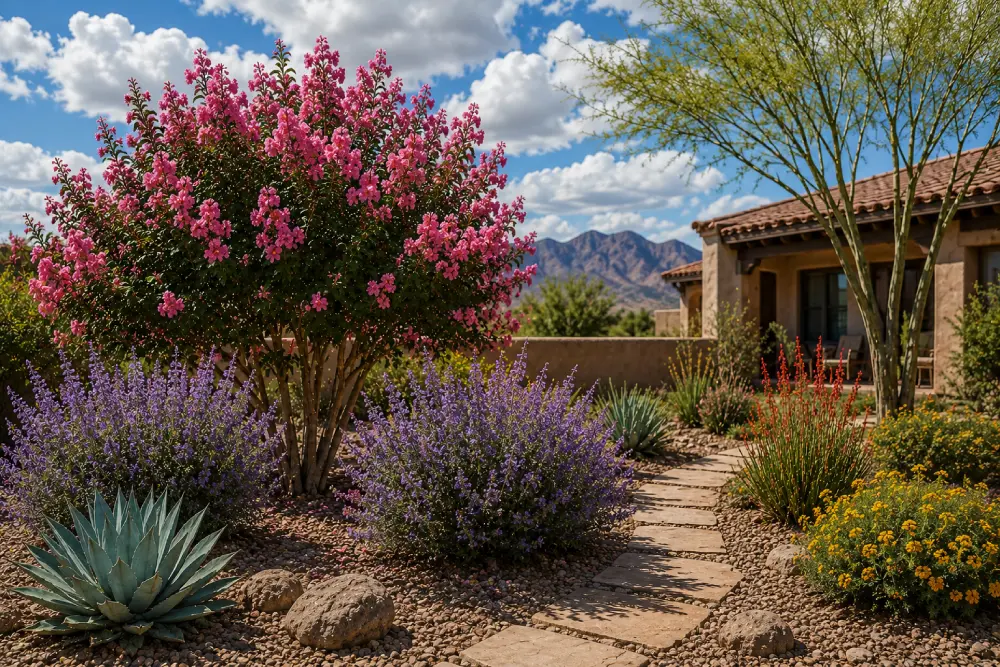
Full Sun
Six or more hours of direct sunlight each day.
Great choices include:
- Texas Sage
- Lantana
- Red Yucca
- Yellow Bells
- Desert Willow
- Agave
Partial Shade
Four to six hours of sunlight or filtered afternoon shade.
Good choices include:
- Japanese Aralia
- Cast Iron Plant
- Coral Bells
- Columbine
- Autumn Sage
Shade
Areas beneath patios or mature trees require shade-loving plants such as:
- Hostas (with extra care)
- Ferns
- Cast Iron Plant
- Caladiums
- Begonias
Choose Plants That Fit the Space
Many homeowners underestimate how large plants become.
A shrub that is only two feet tall today may eventually grow eight feet tall and six feet wide.
Always read the mature height and width on the plant tag before purchasing.
Give trees and shrubs enough room to grow naturally instead of planning to keep them small through constant pruning.
Consider Water Requirements
Try grouping plants with similar watering needs together.
For example:
- Desert plants should share one irrigation zone.
- Flowering shrubs should share another.
- Vegetables and lawns usually require much more frequent watering.
Grouping plants this way makes irrigation more efficient and helps prevent overwatering or underwatering.
Improve Your Soil
Much of the Southwest has rocky, sandy, or caliche soil that drains quickly.
Before planting, amend the soil with compost or other organic matter to improve water retention and encourage healthy root development.
Good soil is the foundation of a successful garden.
Buy Healthy Plants
When shopping for plants, look for:
- Bright green foliage
- Strong stems
- Healthy roots
- No insects or disease
- Moist—not soggy—soil
Avoid plants with yellow leaves, wilted stems, broken branches, or roots circling heavily inside the pot.
Think About Maintenance
Ask yourself how much time you want to spend caring for your landscape.
If you prefer a low-maintenance yard, choose drought-tolerant shrubs, ornamental grasses, and native plants that require minimal pruning and watering.
If you enjoy gardening as a hobby, flowering annuals, roses, and tropical plants can provide spectacular color with a little extra care.
Plant for Every Season
A beautiful landscape shouldn’t rely on one plant.
Combine:
- Evergreen shrubs for year-round structure
- Flowering perennials for seasonal color
- Ornamental grasses for texture
- Shade trees for cooling
- Annual flowers for continuous blooms
This creates a landscape that remains attractive throughout the year.
Visit a Local Garden Center
Local nurseries understand which plants perform best in your area.
Unlike large chain stores that often stock plants for many climates, local garden centers can recommend varieties proven to succeed in southern New Mexico and the surrounding Southwest.
Their advice can save you both money and frustration.
Final Thoughts
Choosing the right plants doesn’t have to be difficult.
When you consider your climate, sunlight, soil, available space, and watering needs before planting, you’ll create a landscape that stays healthier, requires less maintenance, and provides years of enjoyment.
The best gardens aren’t built by buying the most expensive plants—they’re built by choosing the right plants for the right location.
Before purchasing plants, check your local growing zone using the USDA Plant Hardiness Zone Map. Choosing plants that are adapted to your climate greatly increases their chances of thriving.
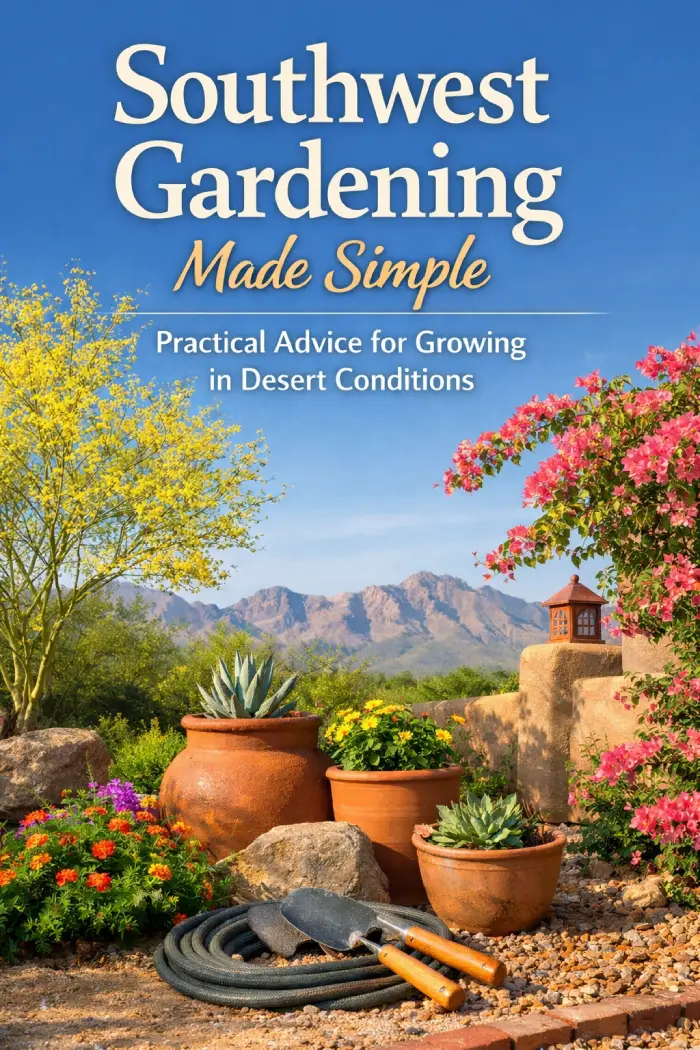
New to Southwest Gardening?
Stop wasting money on plants that will not survive our heat and drought.
My Southwest Gardening Made Simple eBook shows you which trees, shrubs, flowers, and vegetables actually thrive in New Mexico, Arizona, and West Texas.
The best plants for hot, dry climates
Common mistakes that kill Southwest plants
Easy-to-follow advice for beginners

Paul Guzman is a lifelong Southwest gardener and gardening writer with decades of experience helping homeowners grow beautiful landscapes in the desert Southwest. He writes for Guzman’s Garden Centers in Las Cruces, New Mexico, with contributing expertise from Gary Guzman, owner of Guzman’s Garden Centers. If you have any questions or enjoyed this post, feel free to share your thoughts in the comments below.
We recently redid our front lawn and we have been looking to get flowers to make our lawn look fabulous. It was awesome to know that before going to your local garden center or nursery it is best to take notes on your current landscape. We will be sure to take note of that before we buy any flowers to plant!
I like that tip to consider if you have structures and trees blocking the sunlight. I guess you’d need a hardier plant if your garden wouldn’t get a lot of sun. My wife wants to get into gardening so we’ll have to find a nursery to get some plants from.