Last updated on July 3rd, 2026 at 02:44 pm
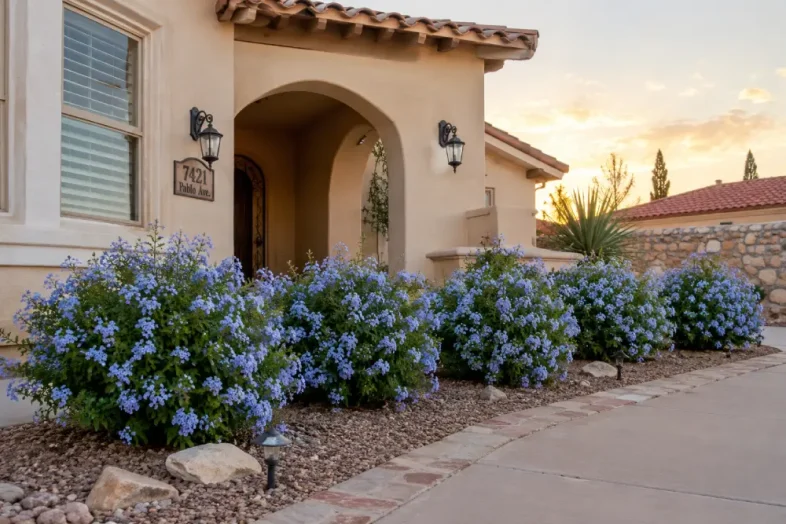
How to grow Plumbago Plants. Below is the Royal Cape Plumbago (Plumbagoo auriculatla ‘Monott’). In the Southwest, this plant will bloom from early spring to mid-fall. A very hardy plant with a bright, showy blue flower. This is a perfect plant that can be used for contrasting colors with other plants that give out red, yellow, and orange blooms.
Where to Plant Plumbago in Southwest Landscapes
Plumbago thrives in the hot, sunny conditions of the Desert Southwest and is an excellent choice for landscapes in Las Cruces, El Paso, Tucson, Phoenix, and other warm climates. Plant it where it will receive at least 6 to 8 hours of direct sunlight each day. Although it can tolerate light afternoon shade, full sun will produce the heaviest flowering and the most compact growth.
This versatile shrub also performs very well in large decorative containers, making it a colorful addition to patios, courtyards, pool areas, and front entryways. Use a high-quality, well-drained potting mix, and remember that container-grown plants usually need watering more often than those planted in the ground during the summer months.
In the landscape, Plumbago makes an excellent background plant in flower beds and mixed borders. Its airy branches and beautiful sky-blue flowers provide the perfect backdrop for lower-growing perennials and annuals. Layering plants by height creates a more natural, professionally designed appearance while giving every plant room to shine.
For a colorful Southwest combination, plant Plumbago behind lower-growing favorites such as Verbena, Creeping Phlox, Ice Plant, Lantana, Angelita Daisy, or Trailing Gazania. It also pairs beautifully with Texas Sage, Red Yucca, and Yellow Bells, creating a landscape that stays colorful through much of the growing season while attracting butterflies and other beneficial pollinators.
Once established, Plumbago is relatively drought tolerant, but it will perform best with deep, occasional watering during extended periods of hot, dry weather. Adding a 2- to 3-inch layer of mulch around the base helps conserve soil moisture, keeps the roots cooler, and reduces weed growth during the hottest months of the year.
How tall does plumbago grow?
The Royal Cape Plumbago, shown below, typically grows to about 5 feet in height and spreads to roughly the same width, making it a balanced and manageable option for gardens. During colder months, the plant goes dormant, losing its vibrant appearance, but don’t worry—it’s not gone for good. Once the warmer weather returns, the plumbago will bounce back, regaining its lush foliage and beautiful blooms. This seasonal pattern is normal, so it’s a reliable choice for gardeners in regions with distinct seasonal changes. It is a moderate watering plant but needs additional if in a container or placed in rock gardens.
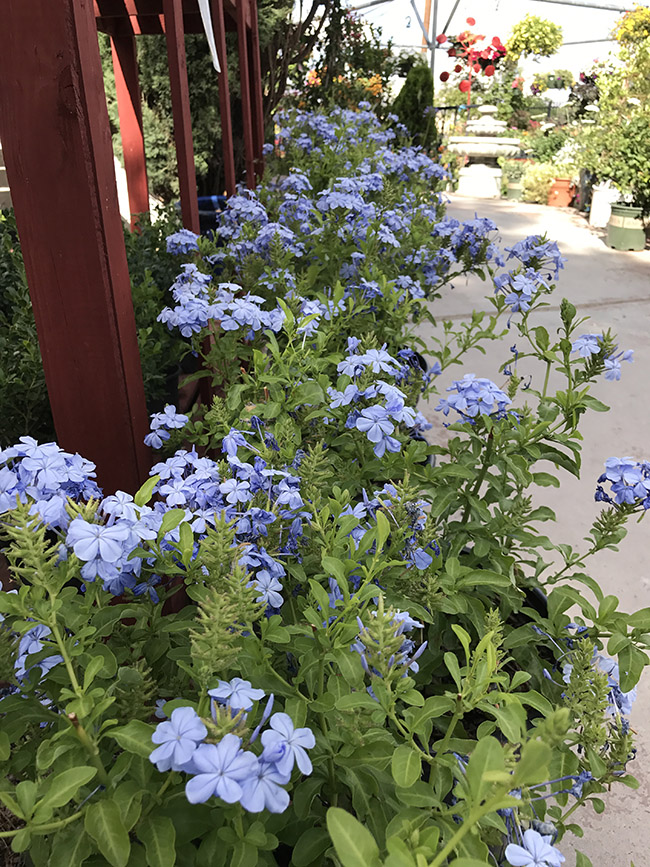
The Dwarf Plumbago (Ceratostigma plumbaginoides)
A good low groundcover plant. Place in full or partial shade, as it will do well in either. This plant will grow about 1 ft. tall and will spread slowly to about 2ft. over time.
Plumbago thrives in containers, showcasing clusters of vibrant blue flowers that brighten any space. As a herbaceous perennial, it returns year after year, adding consistent color and charm to gardens or patios. Its low-maintenance nature makes it a favorite among gardeners who want reliable beauty with minimal effort. It will bloom from about mid-summer till late fall.
There are other types of Plumbago plants, but the ones mentioned here will do great in and around the lower elevations of the Southwest. Varieties of Plumbago plants at Monrovia.
Other Companion Plants are the Blanket Flower (Gaillardia), Tickseed (Coreopsis); Maiden Grass (Miscanthus); Shasta Daisy (Chrysanthemum), and Coral Bells (Heuchera).
Another blue flowering plant is the Russian Sage.
How to Grow Plumbago Plants
New to Southwest Gardening?
Stop wasting money on plants that will not survive our heat and drought.
My Southwest Gardening Made Simple eBook shows you which trees, shrubs, flowers, and vegetables actually thrive in New Mexico, Arizona, and West Texas.
The best plants for hot, dry climates
Common mistakes that kill Southwest plants
Easy-to-follow advice for beginners

Paul Guzman is a lifelong Southwest gardener and gardening writer with decades of experience helping homeowners grow beautiful landscapes in the desert Southwest. He writes for Guzman’s Garden Centers in Las Cruces, New Mexico, with contributing expertise from Gary Guzman, owner of Guzman’s Garden Centers. If you have any questions or enjoyed this post, feel free to share your thoughts in the comments below.