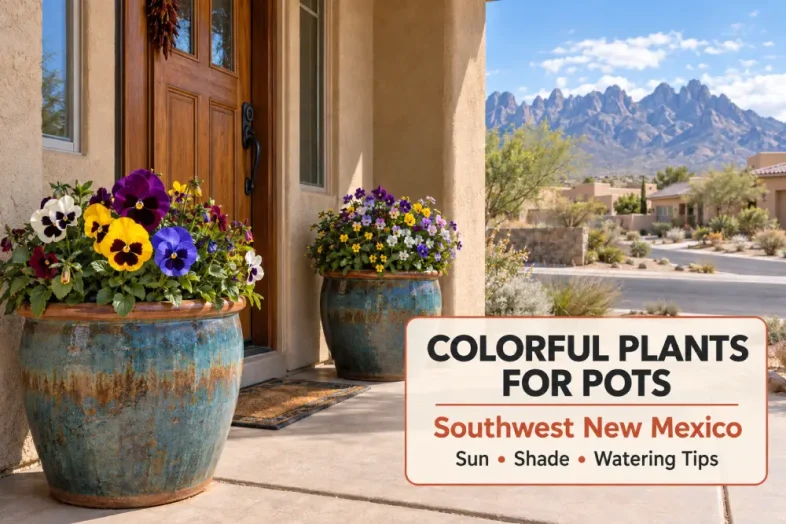
Best Colorful Plants for Pots in Southwest New Mexico. Discover colorful plants that thrive in pots in Southwest New Mexico. Learn which flowers handle our heat. Growing colorful plants in pots is one of the easiest ways to brighten an entrance, patio, courtyard, or backyard. Containers also give you the freedom to move your plants when the Southwest New Mexico sun becomes too intense or cold weather arrives.
Containers also let you move sensitive plants into afternoon shade during extreme heat or protect them when cold weather arrives.
However, growing plants in containers around Las Cruces comes with a few challenges. Our strong sunshine, dry air, wind, and summer temperatures above 100 degrees can dry out a container surprisingly fast.
Choosing the right plants—and learning how to water them correctly—will make a big difference.
Why Grow Colorful Plants in Pots?
Container gardening is perfect for homeowners who have limited planting space or want to add color without digging up the landscape. Decorative pots can also soften the appearance of stucco walls, gravel yards, patios, and rock-wall entrances.
Some advantages of growing flowers in pots include:
- You can move plants away from extreme afternoon sun.
- It is easier to change your colors with the seasons.
- You have better control over the soil and drainage.
- Pots can add height and interest to an otherwise plain area.
- You can replace tired annuals without disturbing the rest of your landscape.
The secret is matching each plant with the correct amount of sunlight and water.
1. Geraniums
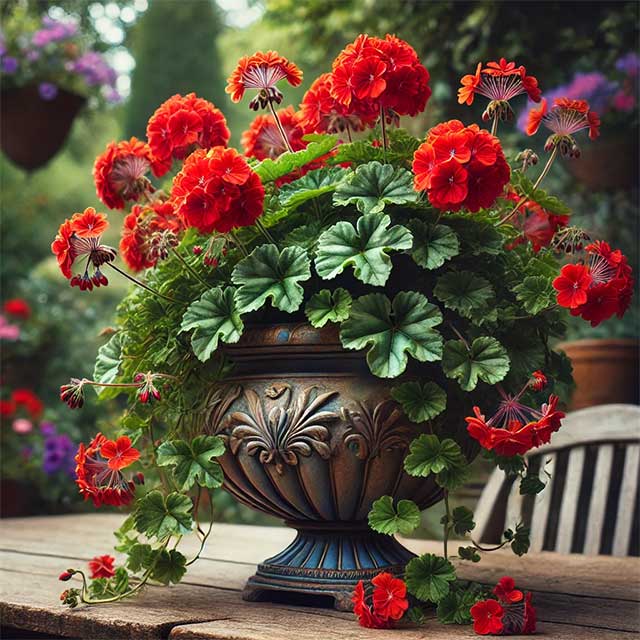
Geraniums are among the most popular flowering plants for containers. Their red, pink, white, coral, and salmon-colored blooms stand out beautifully against Southwestern stucco homes.
Geraniums perform best during spring and fall in Las Cruces. They enjoy plenty of light, but the hottest afternoon sun can cause their leaves and flowers to burn during midsummer.
Place geraniums where they receive morning sun and some afternoon shade. Water thoroughly when the top inch or two of potting soil feels dry. Remove old flowers regularly to encourage additional blooms.
2. Petunias

Petunias produce an abundance of flowers in purple, pink, red, white, yellow, and striped combinations. They look especially good in hanging baskets and larger decorative containers.
In southern New Mexico, petunias are usually at their best during spring and fall. Some newer varieties tolerate heat better than older types, but most appreciate afternoon shade once temperatures become extremely hot.
Water before the potting mix dries completely, but do not leave the roots sitting in water. Trim back long, leggy stems to encourage fresh growth and more flowers.
3. Calibrachoa
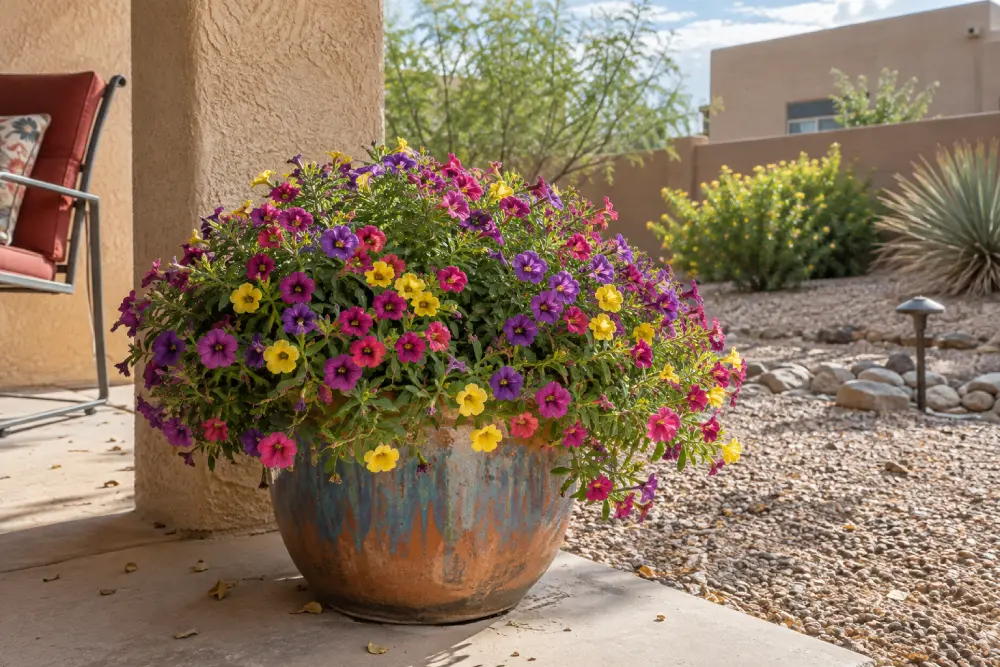
Calibrachoa is sometimes called million bells because it produces hundreds of small, petunia-like flowers. It is an excellent choice for hanging baskets, window boxes, and the edges of mixed containers.
Calibrachoa needs excellent drainage. Constantly wet soil can cause yellow leaves and root problems. Give it morning sun, light afternoon shade during extreme heat, and regular applications of a water-soluble flowering plant fertilizer.
4. Vinca Madagascar periwinkle
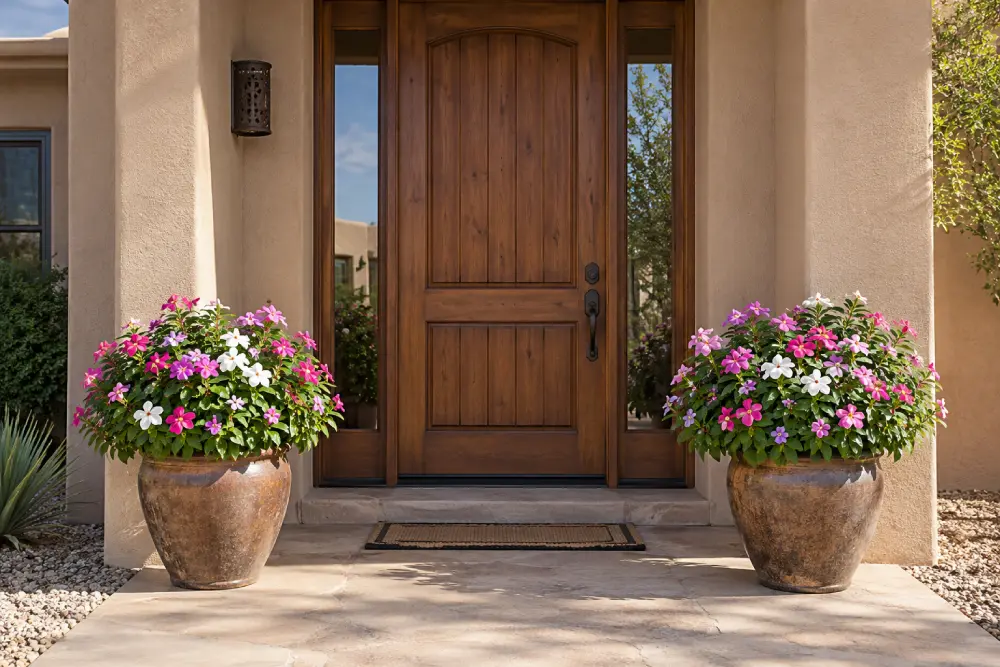
Annual vinca is one of the toughest choices for hot Southwest containers. It produces attractive flowers in white, pink, red, lavender, and mixed colors.
Unlike petunias and pansies, vinca prefers hot weather. It can struggle if planted too early in cold, wet soil, so wait until temperatures have warmed.
Place vinca in full sun or light afternoon shade. Allow the upper portion of the soil to dry slightly before watering again. Overwatering is one of the most common problems with this plant.
Vinca will bloom from mid-spring until the first frost.
5. Lantana
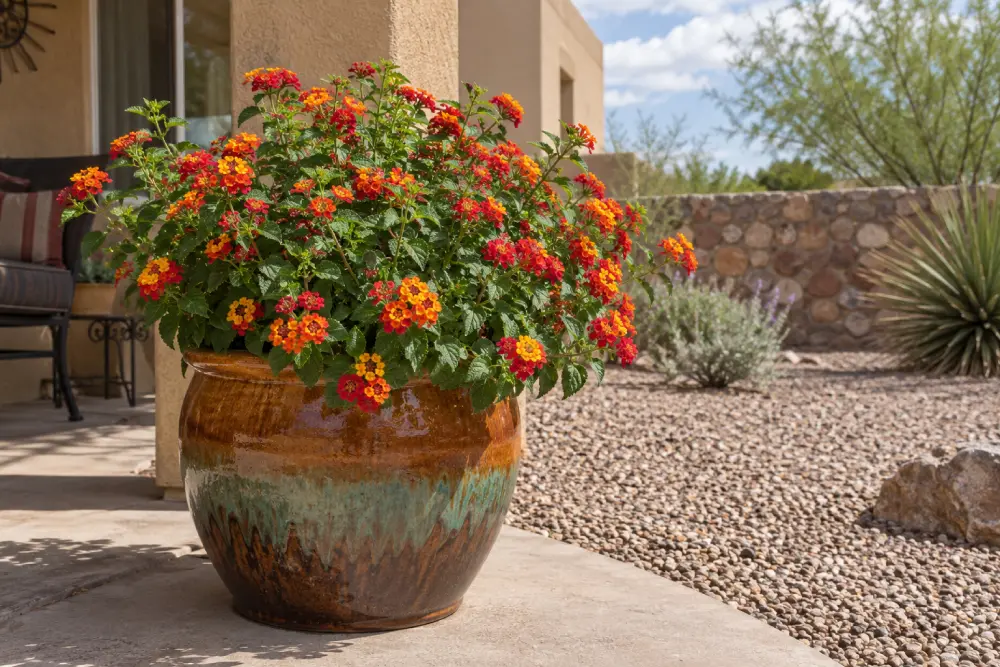
Lantana is hard to beat when you want long-lasting summer color. Its clusters of yellow, orange, red, pink, purple, or multicolored flowers attract butterflies and other pollinators.
Lantana loves sunshine and heat. It works well as the taller centerpiece in a large container. Although established lantana is drought tolerant in the landscape, a plant growing in a pot will need regular watering.
Water deeply and then allow the upper layer of potting soil to dry. Avoid keeping the roots constantly wet. Remember that lantana is not reliably winter-hardy in an exposed container, so protect it when freezing weather arrives.
There are numerous varieties of Lantana here are the most common ones.
- New Gold Lantana – Bright golden-yellow flowers with a low, spreading growth habit. Excellent for pots and hanging baskets.
- Dallas Red Lantana – Produces clusters of red, orange, and yellow flowers. It grows larger and works best in a substantial container.
- Bandana Cherry Lantana – Rich cherry-red and pink blooms on a compact plant. A good choice for decorative patio pots.
- Miss Huff Lantana – Orange, pink, and yellow flower clusters. This vigorous variety needs a large pot and may have better cold tolerance than many lantanas.
- Trailing Purple Lantana – Lavender-purple blooms with a trailing habit that looks attractive spilling over the side of a container.
All prefer full sun and well-draining soil. In containers, water thoroughly when the top one to two inches of soil feel dry. Even drought-tolerant lantanas need regular watering in pots during Las Cruces summers.
6. Portulaca
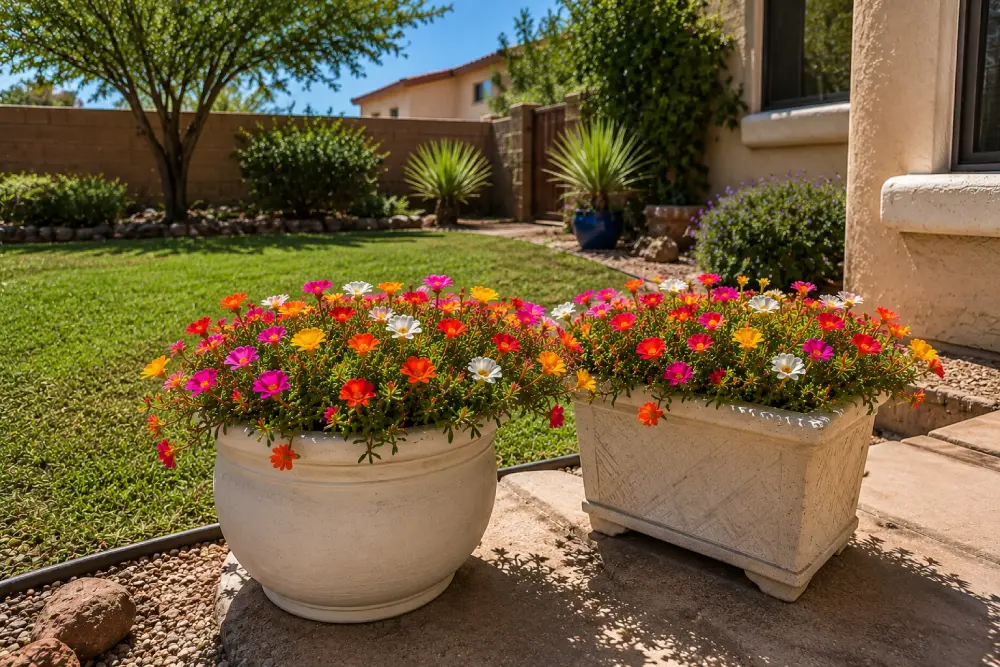
Portulaca, also known as moss rose, is one of my favorite plants for hot, sunny containers. Its bright flowers come in red, orange, yellow, pink, white, and mixed colors.
This low-growing plant trails nicely over the edge of a pot and thrives in sunshine. It also stores moisture in its fleshy leaves, so it does not need as much water as petunias or geraniums.
Use fast-draining potting soil and allow it to dry slightly between waterings. Too much water can cause weak growth and root rot.
Read our complete guide to growing Portulaca in the Southwest.
7. Angelonia
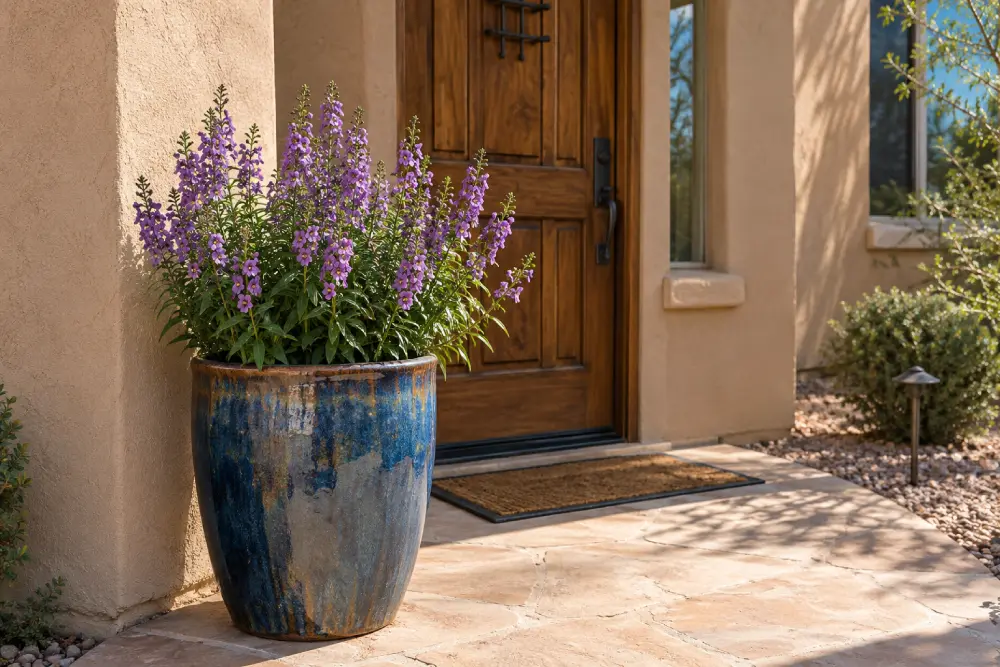
Angelonia produces upright flower spikes in purple, pink, blue, and white. It handles summer heat well and can provide vertical interest in a mixed container.
Plant Angelonia in full sun for the best flowering. Water regularly while it becomes established, and then water whenever the upper inch or two of potting mix feels dry.
It pairs nicely with trailing plants such as Portulaca, verbena, or sweet potato vine.
8. Verbena
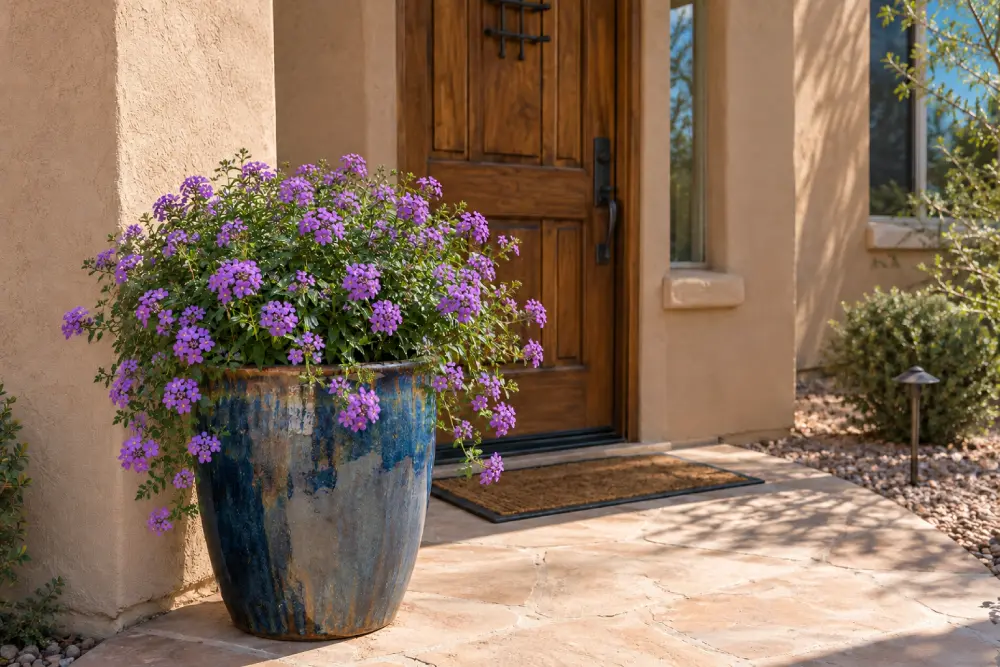
Verbena is an excellent container plant with clusters of red, pink, purple, or white flowers. Its spreading growth makes it suitable for the front or edge of a pot.
Verbena enjoys sunshine and good drainage. Remove faded flowers and trim back long stems if the plant becomes thin or leggy. This encourages another flush of growth and color.
Check the soil frequently during hot weather, but avoid keeping it continually soggy.
9. Marigolds
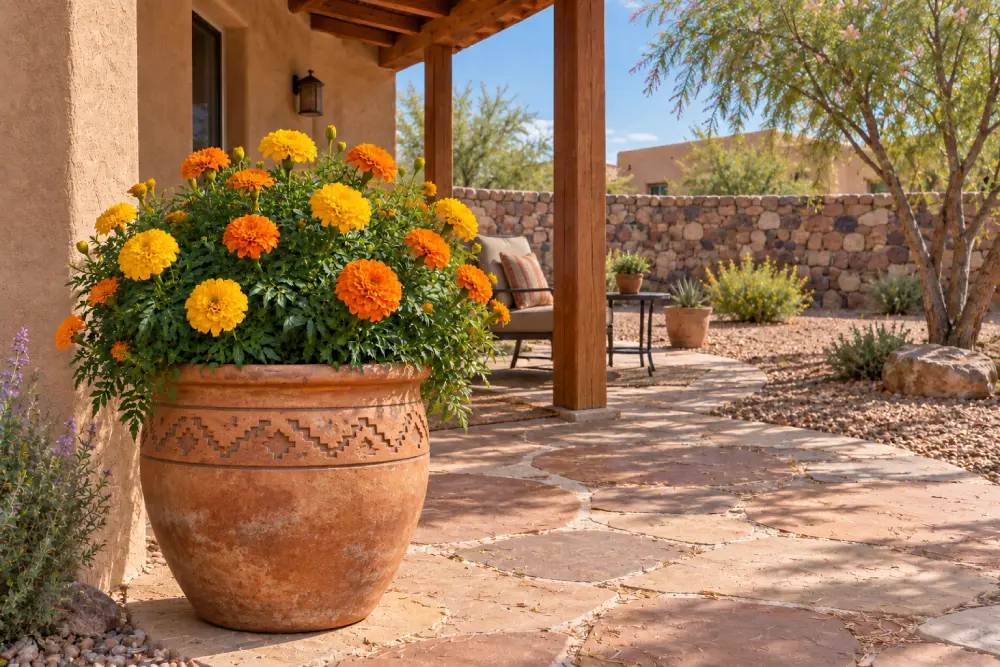
Marigolds are dependable, colorful, and easy to grow. Their yellow, orange, gold, and reddish flowers fit naturally into a Southwest landscape.
They perform best with plenty of sun but may appreciate some late-afternoon shade during extreme heat. Deadhead the old flowers to keep the plants neat and encourage continued blooming.
Dwarf varieties work well around the edges of containers, while taller varieties can be placed toward the center.
10. Zinnias
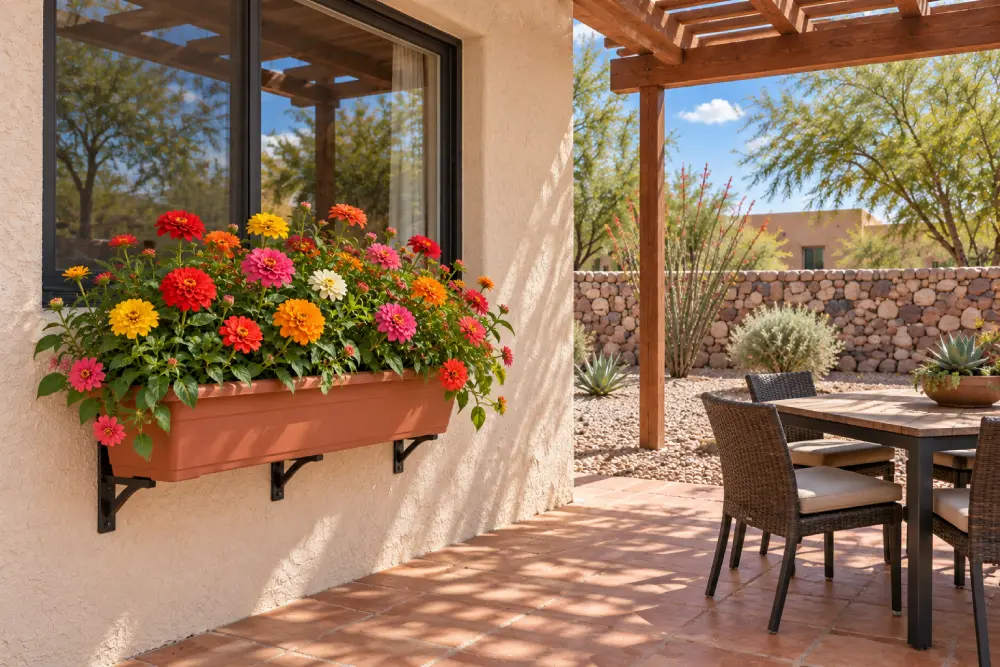
Zinnias provide some of the brightest colors available for summer containers. Depending on the variety, their flowers may be red, orange, yellow, pink, purple, white, or multicolored.
Choose compact or dwarf varieties for pots. Zinnias need good air circulation and plenty of sunshine. Water the soil instead of soaking the leaves, since wet foliage may encourage fungal problems.
Remove faded blooms regularly to help the plant continue flowering.
11. Begonias
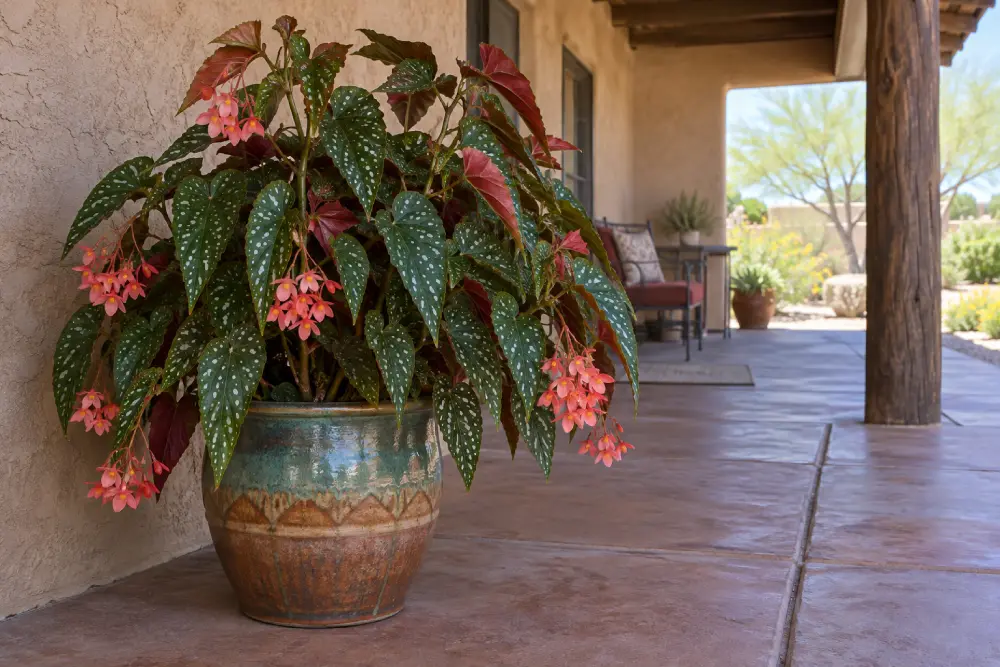
Begonias are a good choice for covered patios, porches, and other locations protected from the intense afternoon sun. They produce flowers in red, pink, orange, white, and yellow, and some varieties also have colorful foliage.
Begonias prefer bright shade or morning sun. Their soil should remain lightly moist but never waterlogged. Direct midsummer afternoon sun can quickly scorch the leaves.
12. Pansies and Violas
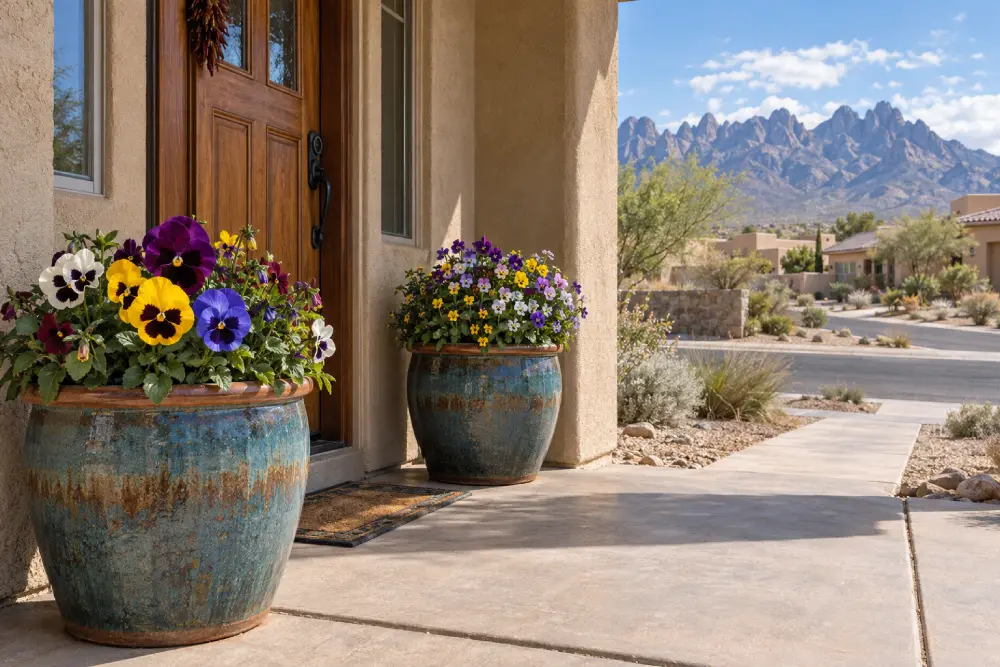
Pansies and violas bring dependable color to containers when many warm-season plants have stopped blooming. They are ideal for fall, winter, and early spring in southern New Mexico.
They are available in almost every color, including yellow, purple, blue, orange, white, and red. Place them in sun during cool weather and water when the upper layer of soil starts to dry.
Pansies do not enjoy our extreme summer heat. Once temperatures remain consistently high, replace them with heat-tolerant plants such as vinca, Portulaca, Angelonia, or lantana.
Choose the Right Container
Your container should be large enough to hold plenty of soil and give the roots room to grow. Larger containers also dry out more slowly than small pots.
Every outdoor pot must have drainage holes. If the holes become plugged by roots, soil, or debris, water may collect around the roots and cause root rot.
Avoid placing rocks in the bottom as a substitute for drainage holes. Instead, use a quality potting mix and make sure excess water can escape freely.
Dark-colored pots absorb more heat than light-colored ones. During midsummer, a black or dark brown container sitting in full afternoon sun can become extremely hot. Consider using a lighter-colored pot or moving darker containers where they receive afternoon shade.
Use Potting Mix, Not Native Soil
Do not fill containers with soil dug directly from the yard. Our native soil may contain clay, caliche, rocks, or excess salts. In a pot, it can become compacted and drain poorly.
Use a good-quality potting mix made for outdoor containers. It should hold enough moisture for the roots without remaining soggy.
Fresh potting mix also provides better air circulation around the roots. NMSU recommends well-drained potting soil for container-grown plants because heavy soil and excess moisture can contribute to root and stem diseases. See this New Mexico State University container-care guidance.
How Often Should You Water Potted Plants?
There is no single watering schedule that works for every container. The amount of water a plant needs depends on:
- The type and size of the plant
- The size and material of the pot
- The amount of sunlight
- Wind exposure
- The time of year
- How quickly the potting mix drains
During spring, you may only need to water every two or three days. During periods above 100 degrees, some flowering containers and hanging baskets may need water every day.
The best method is to check the soil with your finger. If the upper inch or two feels dry, water thoroughly until a little water drains from the bottom. Do not give the plant only a small splash because that may wet the surface without reaching the entire root system.
Water early in the morning whenever possible. This gives the plant moisture before the hottest part of the day and reduces water loss from evaporation.
For additional summer advice, read How to Keep Potted Plants Alive During 100-Degree Weather.
Fertilizing Flowering Containers
Frequent watering gradually washes nutrients out of container soil. Flowering annuals may benefit from a balanced or bloom-type fertilizer during active growth.
Always follow the product label. It is easy to overfertilize a container because the roots are confined to a small amount of soil. Too much fertilizer may burn the roots and cause brown leaf edges.
A slow-release fertilizer mixed into the potting soil can provide steady nutrition. You can also use a water-soluble fertilizer at a reduced strength every few weeks during the growing season.
Do not fertilize a severely dry or heat-stressed plant. Water it first and allow it to recover.
Try the Thriller, Filler, and Spiller Method
An easy way to design a colorful container is to combine three different growth habits:
- Thriller: A taller plant placed near the center or back, such as Angelonia, lantana, or an ornamental grass.
- Filler: A rounded plant that fills the middle, such as vinca, geraniums, marigolds, or petunias.
- Spiller: A trailing plant that grows over the edge, such as Portulaca, verbena, Calibrachoa, or sweet potato vine.
Make sure all the plants in the same pot have similar sunlight and watering requirements. For example, do not combine a drought-tolerant Portulaca with a thirsty plant that needs constantly moist soil.
Seasonal Container Color for Las Cruces
One container does not have to look the same throughout the year.
Spring: Geraniums, petunias, Calibrachoa, dianthus, and snapdragons.
Summer: Vinca, Portulaca, lantana, Angelonia, marigolds, and zinnias.
Fall: Mums, dianthus, petunias, ornamental peppers, and marigolds.
Winter: Pansies, violas, ornamental kale, and dusty miller.
Changing plants seasonally keeps your entrance or patio colorful without forcing cool-season flowers to survive our midsummer heat.
Final Thoughts
Colorful plants can grow successfully in pots throughout Southwest New Mexico, but they need the right location, good drainage, and regular attention.
Check your containers often during hot and windy weather. Water deeply when needed, protect sensitive plants from intense afternoon sun, and remove faded flowers to encourage new blooms.
If you are unsure which plants will work in your particular location, stop by either Guzman’s Garden Centers location in Las Cruces. Let us know how much sunlight the area receives and the approximate size of your container. We can help you choose plants that will look good together and have similar care requirements.
Frequently Asked Questions
What are the best potted flowers for full sun in New Mexico?
Vinca, Portulaca, lantana, Angelonia, marigolds, zinnias, and verbena are good choices for sunny containers. Even heat-tolerant plants must be watered regularly when growing in pots.
Should I water my outdoor pots every day during summer?
Some containers may need daily watering when temperatures rise above 100 degrees, especially small pots and hanging baskets. Check the soil instead of watering automatically. Water when the upper inch or two begins to feel dry.
What flowers do well in pots with afternoon shade?
Geraniums, begonias, petunias, Calibrachoa, and Gerbera daisies usually benefit from protection against intense midsummer afternoon sun.
Why are my potted flowers wilting even though the soil is wet?
Constantly wet soil can damage the roots and prevent them from absorbing water properly. Check that the drainage holes are open and never leave the pot sitting in a saucer filled with water.
Can I leave flowering containers outside during winter?
Cold-tolerant flowers such as pansies and violas can handle cool weather, but tender plants may be damaged or killed by a hard freeze. Remember that roots in above-ground pots are more exposed to cold than roots planted in the ground. Read more at Successful Container Gardening.
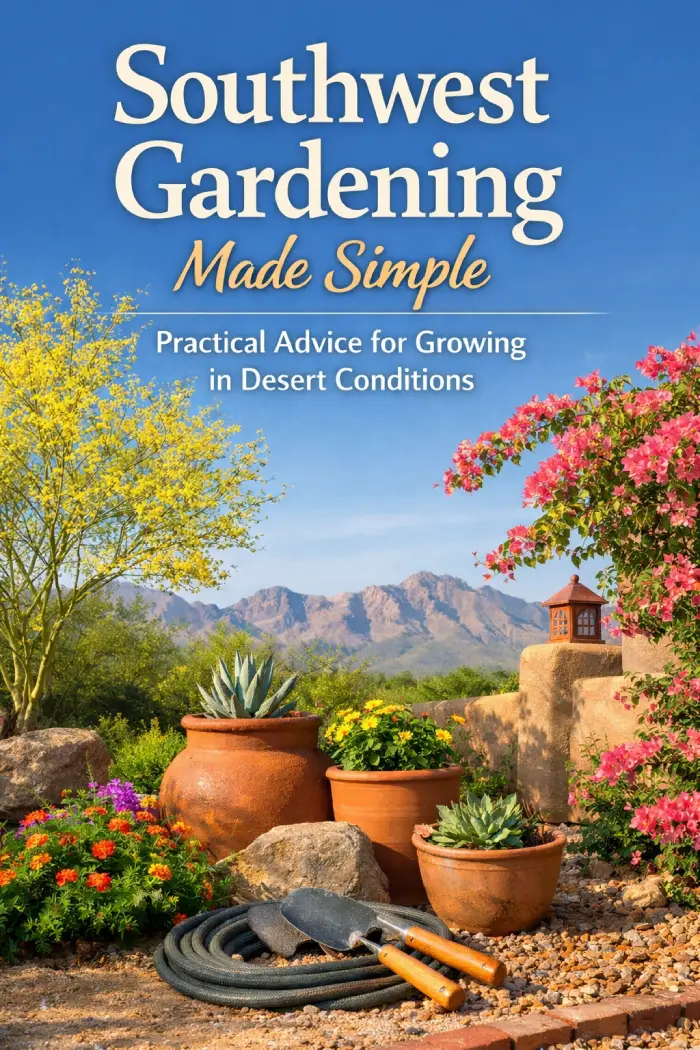
New to Southwest Gardening?
Stop wasting money on plants that will not survive our heat and drought.
My Southwest Gardening Made Simple eBook shows you which trees, shrubs, flowers, and vegetables actually thrive in New Mexico, Arizona, and West Texas.
The best plants for hot, dry climates
Common mistakes that kill Southwest plants
Easy-to-follow advice for beginners

Paul Guzman is a lifelong Southwest gardener and gardening writer with decades of experience helping homeowners grow beautiful landscapes in the desert Southwest. He writes for Guzman’s Garden Centers in Las Cruces, New Mexico, with contributing expertise from Gary Guzman, owner of Guzman’s Garden Centers. If you have any questions or enjoyed this post, feel free to share your thoughts in the comments below.